Latest aggregated data from Research and Markets, Fact.MR and Coherent Market Insights confirms the global matcha industry maintains steady double-digit growth momentum in 2026. Driven by rising global wellness awareness, third-wave café expansion, and surging demand for authentic stone-ground matcha, the total market valuation is set to hit USD 5.26 billion in 2026, growing at a year-on-year rate of 6.9% from USD 4.92 billion in 2025, with a compound annual growth rate (CAGR) of 7.39% projected through 2032, when the market will reach USD 8.10 billion. A parallel booming sub-sector – commercial matcha stone grinding equipment – is also witnessing robust uptake, with its global market value hitting USD 106 million in 2026, as specialty tea shops and food manufacturers prioritize traditional low-temperature stone milling to retain matcha’s original nutrients and vivid green pigment.
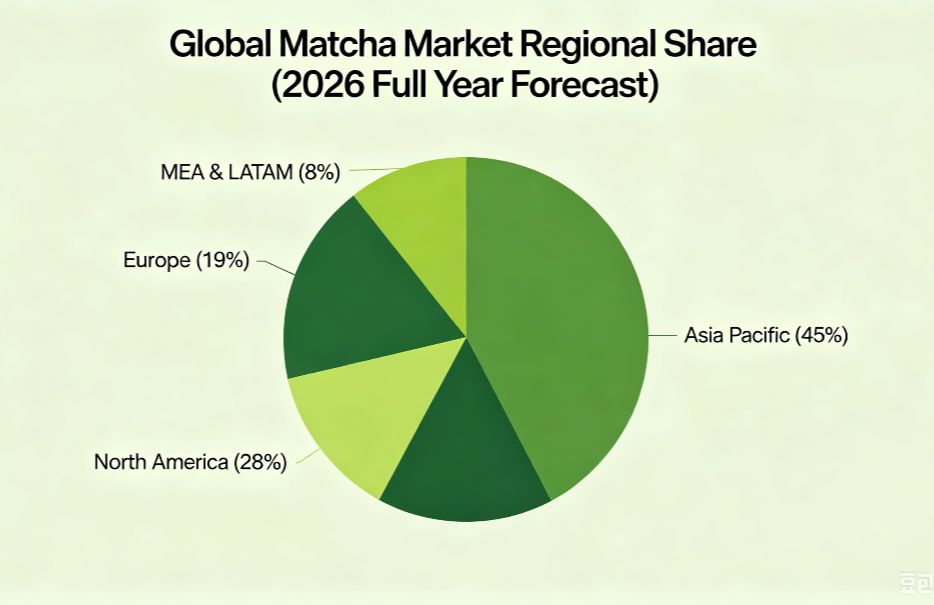
Core Market Size & Segmentation Data 2026
1.1 Global Regional Market Share (2026 Full Year Forecast)
- Asia Pacific (45% market share, USD 2.367 billion): Remains the dominant market, anchored by Japan’s ceremonial matcha heritage and China’s fast-growing domestic tea & bakery demand. China contributes nearly 40% of global market incremental growth, with new tea processing bases in Zhejiang, Guizhou and Fujian expanding annual tencha raw leaf output to support both domestic consumption and cross-border exports.
- North America (28% share, USD 1.473 billion): The fastest-growing mature market. US Department of Agriculture trade data shows annual matcha imports exceeded 4,100 tons in 2024, a 2.1x jump from 2020. Over 60% of imported matcha is deployed in ready-to-drink beverages, functional snacks and premium café lattes; organic certified ceremonial matcha carries a 30–50% price premium among health-focused consumers.
- Europe (19% share, USD 1.000 billion): Fragmented but high-value market, with Germany, UK and France leading demand for EU organic-compliant culinary matcha used in confectionery and skincare formulations.
- Middle East, Latin America & Africa (8% combined share): Emerging growth hotspots fueled by specialty café chain expansion and social media matcha content virality.
1.2 Product Grade Split (2026)
- Culinary Grade Matcha (28% product segment share): The largest volume segment, widely adopted by bakeries, beverage brands and foodservice chains for mass-market matcha products.
- Ceremonial Grade Matcha: High-margin premium segment, favored by tea boutiques, luxury cafes and wellness brands, reliant on low-temperature stone grinding technology to preserve delicate umami flavor and high EGCG antioxidant content.
- Blended & Functional Matcha: Fastest-growing sub-category, infused with collagen, plant protein or adaptogens for beauty and fitness consumer groups.
Key Growth Drivers Reshaping 2026 Matcha Industry
2.1 Global Wellness & Antioxidant Consumer Demand
Matcha’s concentrated catechin (EGCG) content is the primary consumption catalyst. 62% of North American matcha buyers cite health benefits as their top purchase motivation, while European consumers prioritize zero-pesticide, organic traceable matcha raw materials. Brands are increasingly highlighting stone-ground processing as a quality benchmark, as traditional stone mills operate at low temperatures below 20°C to avoid oxidizing matcha’s bright green chlorophyll – a critical advantage over high-speed metal pulverizers that risk heat damage.
2.2 Third-Wave Café Culture & On-Site Fresh Grinding Trend
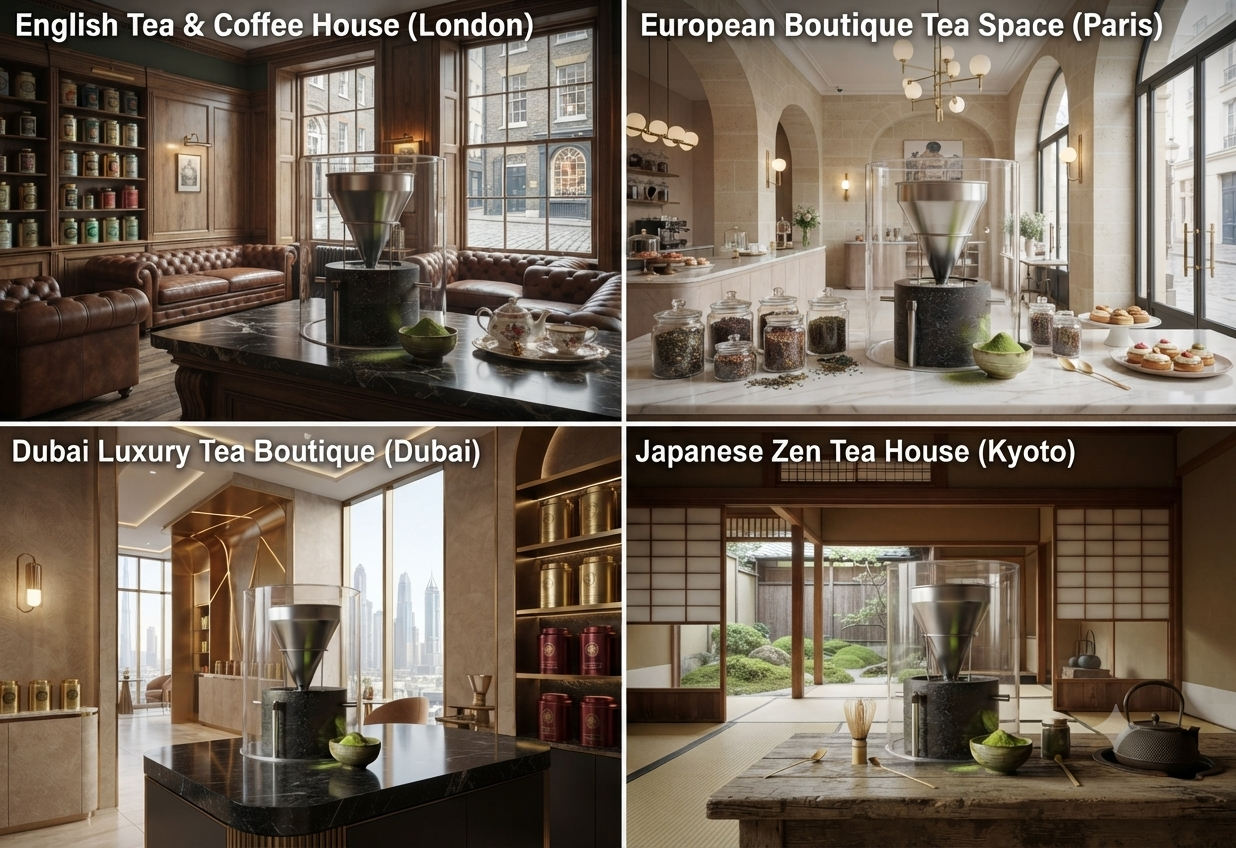
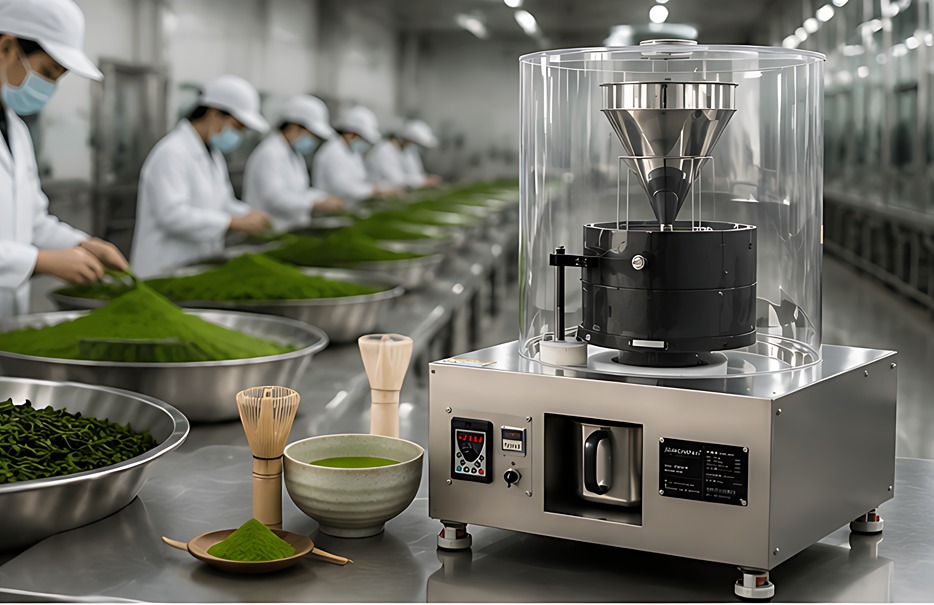
2026 marks a major industry shift: premium matcha cafes are abandoning pre-bagged bulk powder, investing in compact automated commercial stone grinders to grind tencha leaves fresh in-store for customers.Industry machinery market data shows global matcha stone grinder sales rising at a 4.7% CAGR from 2026 to 2032. Café operators favor integrated, wheel-mounted stainless steel stone mills with digital speed control and dust-proof transparent enclosures (as pictured), balancing traditional grinding texture with modern hygiene, automation and space efficiency. Fresh in-house stone-ground matcha delivers richer foam, brighter green color and superior flavor, becoming a core differentiated selling point for specialty tea shops across US, Europe and Southeast Asia.
2.3 Cross-Industry Application Expansion Beyond Beverages
Matcha penetration extends far beyond drinking tea in 2026:
- Food sector: Matcha ice cream, pastries, protein bars, yogurt and savory snacks account for 43% of total culinary-grade matcha usage.
- Personal care: Matcha-infused skincare, face masks and bath products drive steady demand growth in beauty retail, leveraging matcha’s anti-inflammatory properties.
- E-commerce DTC sales: 42% of North American matcha volume moves through online channels, with short-video social platforms accelerating matcha product global exposure.
Industry Challenges & Supply Chain Headwinds in 2026
- Raw Material Supply Constraints: Japanese Uji region tencha yields dropped 20–25% year-on-year, pushing wholesale tencha leaf prices up 100–185%. Chinese tencha production partially offsets the supply gap but faces stricter global food safety import regulations.
- Quality Standard Fragmentation: No unified international grading standard for matcha leads to consumer confusion between low-cost metal-milled powder and premium stone-ground matcha.
- Equipment Technical Barriers: High-quality stone grinding machinery requires precise temperature control and stone material craftsmanship; low-cost imitation grinders produce coarse, oxidized powder that damages brand reputation for café operators.
2026–2032 Future Outlook & Investment Opportunities
Analysts identify two high-potential investment tracks for industry stakeholders:
- Organic, Traceable Stone-Ground Matcha Production: Premium ceremonial-grade output will maintain consistent pricing power amid rising health spending.
- Intelligent Commercial Matcha Stone Grinding Equipment: Compact, automated, mobile stone mills targeting small-to-medium cafes represent a fast-growing machinery niche, with demand surging in all major matcha-consuming regions.
By 2032, the global matcha market will surpass USD 8 billion, with stone-ground authentic matcha capturing over 35% of the total premium product segment, as consumers increasingly prioritize transparent, traditional low-temperature processing over mass-produced substitute powders.