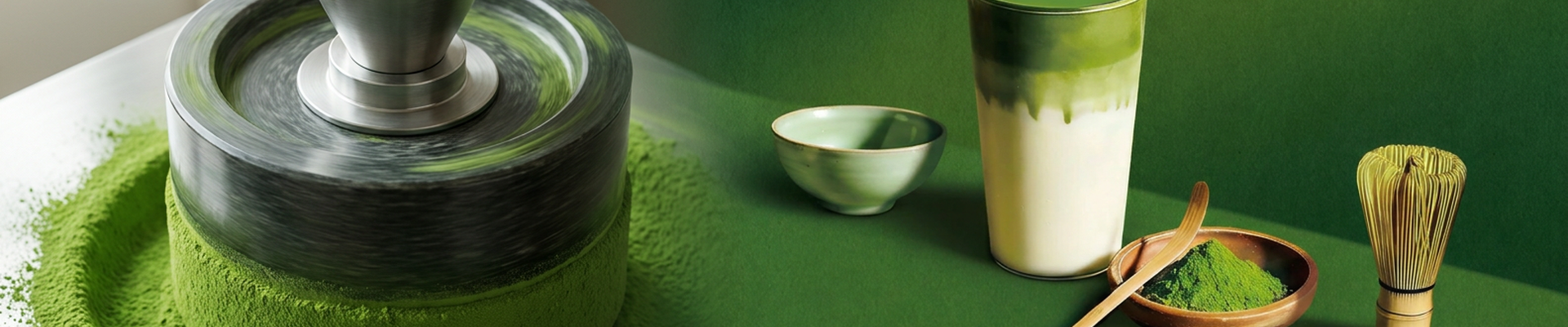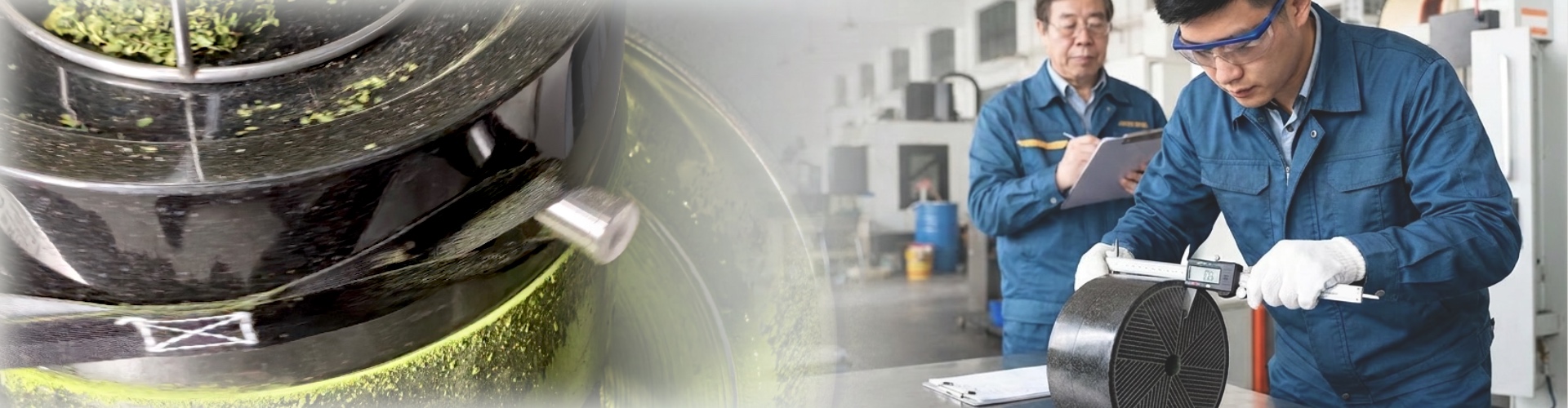
Whether you operate a specialty tea café, dessert brand, tea factory, or distribution business, selecting the right matcha stone mill depends on your expected production capacity, matcha quality requirements, operating environment, and future expansion plans. Choosing equipment based on long-term business goals helps ensure stable production and a better return on investment.
High-quality matcha is influenced by much more than the tea leaves themselves. Grinding stone precision, rotational speed, feeding consistency, temperature control, and machine stability all affect particle size, texture, color, and aroma. A well-engineered grinding system helps maintain consistent quality throughout continuous commercial operation.
Even when processing identical tea leaves, grinding results may vary significantly due to differences in stone craftsmanship, grinding pressure, rotational consistency, and machine precision. Professional stone milling systems are designed to produce uniform particle distribution while preserving the natural characteristics of premium matcha.
Before purchasing a commercial matcha stone mill, businesses should evaluate daily production volume, available workspace, power requirements, maintenance expectations, and future business growth. Investing in equipment that matches operational needs provides greater efficiency, lower operating costs, and long-term reliability.
For commercial matcha production, consistency is often more valuable than maximum output. Stable grinding performance helps maintain uniform particle size, consistent flavor, and reliable product quality over extended operating periods. This is particularly important for premium cafés, tea brands, and specialty beverage businesses where product consistency directly influences customer experience.
Reliable equipment should be supported by reliable service. We provide technical consultation, operation guidance, equipment adjustment assistance, spare parts support, and responsive after-sales service to help customers maintain stable production throughout the equipment lifecycle. Our goal is to build long-term partnerships rather than simply deliver machines.