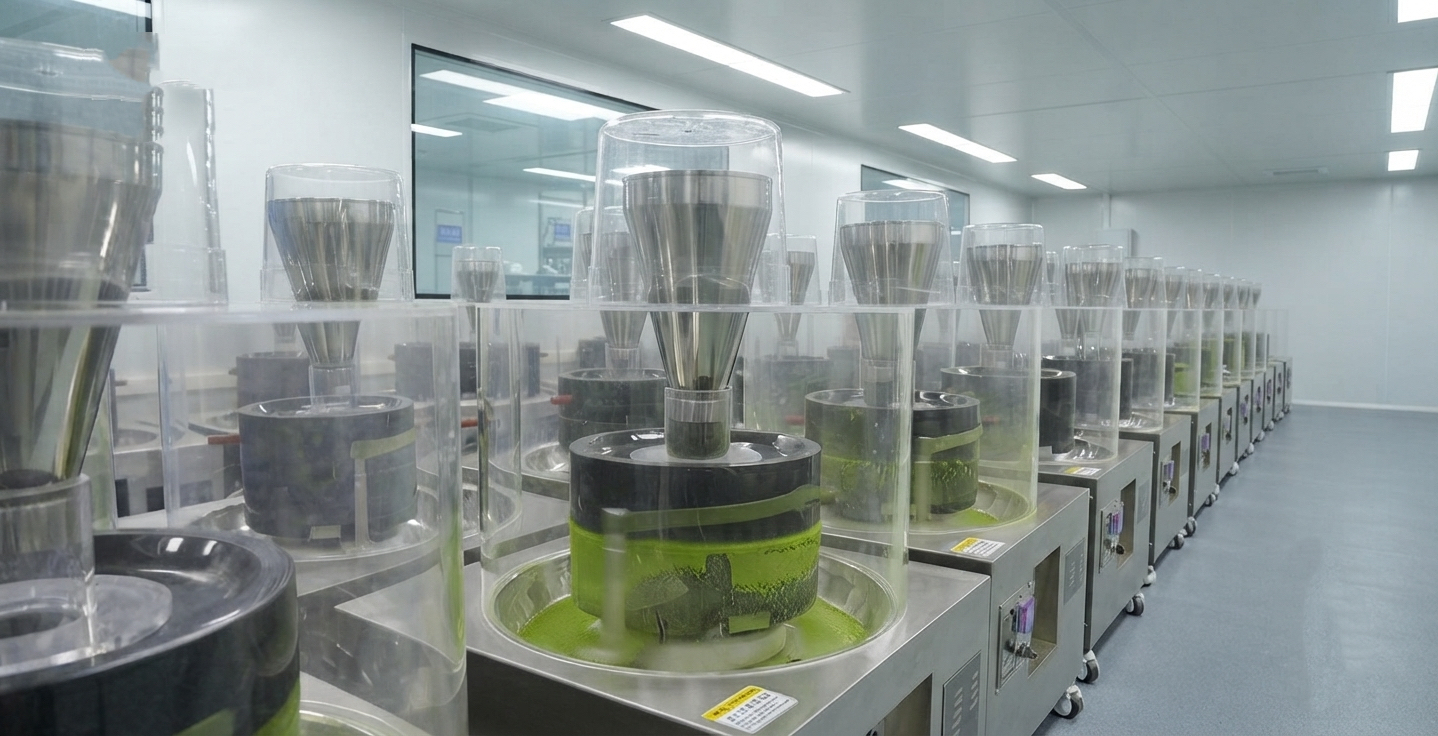
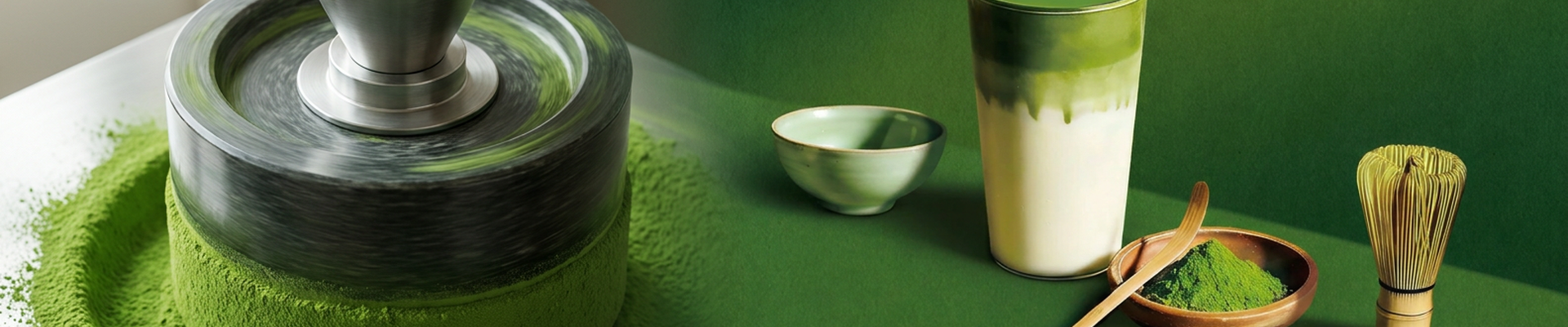
When producing premium matcha, grinding is not simply about turning tea leaves into powder.
The way the tea is ground can influence the temperature, texture and overall characteristics of the finished matcha. This is one of the reasons traditional stone grinding has remained important in premium matcha production.
A matcha stone mill works at a relatively slow and controlled speed. Instead of using rapidly rotating blades, it gradually reduces tencha between two grinding stones.
This slower grinding process helps manage heat generated by friction and provides a controlled environment for producing fine matcha powder.
But why does temperature matter so much?
What Happens When Tea Is Ground?
Grinding is a mechanical process.
Whenever two surfaces move against each other, friction is generated. Friction can produce heat, and the amount of heat depends on factors such as grinding speed, pressure, feeding rate, material properties and equipment design.
Tea leaves are relatively delicate compared with many industrial grinding materials.
For matcha production, uncontrolled heat can affect the characteristics that consumers associate with high-quality matcha, including its fresh aroma, color and overall sensory profile.
This is why temperature management is an important consideration when designing professional matcha grinding equipment.
Why Is Matcha Sensitive to Heat?
Matcha contains a complex combination of naturally occurring compounds responsible for its color, aroma, flavor and nutritional characteristics.
These include chlorophyll, amino acids, polyphenols and volatile aroma compounds.
Some of these compounds are sensitive to processing conditions.
Excessive heat can accelerate chemical and physical changes in food materials. For premium matcha, maintaining controlled processing conditions is therefore an important part of protecting the quality of the finished powder.
Temperature should not be viewed as an isolated specification, however.
The actual grinding temperature depends on the complete operating system.
How Does a Stone Mill Help Control Grinding Heat?
A traditional matcha stone mill uses a slow grinding process rather than high-speed cutting.
The tencha gradually passes through the narrow space between the grinding stones. The material is progressively reduced as it moves across the grinding surface.
Because the grinding speed is controlled, the rate at which mechanical energy is converted into heat can also be managed.
This does not mean that a stone mill produces no heat.
All mechanical grinding generates some heat.
The goal is to control heat generation rather than simply maximize grinding speed.
This distinction is particularly important when producing premium matcha.
Why Not Simply Grind Matcha Faster?
At first glance, faster grinding seems attractive.
Higher speed can increase processing capacity, which may appear beneficial for commercial production.
However, grinding speed is only one part of the equation.
Increasing speed can also increase friction and mechanical energy input, potentially resulting in greater heat generation depending on the machine design and operating conditions.
For matcha, the objective is not necessarily to achieve the highest possible grinding speed.
Instead, professional grinding equipment needs to balance:
- Grinding efficiency
- Temperature
- Particle size
- Feeding rate
- Powder consistency
- Equipment stability
This is why traditional matcha grinding focuses on controlled processing rather than simply maximum output.
The Relationship Between Grinding Speed and Temperature
Grinding speed, feeding rate and temperature are closely connected.
If material is fed too quickly, the grinding chamber can become overloaded.
If the grinding speed is too high, friction and mechanical energy input may increase.
If the grinding gap is not properly adjusted, the grinding process can become unstable.
A professional machine therefore needs to consider these factors together.
There is no single number that guarantees perfect matcha.
Instead, stable results come from maintaining an appropriate balance between the grinding system and the tea material.
Does Lower Temperature Always Mean Better Matcha?
Not necessarily.
This is an important distinction.
The objective is not to claim that the lowest possible temperature automatically produces the best matcha.
Instead, the goal is to avoid unnecessary heat and maintain controlled grinding conditions.
Matcha quality is influenced by many factors, including:
- Tencha quality
- Cultivation and processing
- Storage conditions
- Moisture
- Grinding technology
- Grinding speed
- Feeding rate
- Grinding stone characteristics
- Temperature
- Packaging and storage after grinding
Grinding is one stage of the overall production process.
A high-quality stone mill can help control this stage, but it cannot replace high-quality raw materials or proper handling.
Why Low-Speed Grinding Is Important
Traditional matcha stone grinding is characterized by slow rotation.
This is fundamentally different from high-speed blade grinding.
A blade grinder is designed to rapidly cut and break material.
A stone mill gradually crushes and reduces the tea material between carefully prepared grinding surfaces.
The slower process can help create a more controlled grinding environment and supports the traditional characteristics associated with stone-ground matcha.
For premium matcha businesses, this difference is important because the grinding method itself can become part of the product story.
Temperature and Matcha Aroma
Aroma is an important part of the matcha experience.
Premium matcha contains delicate volatile compounds that contribute to its characteristic fragrance.
Excessive heat during processing can affect volatile compounds and may influence the sensory characteristics of the finished product.
For this reason, professional matcha processing aims to minimize unnecessary thermal stress.
A controlled stone-grinding process provides one approach to managing this challenge.
Temperature and Matcha Color
The vibrant green appearance of matcha is another important quality characteristic.
Chlorophyll contributes significantly to the green color of matcha.
Processing and storage conditions can influence pigment stability.
While grinding temperature is not the only factor affecting color, controlling excessive heat during grinding is part of a broader strategy for maintaining the desired characteristics of premium matcha.
Temperature and Particle Size
Temperature is also related to the stability of the grinding process.
When a grinding system operates under stable conditions, it becomes easier to maintain consistent material flow and powder characteristics.
The final particle size of matcha depends on several factors:
- Grinding stone design
- Grinding gap
- Rotation speed
- Feeding rate
- Tencha characteristics
- Moisture condition
- Grinding surface condition
Therefore, a professional matcha stone mill should not be evaluated based on temperature alone.
Temperature control, particle size and grinding consistency need to be considered as parts of the same system.
Why Commercial Matcha Grinding Is Different
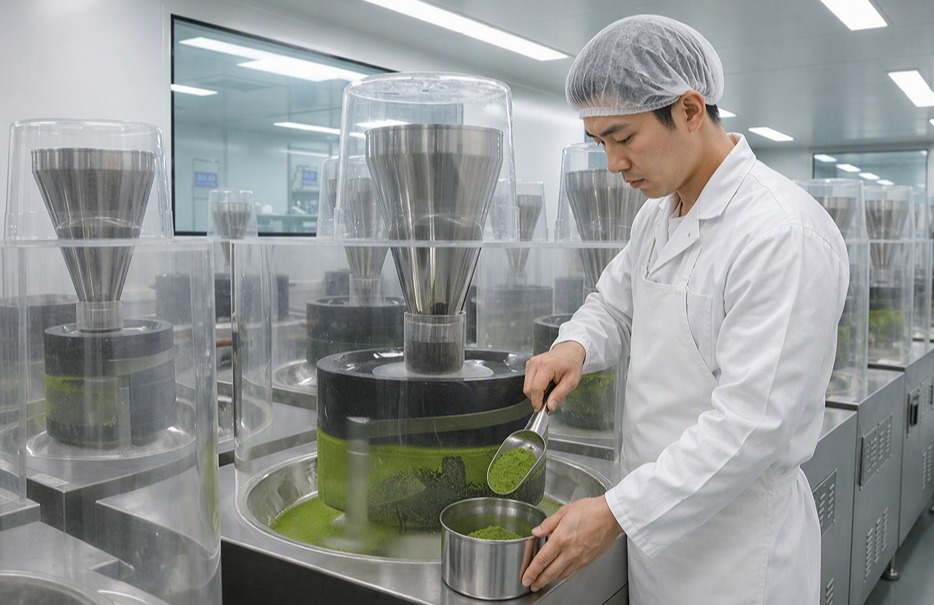
A commercial matcha business may need to grind tea repeatedly over extended periods.
This creates different requirements from occasional household grinding.
Commercial equipment needs to provide stable operation while maintaining appropriate grinding conditions.
Important considerations include:
Stable Rotation
The grinding system should maintain a consistent rotation speed during operation.
Controlled Feeding
Tencha should enter the grinding area at an appropriate and stable rate.
Appropriate Grinding Gap
The distance between the grinding surfaces influences both material flow and grinding performance.
Heat Management
The machine should be designed to avoid unnecessary heat accumulation during operation.
Reliable Structure
The motor, transmission system, grinding stones and machine frame need to work together reliably.
These factors become increasingly important as production requirements increase.
What Should Buyers Ask a Matcha Stone Mill Supplier?
If you are considering a commercial matcha stone mill, don’t ask only:
“How many grams per hour can it produce?”
Also ask:
- What is the grinding speed?
- How is the grinding temperature managed?
- What type of stone is used?
- How is the grinding gap adjusted?
- How is tencha fed into the grinding system?
- How consistent is the powder?
- How long can the machine operate continuously?
- What maintenance is required?
- What technical support is available?
These questions provide a much better understanding of the actual grinding system.
How JUNZHENG Approaches Low-Temperature Grinding
At JUNZHENG, we believe that commercial matcha grinding should balance productivity with controlled processing.
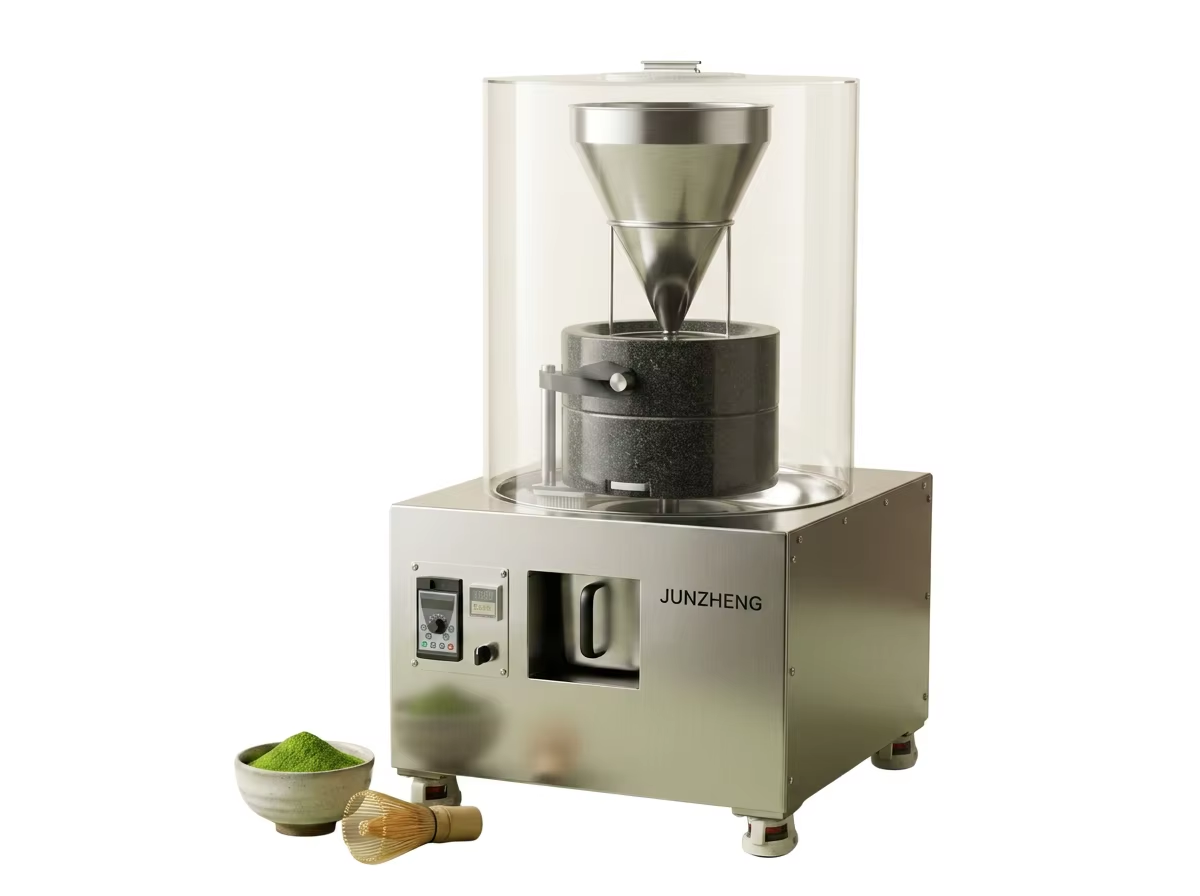
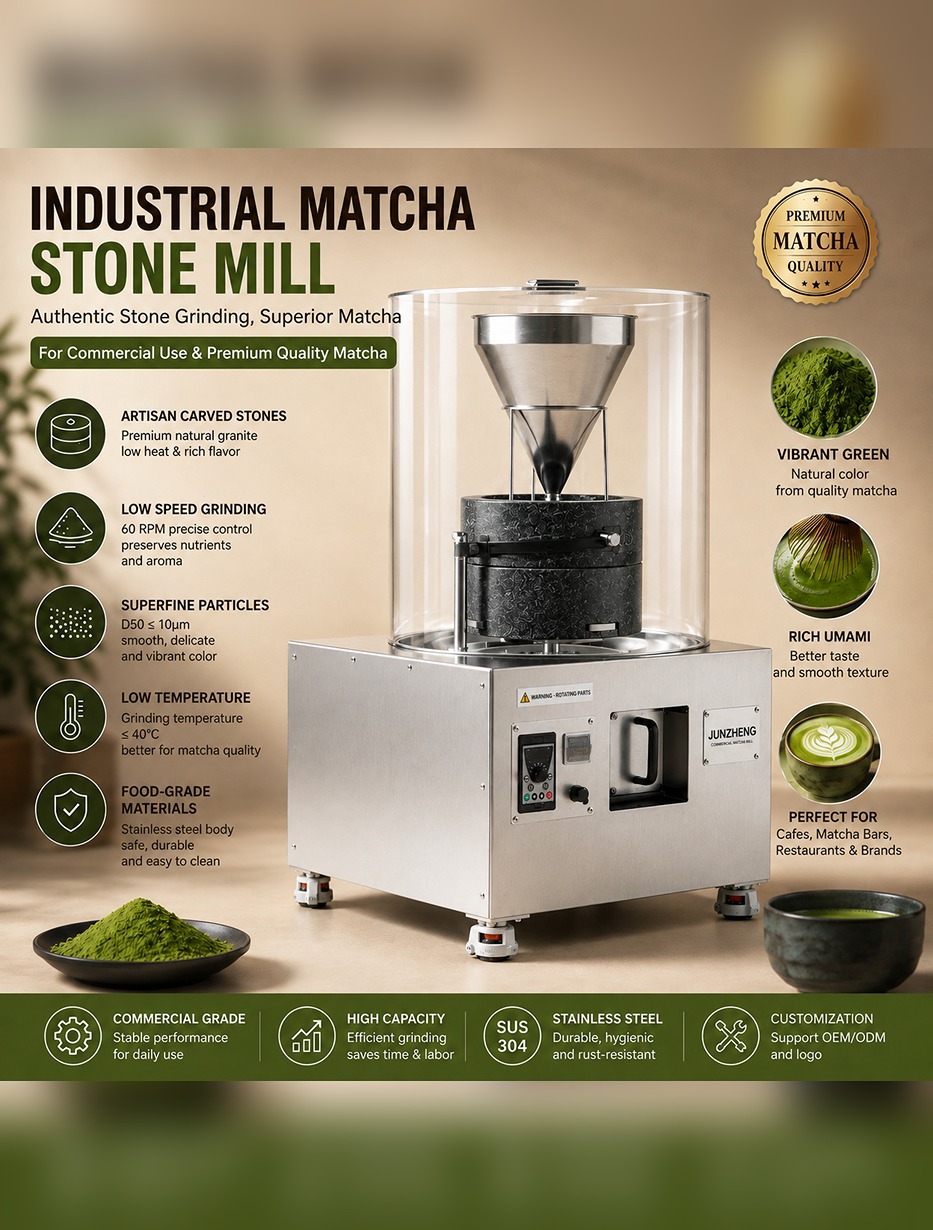
Our electric matcha stone mill uses a low-speed grinding principle combined with natural granite grinding stones.
The machine is designed to gradually process tencha rather than relying on high-speed blade cutting.
Our goal is to provide commercial users with a stable grinding environment suitable for cafés, tea houses, matcha brands and other professional applications.
The machine’s grinding speed, feeding system, stone structure and overall mechanical design are considered together rather than as isolated components.
Low Temperature Is About Control, Not Just a Number
One of the most common misunderstandings about matcha grinding is that a single temperature specification can determine product quality.
In reality, temperature is the result of the entire grinding process.
A professional approach focuses on controlling the factors that generate heat:
Grinding speed + feeding rate + grinding pressure + stone characteristics + operating conditions
When these elements are properly balanced, the machine can operate in a more stable and controlled manner.
This is the principle behind professional low-temperature matcha grinding.
Conclusion
Temperature management is an important consideration when producing premium matcha.
Unlike high-speed grinding methods that prioritize rapid processing, traditional stone grinding uses a slower and more controlled approach.
Natural granite grinding stones, controlled rotation, appropriate feeding and proper grinding adjustment work together to create a stable grinding environment.
The objective is not simply to grind matcha as quickly as possible.
It is to produce fine, consistent powder while minimizing unnecessary heat and preserving the characteristics that make premium matcha unique.
For commercial matcha businesses, understanding this principle can help them make better decisions when selecting grinding equipment.
Looking for a Commercial Matcha Stone Mill?
JUNZHENG provides professional electric matcha stone mills for cafés, tea houses, matcha brands and commercial applications.
Explore our Commercial Matcha Stone Mill or contact our technical team to discuss your application, production requirements and grinding needs.