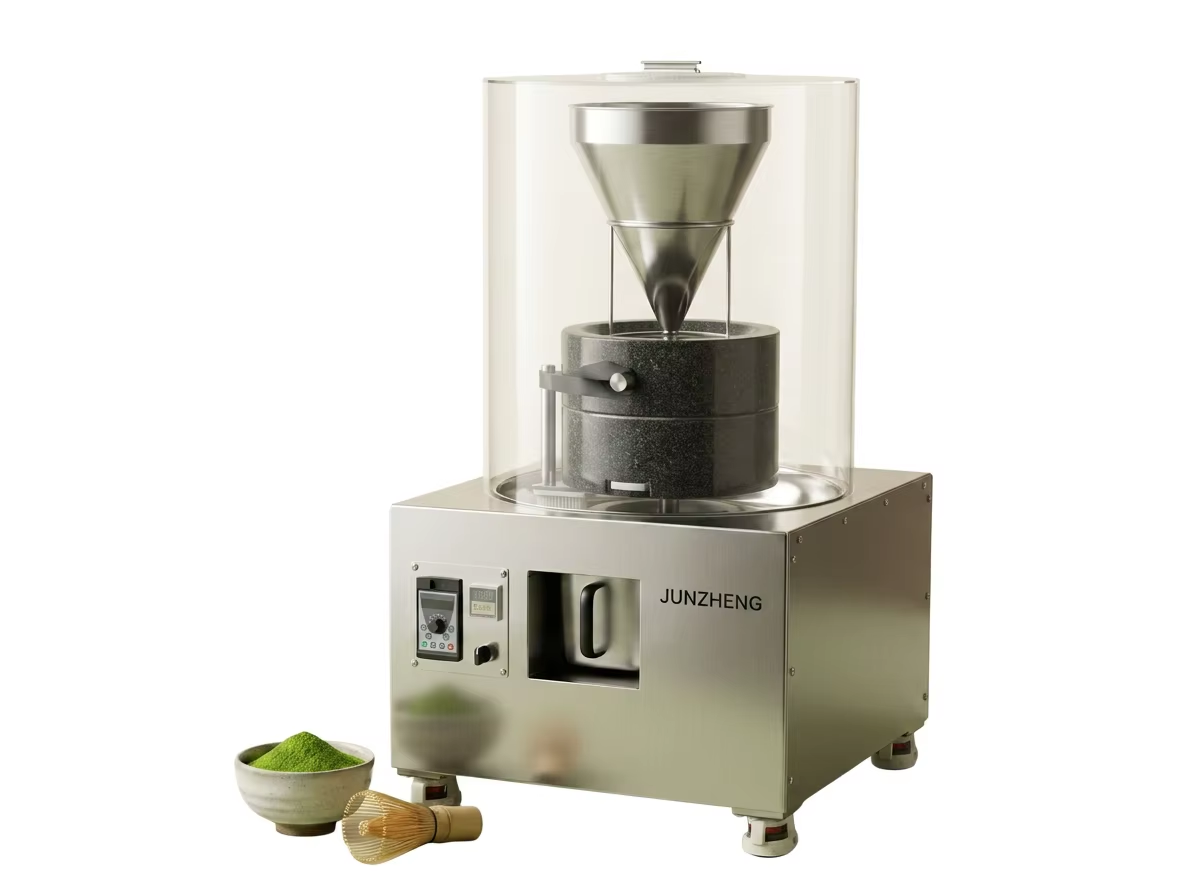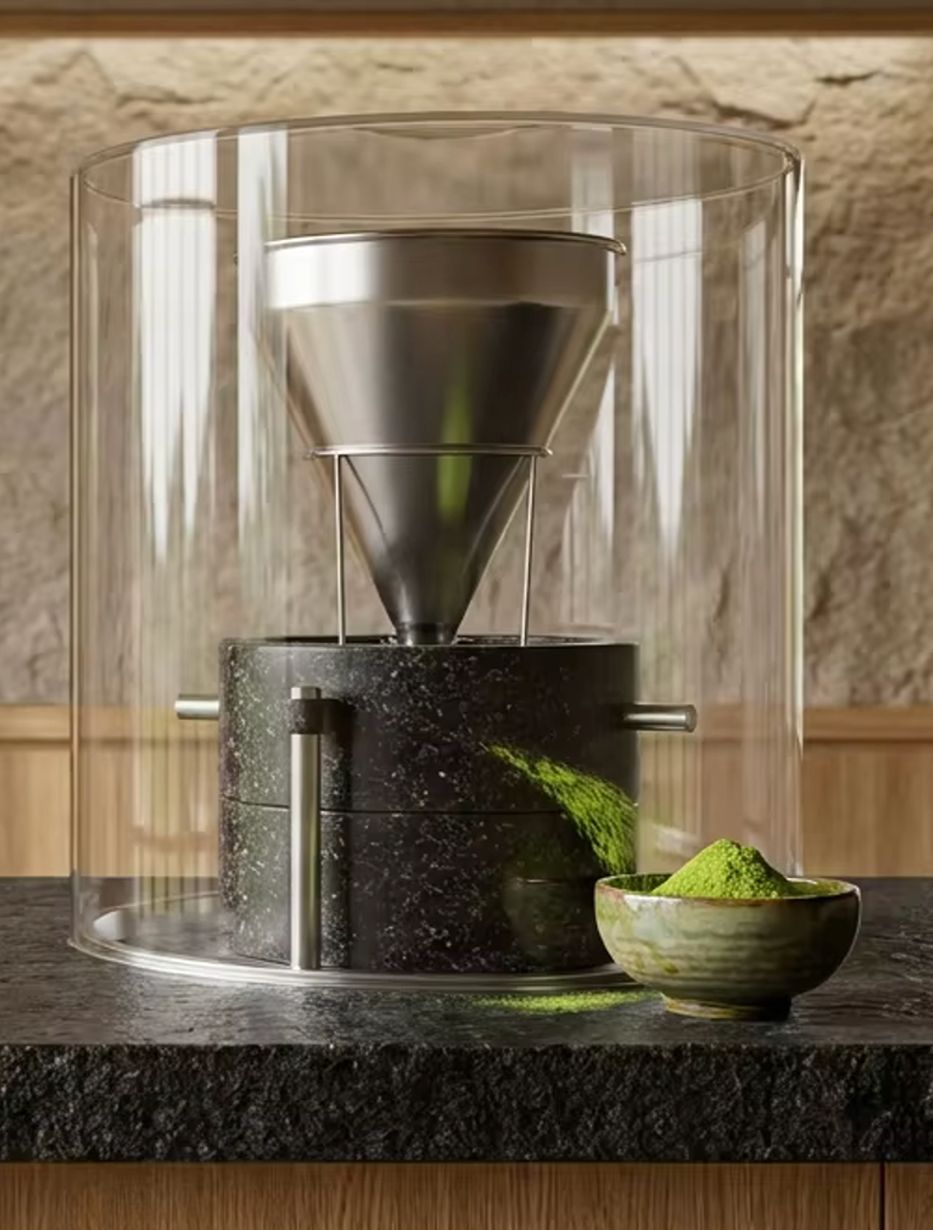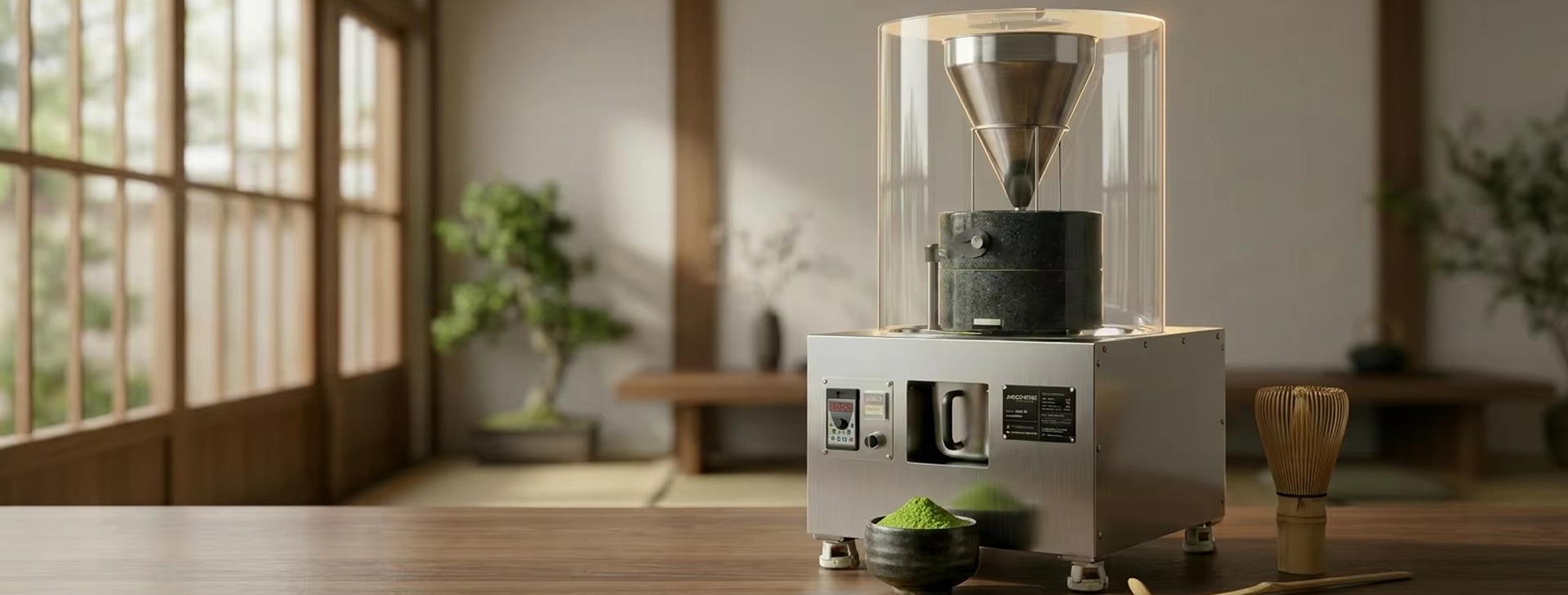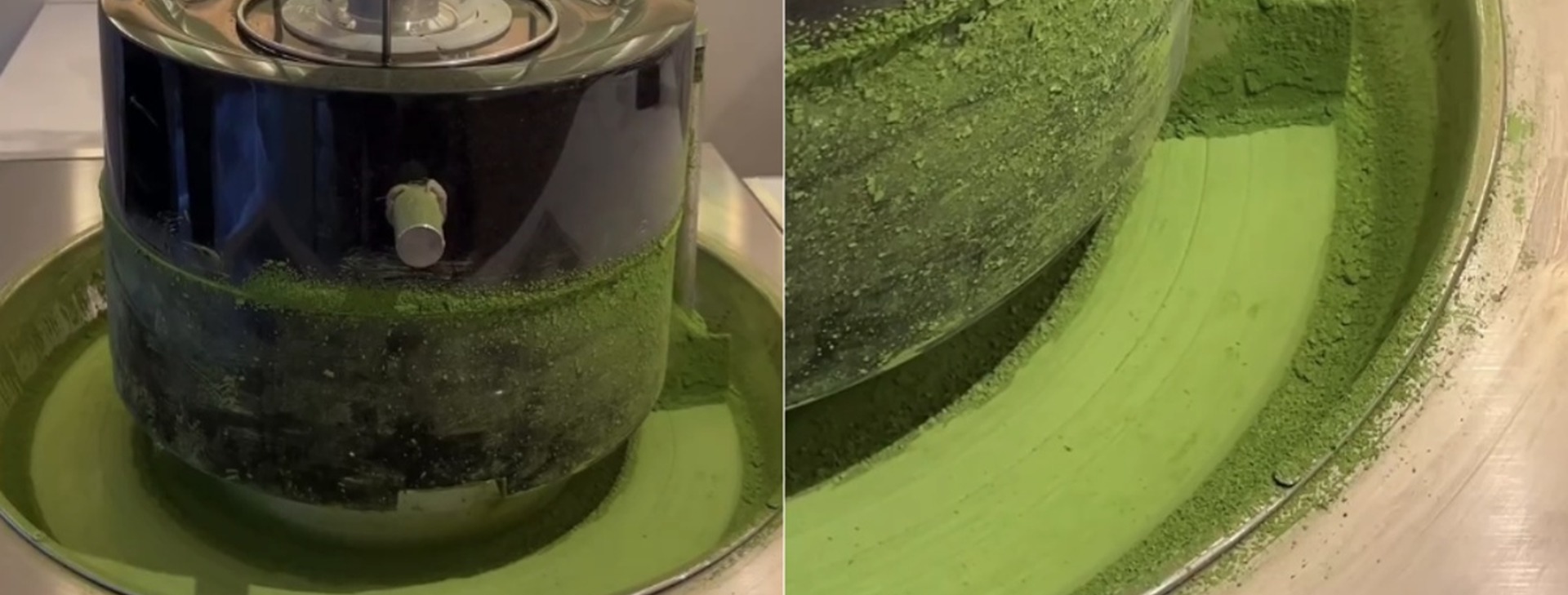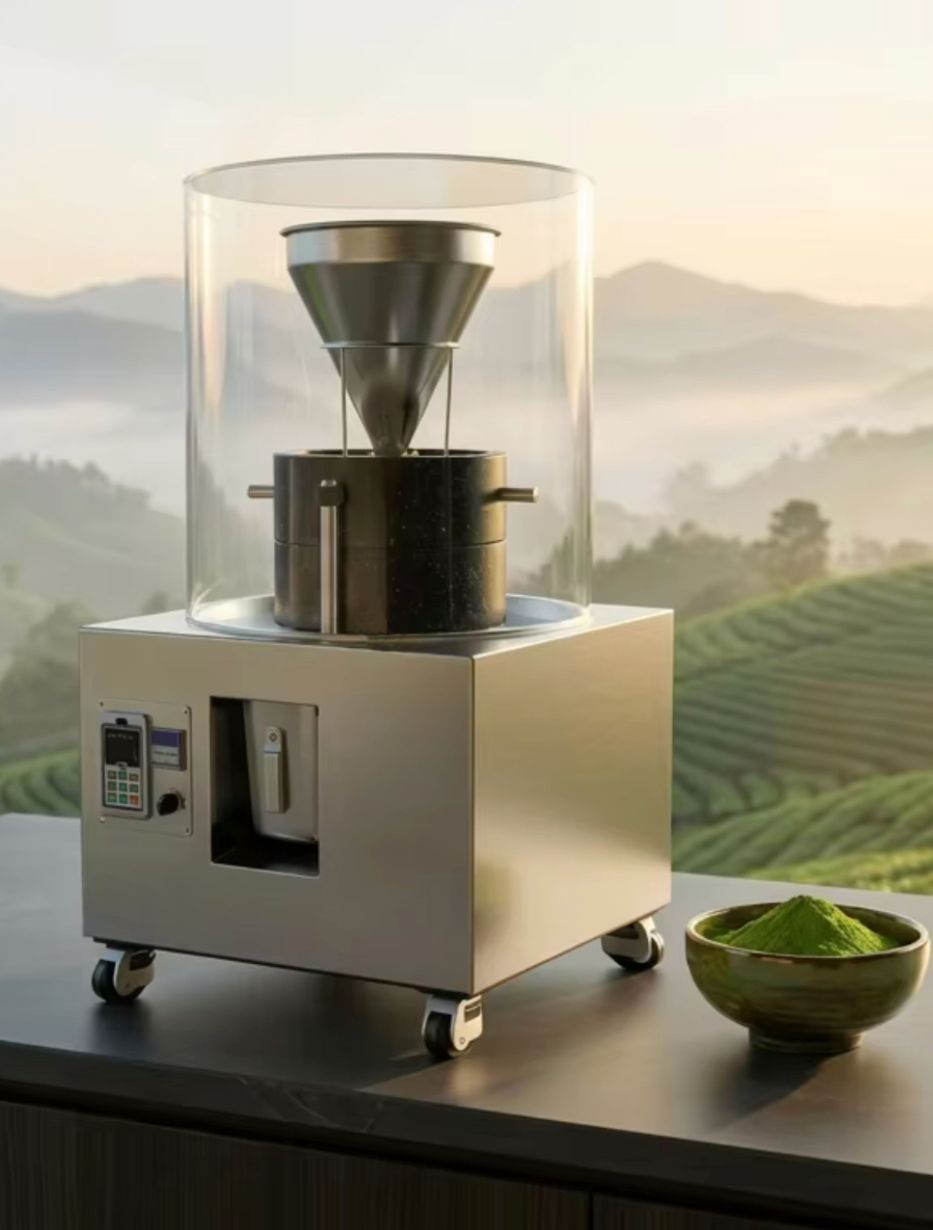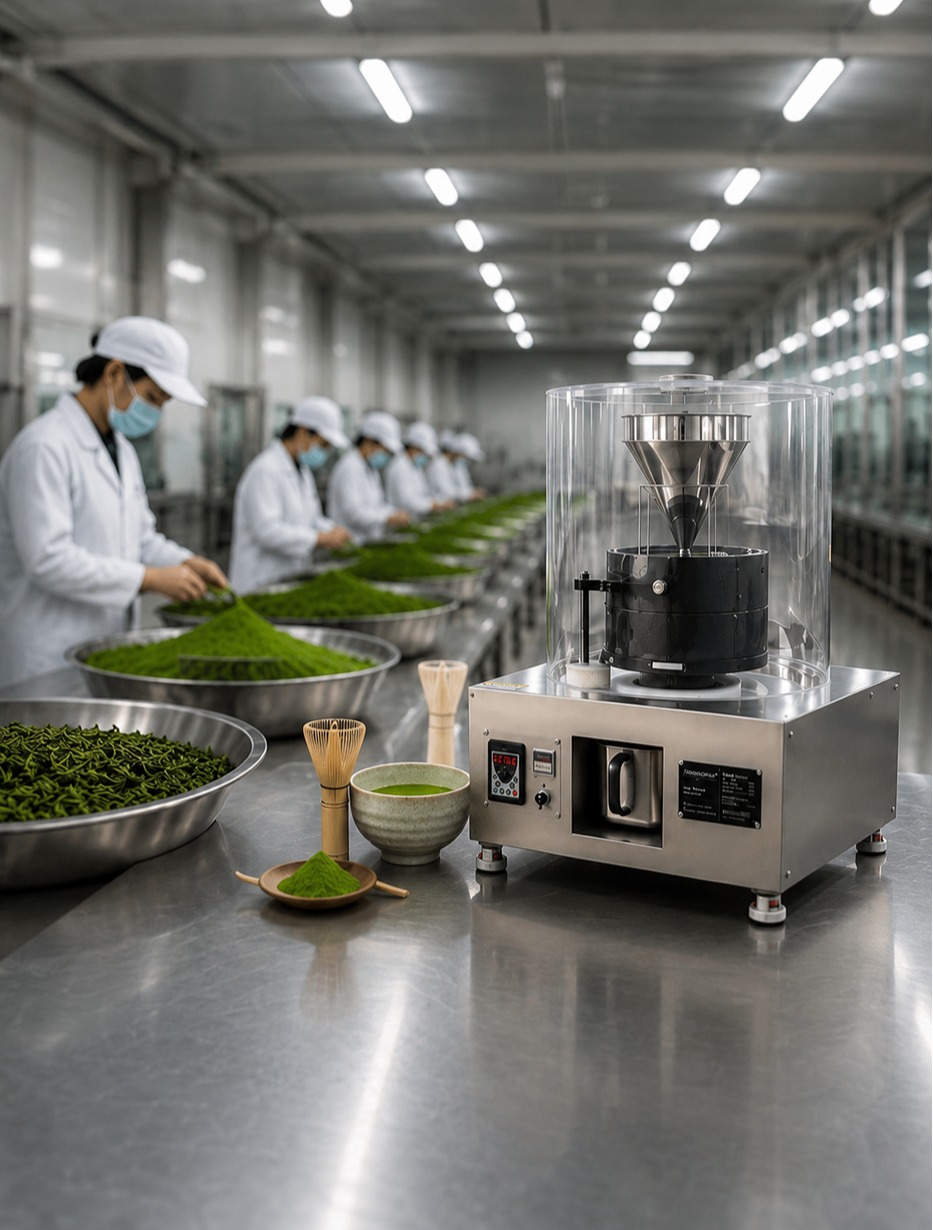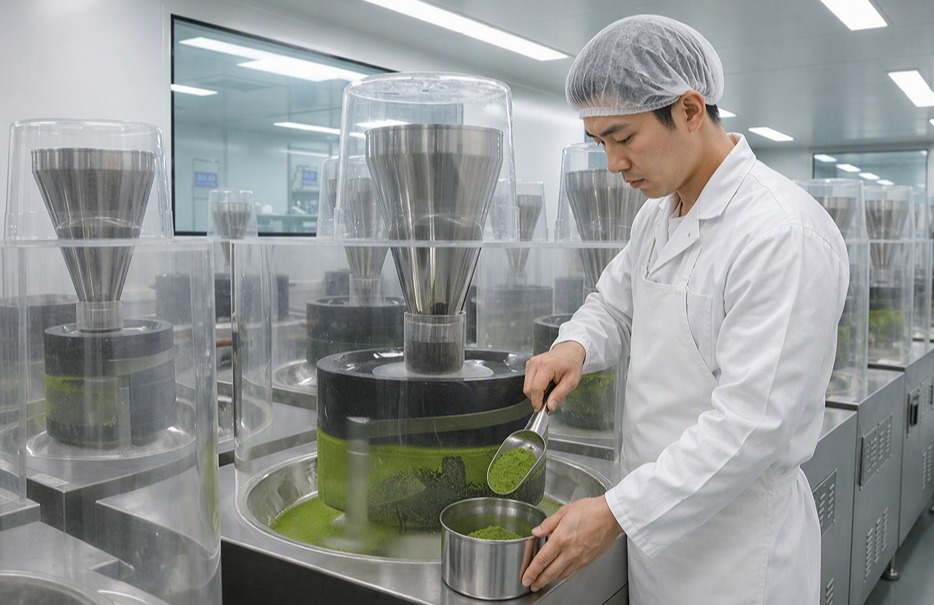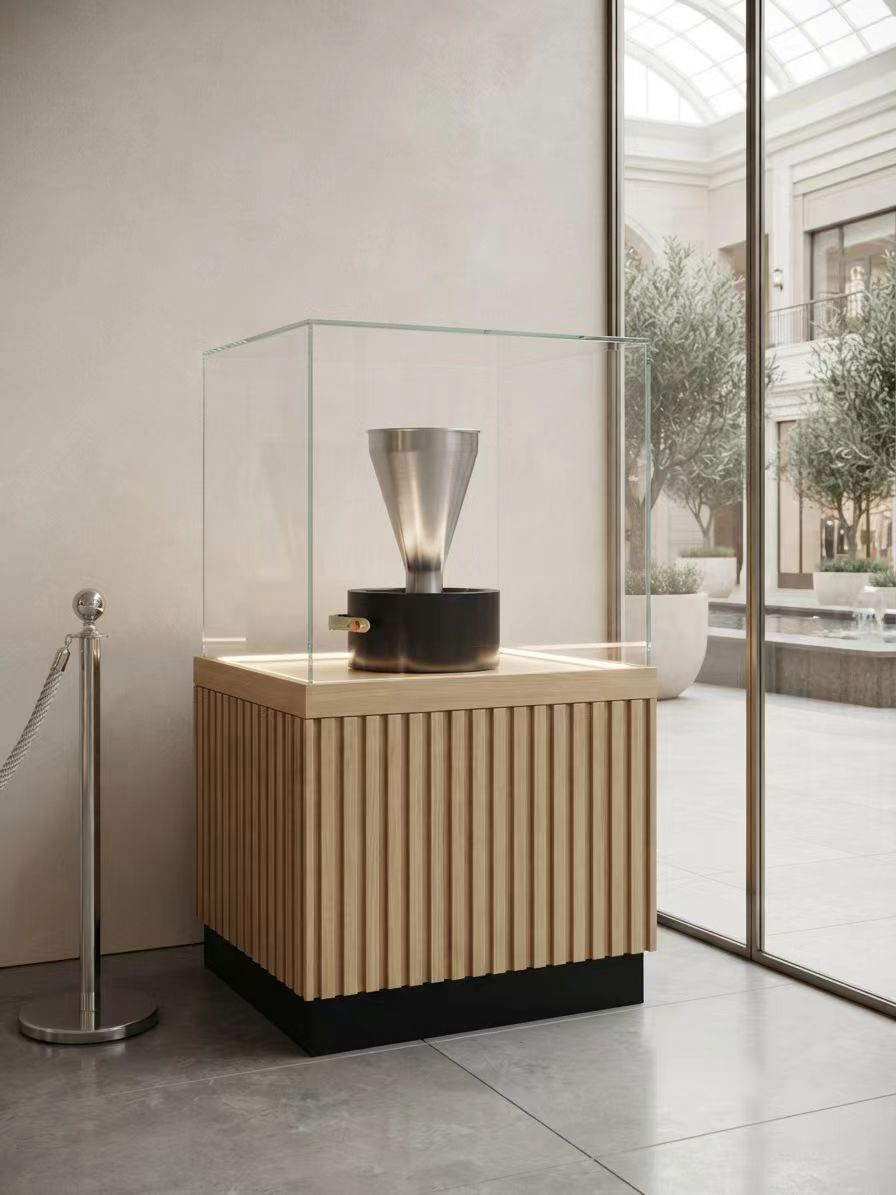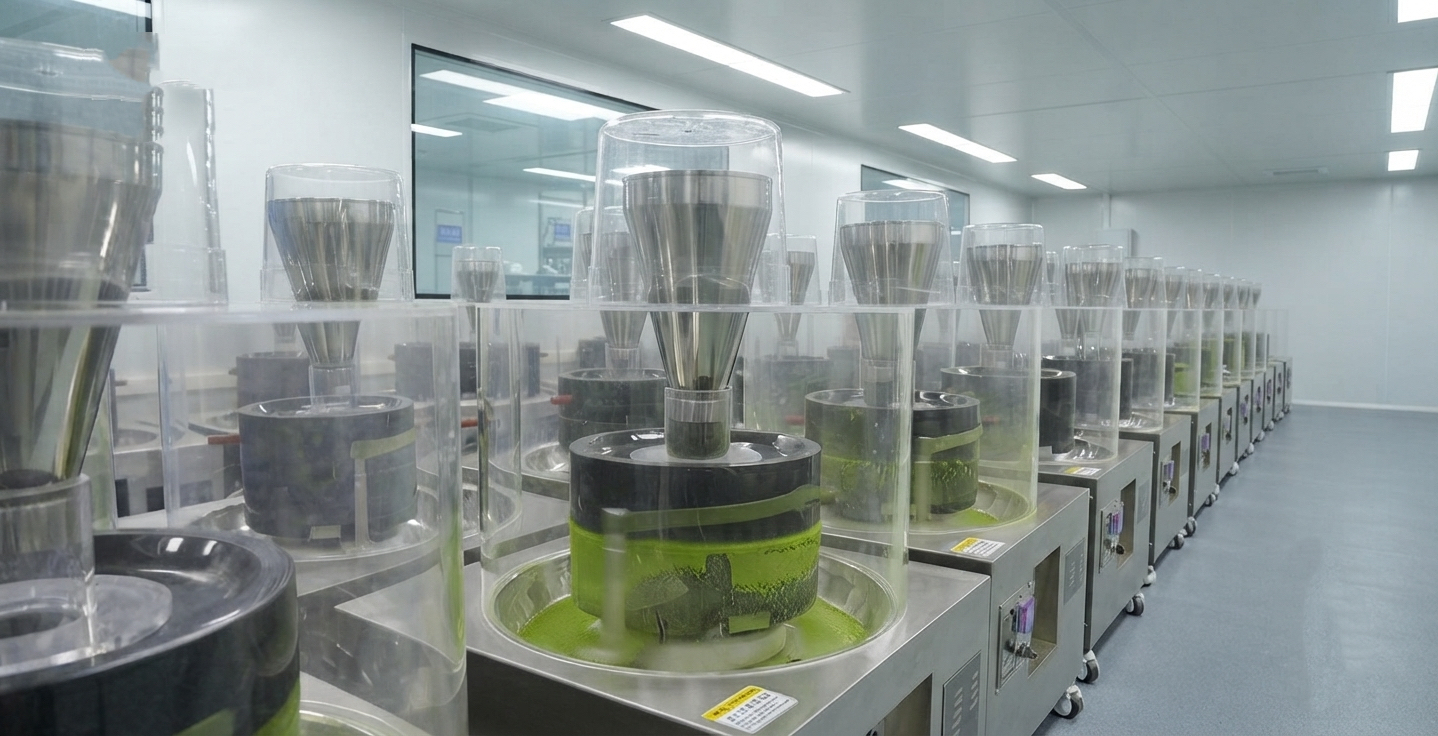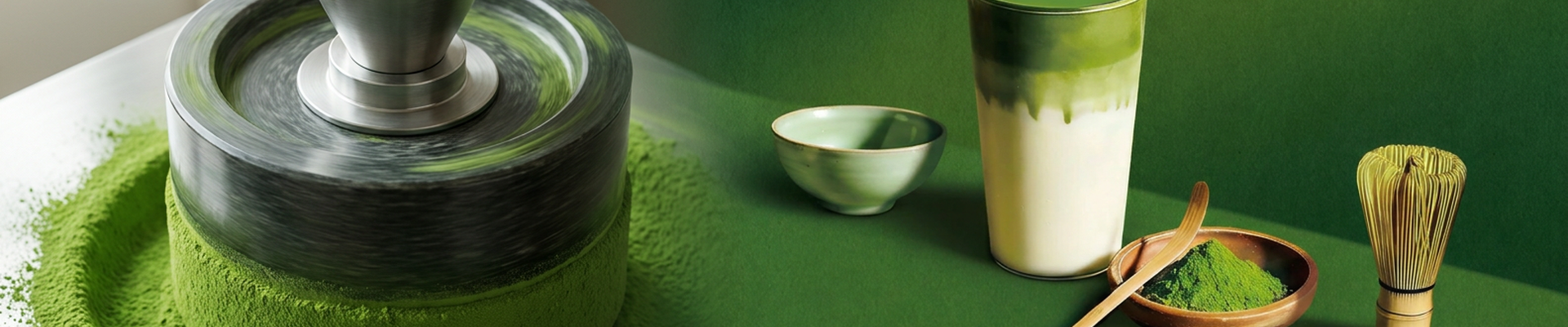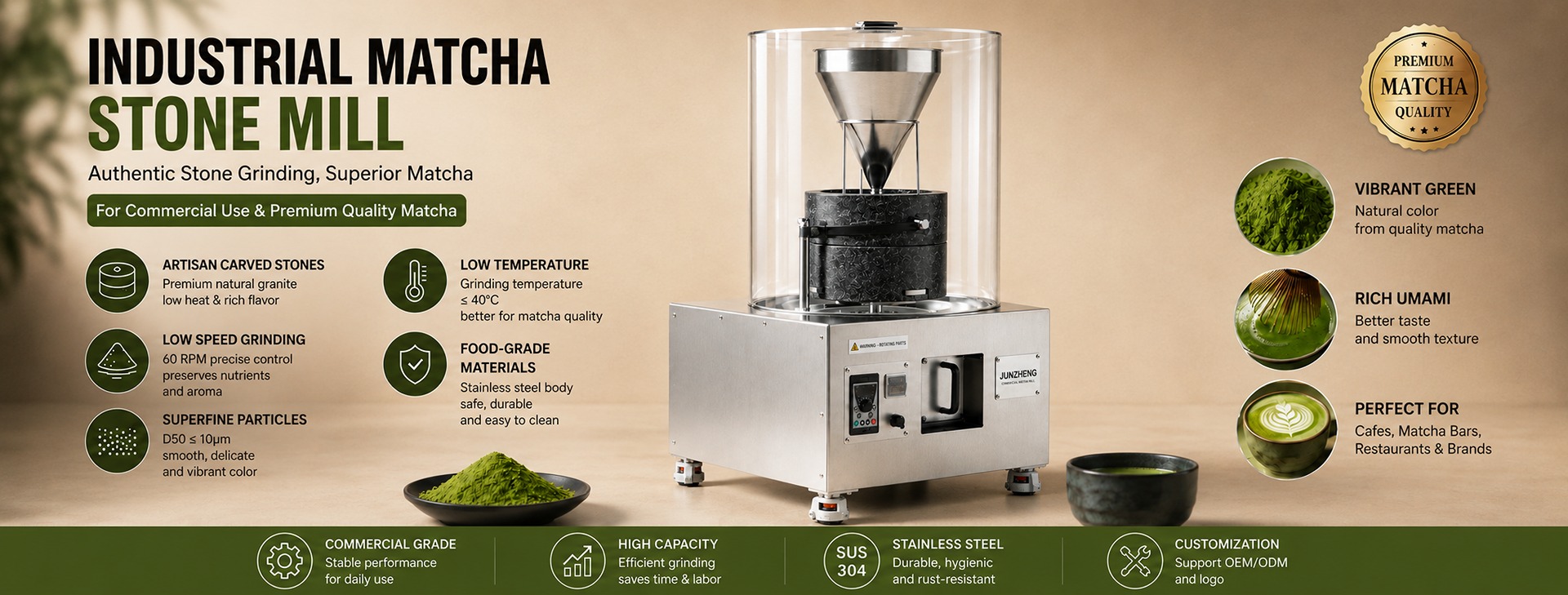
When people look at a traditional matcha stone mill, the first thing they often notice is the stone itself.
But the grinding stone is much more than a simple mechanical component.
For centuries, carefully selected natural stone has been used to grind tencha into fine matcha powder. Today, natural granite remains an important material for professional matcha stone mills because its physical characteristics can provide the hardness, durability and stable grinding surface required for controlled stone grinding.
So why is granite used for matcha stone mills?
The answer lies in the relationship between the stone material, grinding surface, rotation speed, temperature and tea material.
What Is a Matcha Grinding Stone Made Of?
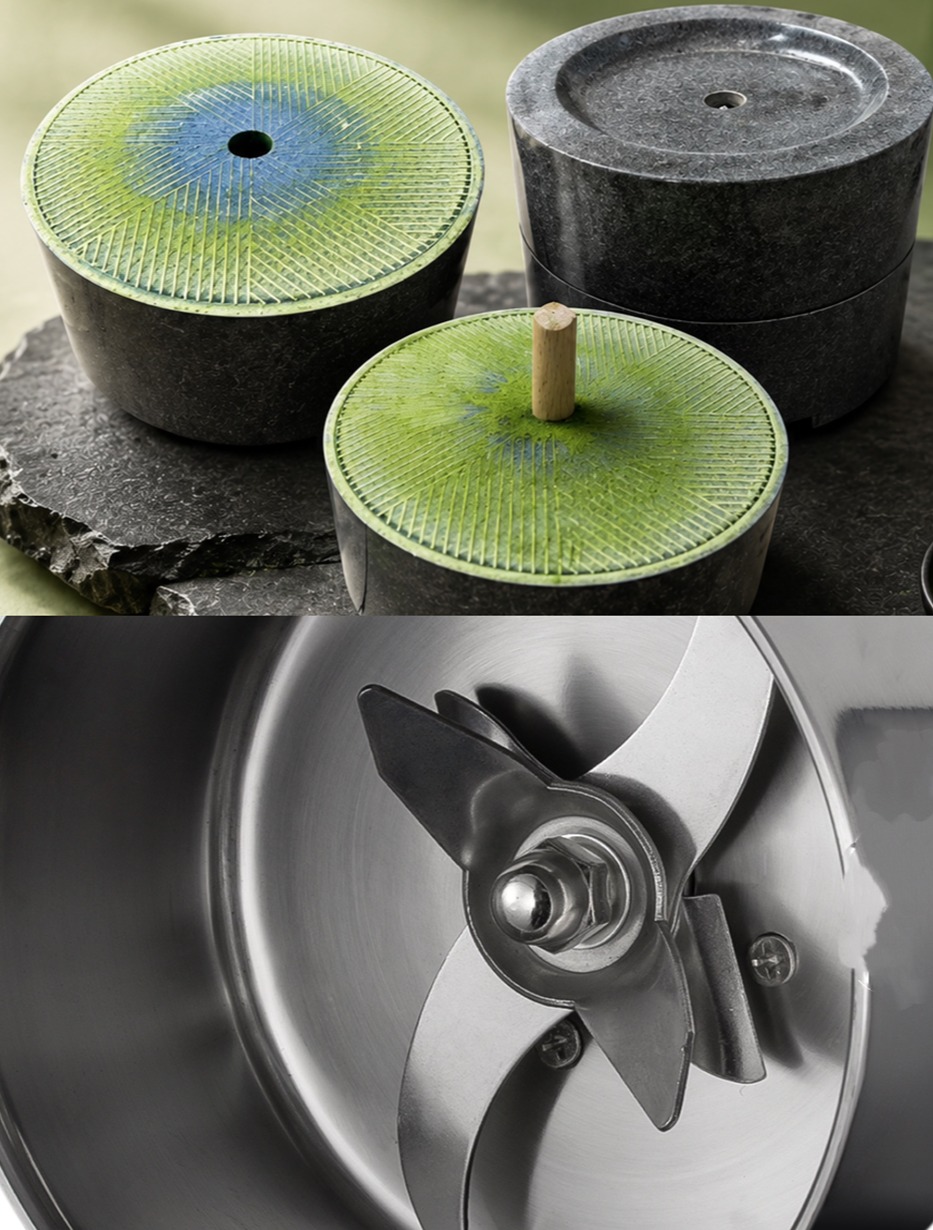
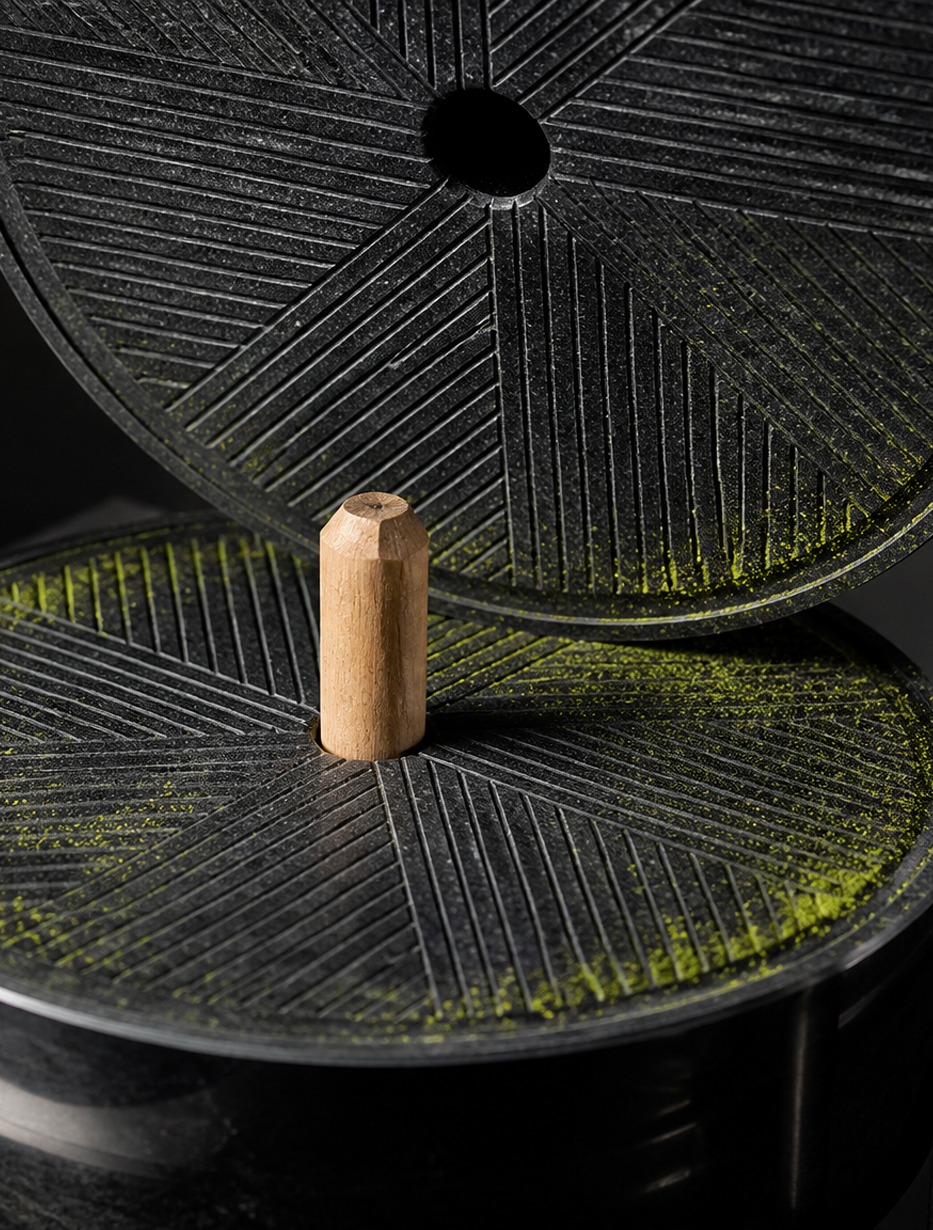
A traditional matcha stone mill uses two carefully prepared grinding stones.
The stones form the primary grinding surface of the machine. Tencha enters between the stones and is gradually reduced into fine powder as the rotating stone moves against the stationary surface.
For professional applications, the material needs to withstand repeated mechanical contact while maintaining a stable grinding surface.
Natural granite is well suited to this type of application because of its combination of hardness, durability and structural stability.
However, not every piece of granite is automatically suitable for matcha grinding.
The selection and preparation of the stone are important parts of the grinding system.
Why Is Granite Suitable for Matcha Grinding?
Several physical characteristics make granite a practical material for stone grinding.
- High Hardness
The grinding surface needs to withstand repeated contact during operation.
Granite is a hard natural stone that can maintain its structural integrity during long-term use when properly selected and prepared.
This helps the grinding stones maintain a stable working surface.
2. Good Durability
A commercial matcha stone mill may operate repeatedly over many years.
The grinding stones therefore need to be durable enough for regular commercial use.
Properly selected granite can provide long-lasting performance while maintaining the characteristics required for controlled grinding.
3. Stable Grinding Surface
The surface characteristics of the grinding stone directly influence how tencha moves through the grinding area.
A stable and properly prepared surface helps create more predictable grinding conditions.
For commercial users, consistency is particularly important.
The objective is not simply to grind tea as finely as possible, but to achieve stable results from one batch to another.
4. Natural Surface Characteristics
Natural stone has physical characteristics that differ from manufactured grinding materials.
The texture and structure of the stone influence the interaction between the tea material and grinding surface.
This is one reason traditional matcha stone grinding has remained closely associated with carefully selected natural stone.
Does the Type of Granite Matter?
Yes.
This is an important point for anyone considering a commercial matcha stone mill.
The word “granite” describes a broad family of natural stones. Different granite materials can vary in hardness, mineral composition, grain structure and surface characteristics.
Therefore, choosing a grinding stone should not be based simply on the name of the stone.
Professional stone selection considers whether the material is appropriate for:
- Grinding performance
- Surface stability
- Durability
- Grinding texture
- Long-term operation
- Intended matcha application
The stone must then be processed and finished appropriately for use as a grinding surface.
Why Not Use Any Ordinary Stone?
It may seem that any hard stone could be used to grind tea.
In practice, the situation is more complicated.
A grinding stone needs to provide a controlled and stable interaction with the tea material.
If the material or surface is unsuitable, it may affect:
- Grinding consistency
- Particle distribution
- Material flow
- Surface wear
- Machine performance
The goal of a professional matcha stone mill is therefore not simply to use a “stone.”
It is to create a carefully engineered grinding system around a suitable stone material.
Granite and Temperature Control
Temperature is another important consideration in matcha grinding.
Grinding creates friction, and friction produces heat.
High-speed grinding systems can generate significant heat depending on the design and operating conditions.
Traditional stone grinding uses a relatively slow grinding process. This helps manage the rate of heat generation and supports the gentle processing characteristics associated with premium matcha.
The stone material is only one part of this process.
Temperature control depends on the entire grinding system, including:
- Stone design
- Grinding speed
- Grinding pressure
- Feeding rate
- Grinding gap
- Operating environment
This is why a professional matcha stone mill should be evaluated as a complete system rather than by looking at the stone material alone.
How Does Granite Affect Matcha Powder?
The grinding stone influences the way tencha is progressively reduced into powder.
A properly designed grinding surface helps create the fine texture associated with stone-ground matcha.
The final powder characteristics, however, are influenced by many factors, including:
- Tencha quality
- Tea moisture
- Grinding speed
- Feeding rate
- Grinding stone characteristics
- Grinding gap
- Operating temperature
Therefore, it would be misleading to say that granite alone determines matcha quality.
Instead, granite is one important component within a carefully controlled grinding process.
Natural Granite vs. Artificial Grinding Materials
Modern grinding equipment can use a variety of manufactured materials.
These materials may offer advantages in certain industrial applications, particularly where extremely high processing speeds or specialized grinding requirements are needed.
However, matcha is a particularly delicate product.
Premium matcha production often prioritizes:
- Fine powder texture
- Controlled grinding
- Low heat generation
- Traditional processing
- Sensory quality
For businesses that want to preserve the traditional identity of stone-ground matcha, natural granite remains an attractive choice.
What Should Buyers Look for in a Granite Matcha Stone Mill?
If you are purchasing a commercial matcha stone mill, don’t evaluate the machine based only on whether it uses granite.
Consider the entire grinding system.
Stone Material
Ask what type of natural stone is used and how it has been selected and prepared.
Grinding Surface
The design and condition of the grinding surface are critical to stable performance.
Rotation Speed
Slow and controlled rotation is an important characteristic of traditional matcha stone grinding.
Grinding Gap
The relationship between the two grinding surfaces influences material flow and final powder characteristics.
Feeding System
A stable feeding system helps prevent excessive material accumulation and supports consistent grinding.
Temperature Management
The machine should be designed to control heat generation during operation.
Maintenance
Grinding stones and other components require proper cleaning, inspection and maintenance to maintain stable performance.
Why Does JUNZHENG Use Natural Granite?
At JUNZHENG, we believe that a professional matcha stone mill should respect the fundamental principles of traditional stone grinding while incorporating modern commercial equipment design.
Our commercial matcha stone mills use carefully selected natural granite grinding stones combined with a controlled low-speed grinding system.
The objective is not simply to produce powder.
It is to provide a stable grinding environment that helps professional users achieve consistent matcha quality while maintaining the traditional character of stone-ground matcha.
Each part of the system—from the grinding stone and mechanical structure to the feeding and powder collection design—needs to work together.
The Stone Is Only the Beginning
A natural granite grinding stone is an important part of a matcha stone mill, but it is not the only factor that determines performance.
The best results come from the interaction between:
Suitable tea material + carefully selected stone + precise grinding structure + controlled speed + proper feeding + temperature management.
Understanding this relationship helps buyers make better decisions when selecting commercial matcha grinding equipment.
Conclusion
Natural granite has remained an important material for matcha stone mills because it combines hardness, durability and stable grinding characteristics suitable for controlled stone grinding.
However, choosing the right granite is only one part of building a professional matcha grinding system.
For commercial users, the quality of the grinding stone should always be considered together with the machine structure, grinding speed, feeding system, grinding gap and temperature management.
Traditional stone grinding is not simply about using two pieces of stone.
It is a carefully controlled process that combines material science, mechanical engineering and centuries of matcha-making tradition.
Looking for a Commercial Matcha Stone Mill?
JUNZHENG provides professional electric matcha stone mills designed for cafés, tea houses, specialty beverage businesses, matcha brands and commercial applications.
Explore our Commercial Matcha Stone Mill or contact our technical team to discuss your application and grinding requirements.