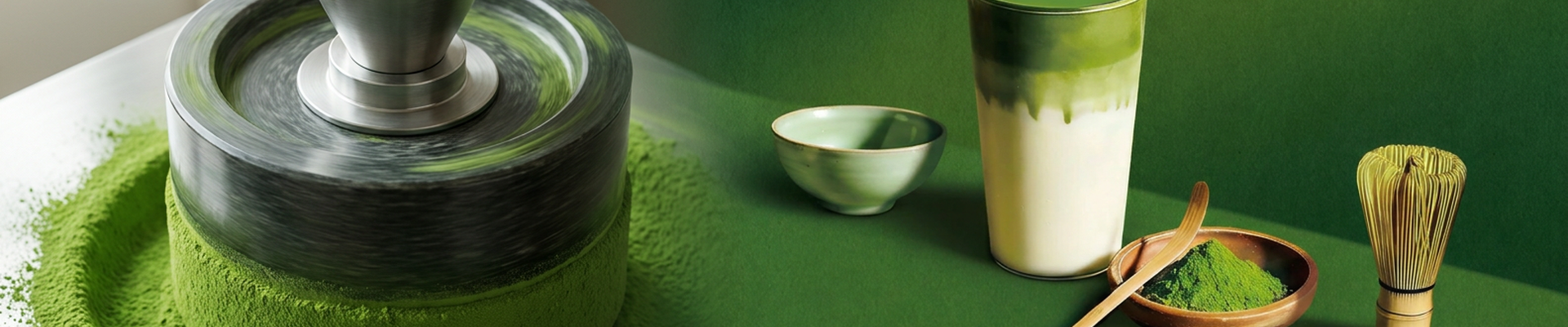
When looking for a way to turn tea leaves into matcha powder, buyers may encounter many different types of grinding equipment.
Some machines use rapidly rotating blades, while traditional matcha stone mills use two carefully prepared grinding stones.
At first glance, both machines appear to perform the same basic function: reducing tea leaves into powder.
However, the grinding principles are very different.
For businesses producing or serving premium matcha, understanding these differences is important when choosing the right equipment.
In this guide, we compare matcha stone mills and blade grinders based on grinding method, speed, temperature, particle characteristics, consistency, operation and commercial applications.
What Is a Matcha Stone Mill?
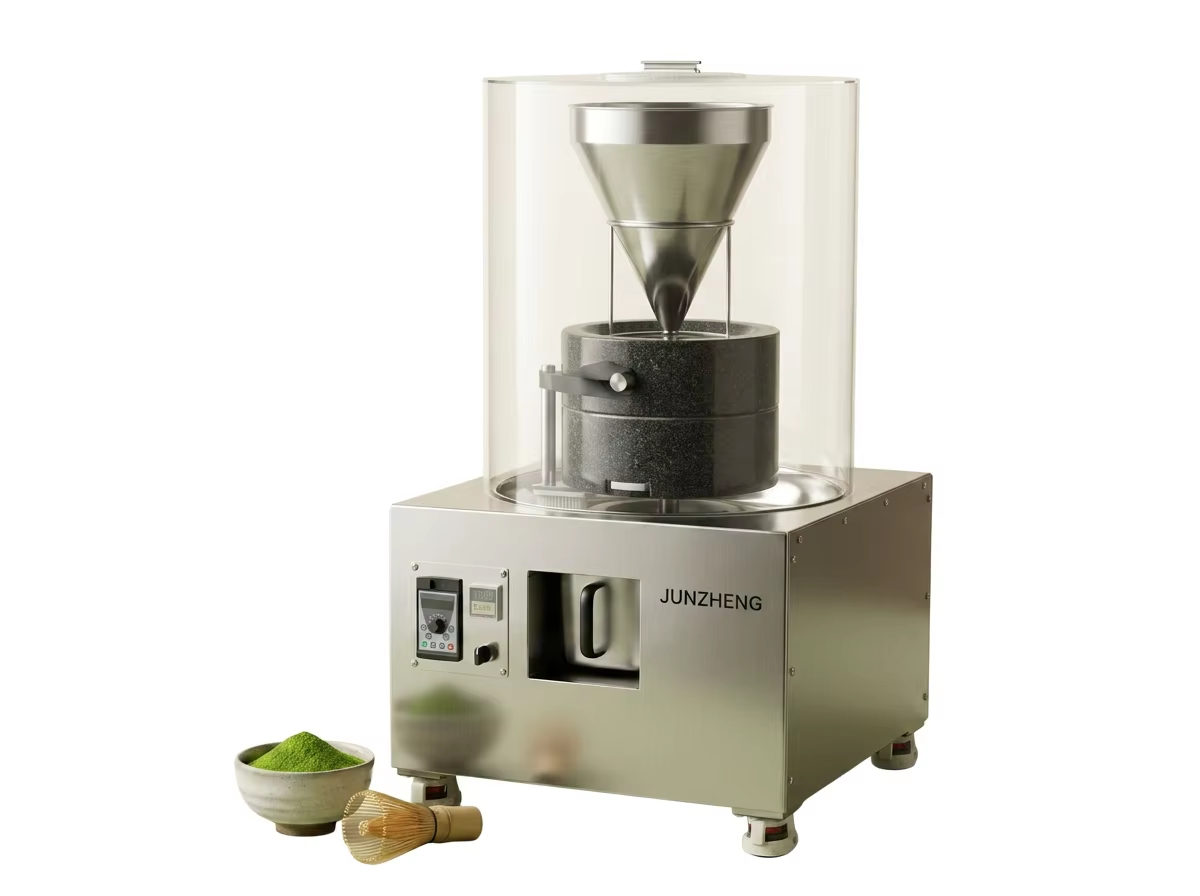
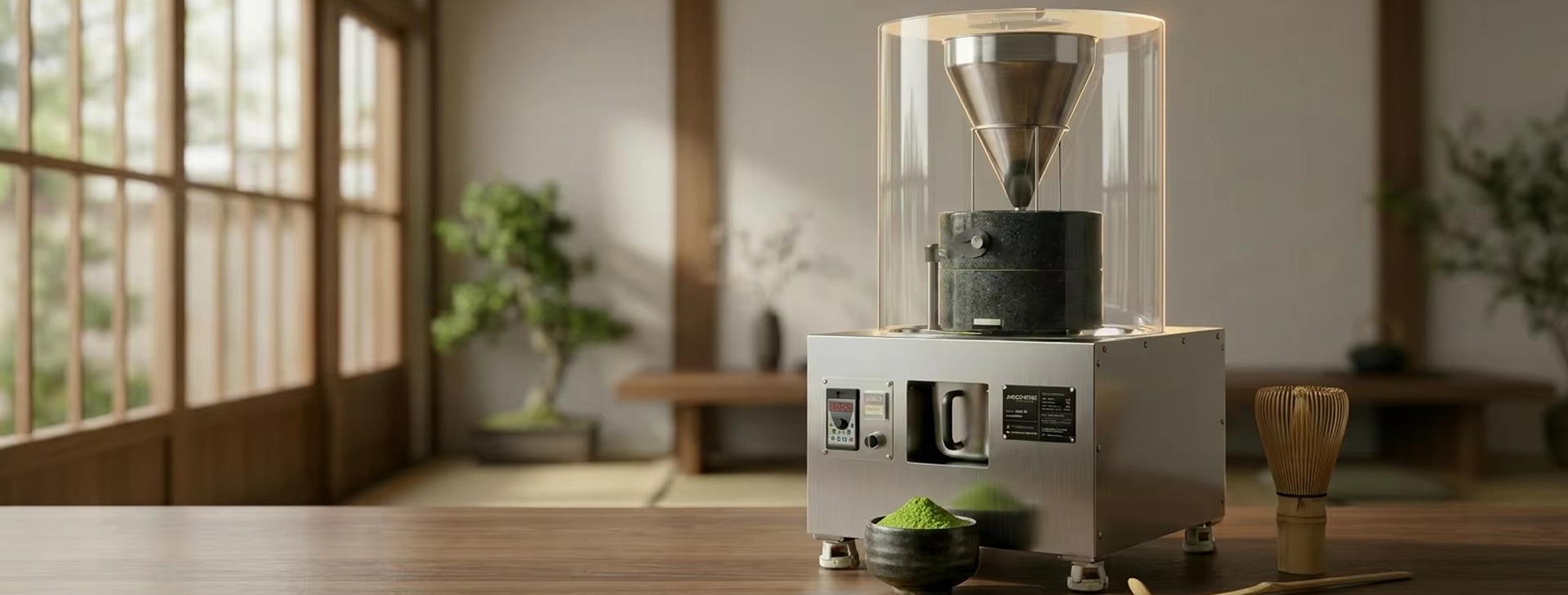
A matcha stone mill uses two grinding stones to gradually reduce tencha into very fine powder.
The upper stone rotates at a controlled speed while the lower stone remains stationary.
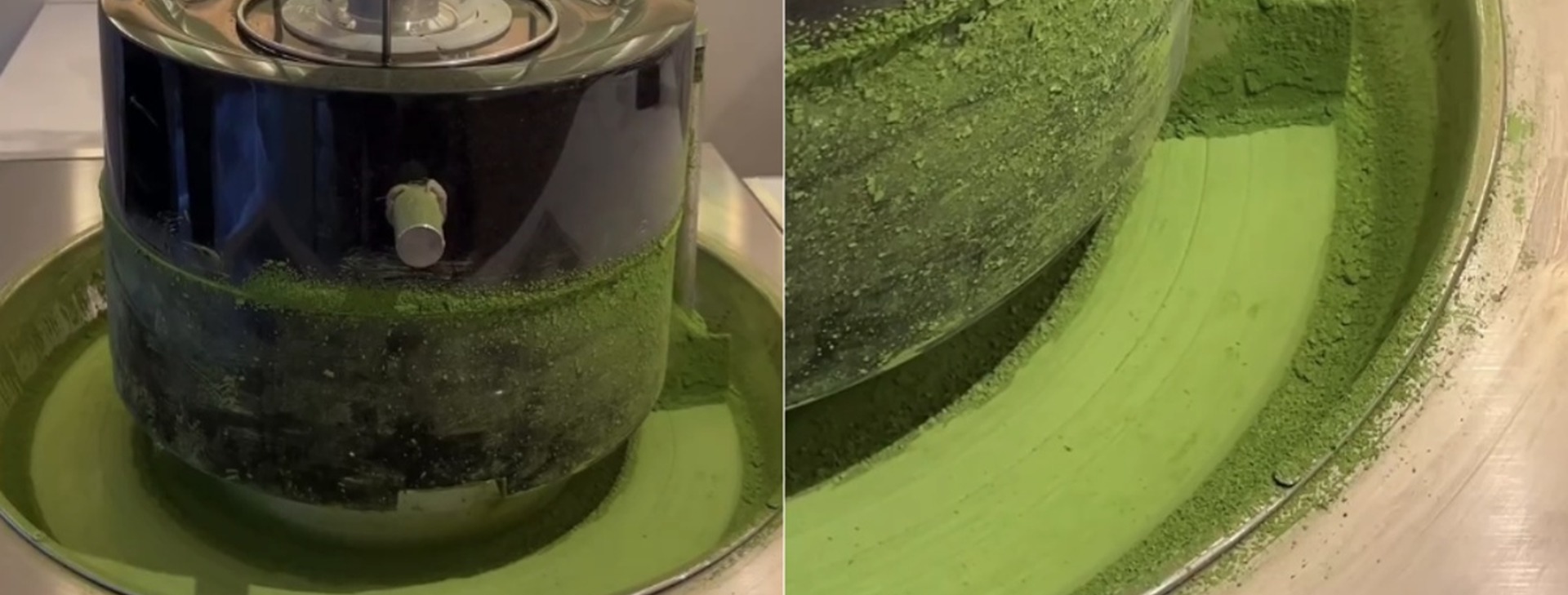
Tencha enters near the center of the grinding surface and gradually moves through the space between the stones.
As it travels through the grinding area, the tea material is progressively crushed and reduced into fine powder.
This is the traditional grinding principle associated with high-quality matcha production.
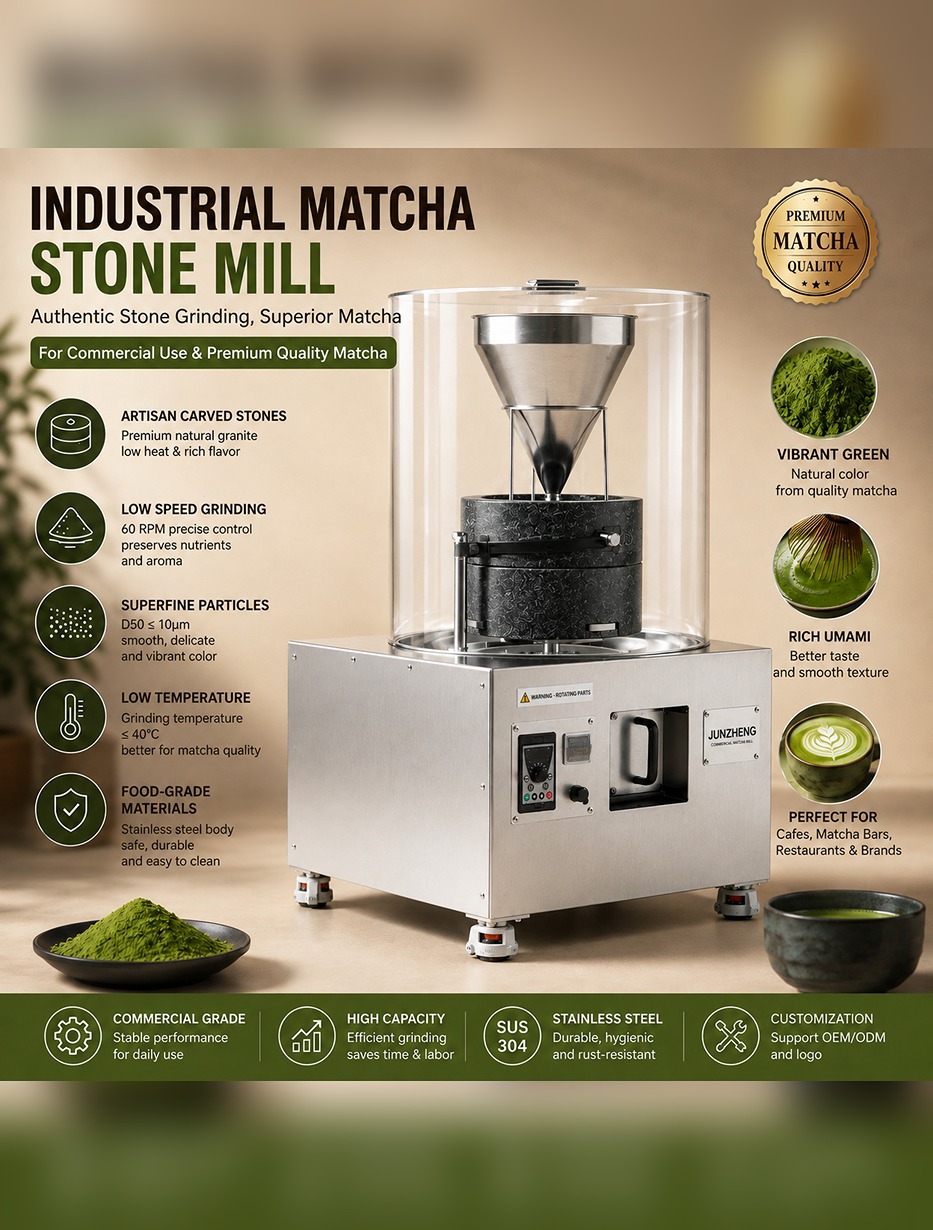
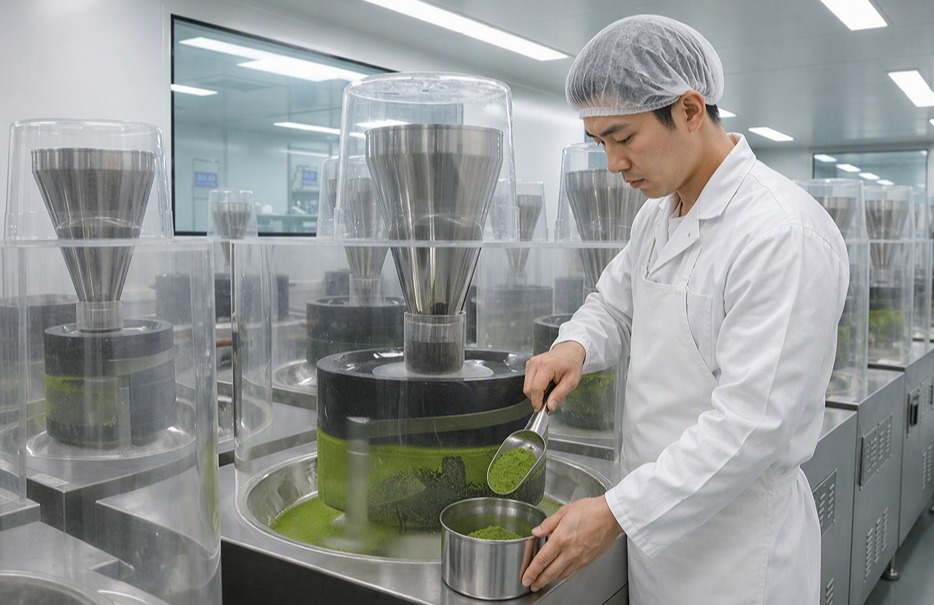
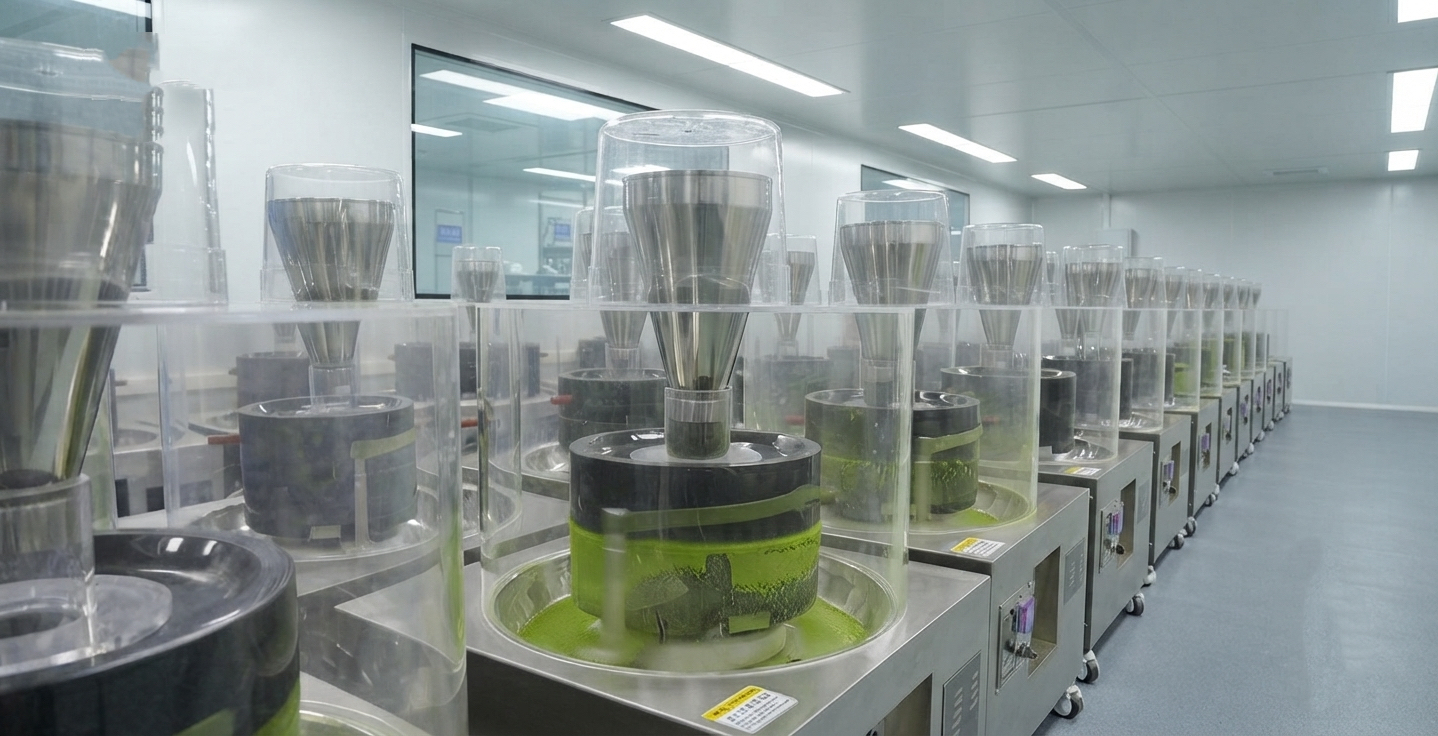
Modern commercial electric matcha stone mills combine this principle with a motor-driven system, allowing businesses to produce matcha more efficiently while maintaining controlled grinding conditions.
What Is a Blade Grinder?
A blade grinder uses rapidly rotating blades to cut, break and disperse material.
This type of grinder is widely used for many food and beverage ingredients because it can process materials quickly.
For applications where processing speed is the primary requirement, a blade-based system can be practical.
However, grinding matcha is a specialized application.
The objective is not simply to break tea leaves into smaller pieces. Premium matcha requires extremely fine powder and careful control of the grinding process.
This is where the difference between the two technologies becomes important.
How Are the Two Grinding Methods Different?
The fundamental difference is the way mechanical energy is applied to the tea material.
Stone Grinding
Stone grinding relies on controlled pressure and friction between grinding surfaces.
The tea material is gradually reduced as it passes through the grinding stones.
Blade Grinding
Blade grinding relies primarily on rapidly rotating cutting surfaces.
The tea material is repeatedly struck and cut by the blades.
These different mechanisms influence the speed, temperature, particle characteristics and overall grinding process.
Grinding Speed
One of the most obvious differences is grinding speed.
Blade grinders generally operate at much higher rotational speeds.
This allows them to process material rapidly.
A stone mill operates much more slowly.
This slower operation is intentional.
Traditional matcha grinding prioritizes controlled processing rather than maximum mechanical speed.
For premium matcha, faster is not necessarily better.
The appropriate grinding speed depends on the characteristics of the tea material and the desired powder quality.
Temperature During Grinding
Grinding generates friction, and friction generates heat.
High-speed grinding can introduce more mechanical energy into the material over a shorter period of time.
Depending on the equipment design, operating conditions and feeding rate, this can increase the rate of heat generation.
Stone grinding operates at a much slower speed.
This allows the grinding process to be controlled more carefully and can help manage heat generation.
For premium matcha, temperature management is important because excessive heat can affect the sensory characteristics of tea powder.
This does not mean that stone grinding produces no heat.
Rather, the objective is to control heat generation throughout the grinding process.
Particle Size and Powder Texture
Another important difference is the way particles are produced.
Blade grinders break and cut tea material at high speed.
The resulting powder may contain particles with a wider range of sizes depending on the grinder design and operating conditions.
A stone mill gradually reduces the material as it passes through the grinding surface.
This controlled process is well suited to producing the extremely fine powder associated with traditional matcha.
For businesses serving premium matcha beverages, powder texture can have a noticeable effect on the drinking experience.
Grinding Consistency
Consistency is especially important for commercial users.
A café or matcha brand may need to produce the same type of powder repeatedly.
The grinding result depends on many variables, including:
- Raw material
- Grinding speed
- Feeding rate
- Grinding gap
- Grinding surface
- Moisture condition
- Operating temperature
A professionally designed stone mill allows these factors to be controlled as part of one grinding system.
This can help commercial users achieve more predictable results.
Why Does Matcha Need Such Fine Powder?
Traditional matcha is consumed as a suspension rather than being brewed and filtered like conventional loose-leaf tea.
The powder is whisked or mixed directly into water, milk or other beverage ingredients.
Because the tea material itself remains in the final drink, particle size becomes particularly important.
Very coarse particles can create a rougher mouthfeel and may settle more quickly.
Fine matcha powder provides the smooth texture and appearance expected from premium matcha.
This is one of the reasons specialized matcha grinding equipment is different from a general-purpose herb or spice grinder.
Is a Blade Grinder Always the Wrong Choice?
No.
A blade grinder can still be useful for certain applications.
If a business needs to process tea or other ingredients rapidly and does not require the characteristics associated with traditional stone-ground matcha, a high-speed grinder may be appropriate.
The right equipment depends on the intended application.
For example:
General ingredient processing
Speed and throughput may be the primary considerations.
Premium matcha production
Fine powder, controlled grinding and traditional processing characteristics may be more important.
The question is therefore not simply:
Which machine is better?
A better question is:
Which grinding method is better suited to your product and business?
Stone Mill vs. Blade Grinder: Comparison
| Feature | Matcha Stone Mill | Blade Grinder |
|---|---|---|
| Grinding principle | Controlled stone grinding | High-speed cutting |
| Typical operating speed | Low | High |
| Heat management | Designed for controlled grinding | Depends strongly on speed and design |
| Powder characteristics | Very fine, traditional stone-ground texture | Depends on blade design and operation |
| Matcha specialization | High | General-purpose |
| Traditional processing | Yes | No |
| Commercial premium matcha | Well suited | Application dependent |
| Processing speed | Relatively slow | Generally faster |
| Grinding experience | Traditional craftsmanship | High-speed mechanical processing |
The comparison shows that the two technologies are designed around different priorities.
When Should You Choose a Matcha Stone Mill?
A commercial matcha stone mill may be a good choice if your business prioritizes:
- Premium matcha quality
- Traditional stone grinding
- Fine powder texture
- Controlled grinding conditions
- Consistent commercial production
- Freshly ground matcha
- Japanese-inspired craftsmanship
- Premium customer experience
Typical users include:
Food and beverage businesses
Matcha cafés
Specialty beverage shops
Japanese tea houses
Matcha brands
Tea retailers
Specialty tea producers
Food and beverage businesses
When Might a Blade Grinder Make More Sense?
A blade grinder may be more suitable when:
- Maximum processing speed is the priority
- The application is not focused on premium matcha
- Powder fineness requirements are less demanding
- The equipment is used for multiple general-purpose ingredients
- The business prioritizes low initial equipment cost
Understanding these differences can help businesses avoid buying equipment based solely on price.
Don’t Compare Machines by Price Alone
One of the biggest mistakes buyers can make is comparing a professional matcha stone mill directly with a general-purpose grinder simply by purchase price.
A low-cost grinder may appear attractive initially.
However, the machines may have completely different purposes.
A professional matcha stone mill is designed around a specialized grinding process.
Its value comes from the complete system:
Grinding stones + grinding geometry + controlled speed + feeding system + temperature management + machine stability
The correct comparison should therefore be based on the intended application and desired result.
What Should You Ask Before Buying a Matcha Grinder?
Before purchasing equipment, commercial buyers should consider:
1. What type of tea material will you grind?
Different tea materials have different characteristics.
2. How fine does the powder need to be?
Particle size requirements should match the intended application.
3. How much matcha do you need to produce?
Capacity requirements vary between cafés, brands and manufacturers.
4. How important is temperature control?
For premium matcha, controlling grinding conditions can be an important consideration.
5. Do you want traditional stone-ground matcha?
If traditional processing is part of your brand positioning, a stone mill may be the more appropriate technology.
6. What level of consistency do you require?
Commercial businesses should consider repeatability rather than looking only at maximum output.
Why Professional Matcha Businesses Choose Stone Grinding
For a premium matcha brand, the grinding method can become part of the product itself.
Customers increasingly care about:
- Where matcha comes from
- How it is processed
- How it is prepared
- How fresh it is
- What equipment is used
A stone mill can therefore provide more than grinding functionality.
It can become part of the story behind the product.
In a specialty matcha café, freshly ground matcha can also become a visible part of the customer experience.
The slow movement of the grinding stones and the craftsmanship associated with traditional processing help communicate the premium character of the product.
How JUNZHENG Approaches Matcha Grinding
At JUNZHENG, we focus specifically on commercial matcha grinding rather than general-purpose powder processing.
Our electric matcha stone mill combines natural granite grinding stones with a controlled low-speed grinding system.
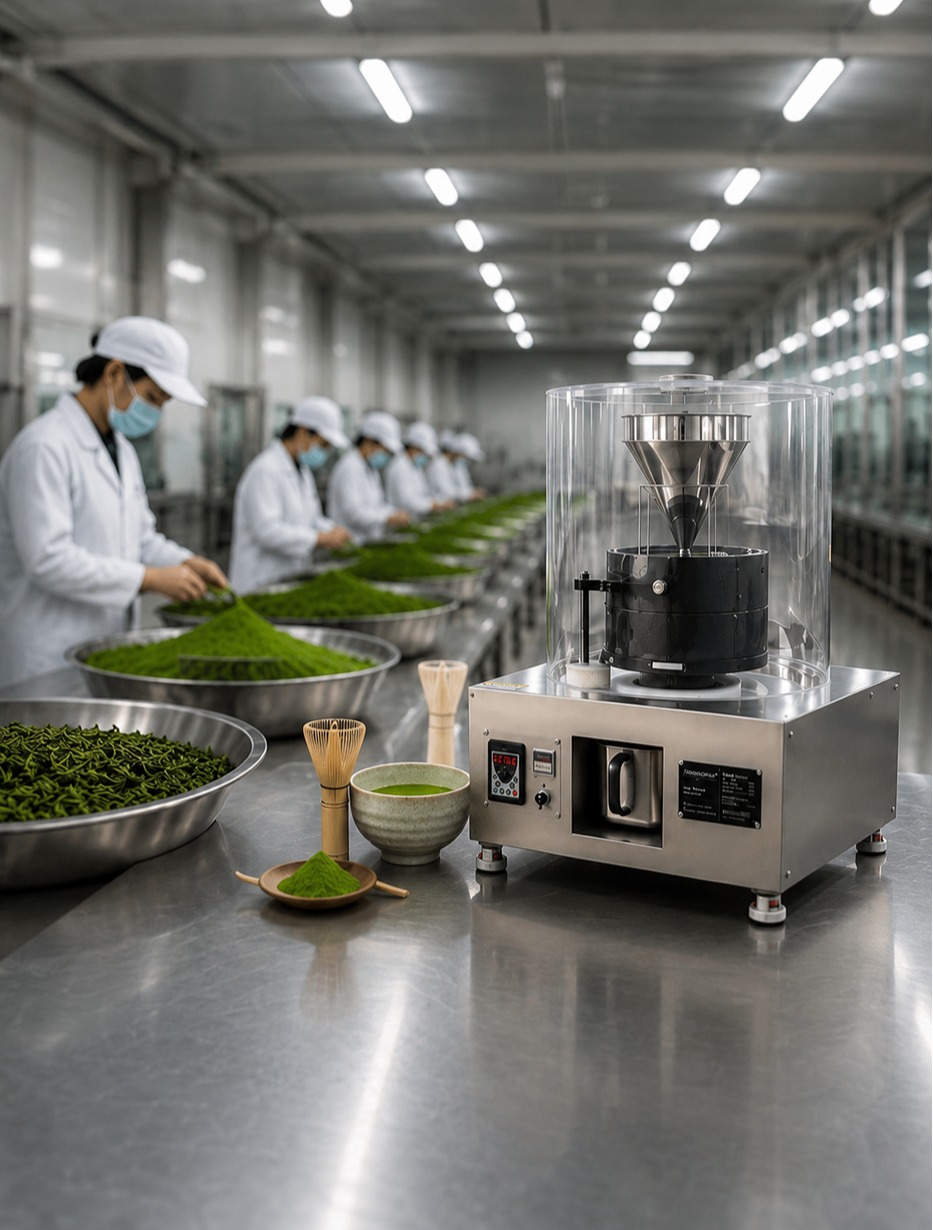
The machine is designed for professional environments such as matcha cafés, tea houses, specialty beverage businesses and matcha brands.
Our approach is based on a simple principle:
The goal is not to grind tea as quickly as possible. The goal is to create a stable grinding process that produces fine and consistent matcha powder.
For commercial buyers, this means looking beyond motor power and maximum speed.
The grinding stone, feeding system, mechanical structure, grinding speed and operating conditions all need to work together.
Which Grinder Is Right for Your Business?
There is no universal answer.
If your priority is maximum processing speed and general-purpose grinding, a high-speed blade grinder may be appropriate.
If your business focuses on premium matcha and values traditional stone grinding, fine powder texture, controlled processing and customer experience, a commercial matcha stone mill may be the better choice.
The most important factor is to choose the technology that matches your product positioning and operating requirements.
Conclusion
A matcha stone mill and a blade grinder may both produce powdered tea, but they use fundamentally different grinding principles.
Blade grinders prioritize speed and rapid mechanical processing.
Stone mills prioritize controlled grinding and the traditional production method associated with premium matcha.
For commercial matcha businesses, the right choice depends on the desired powder characteristics, production requirements, brand positioning and customer experience.
Understanding these differences before purchasing equipment can help businesses make a more informed investment.
Looking for a Professional Matcha Stone Mill?
JUNZHENG provides commercial electric matcha stone mills designed for cafés, tea houses, matcha brands and professional matcha applications.
Contact our technical team to discuss your grinding requirements and find the appropriate solution for your business.