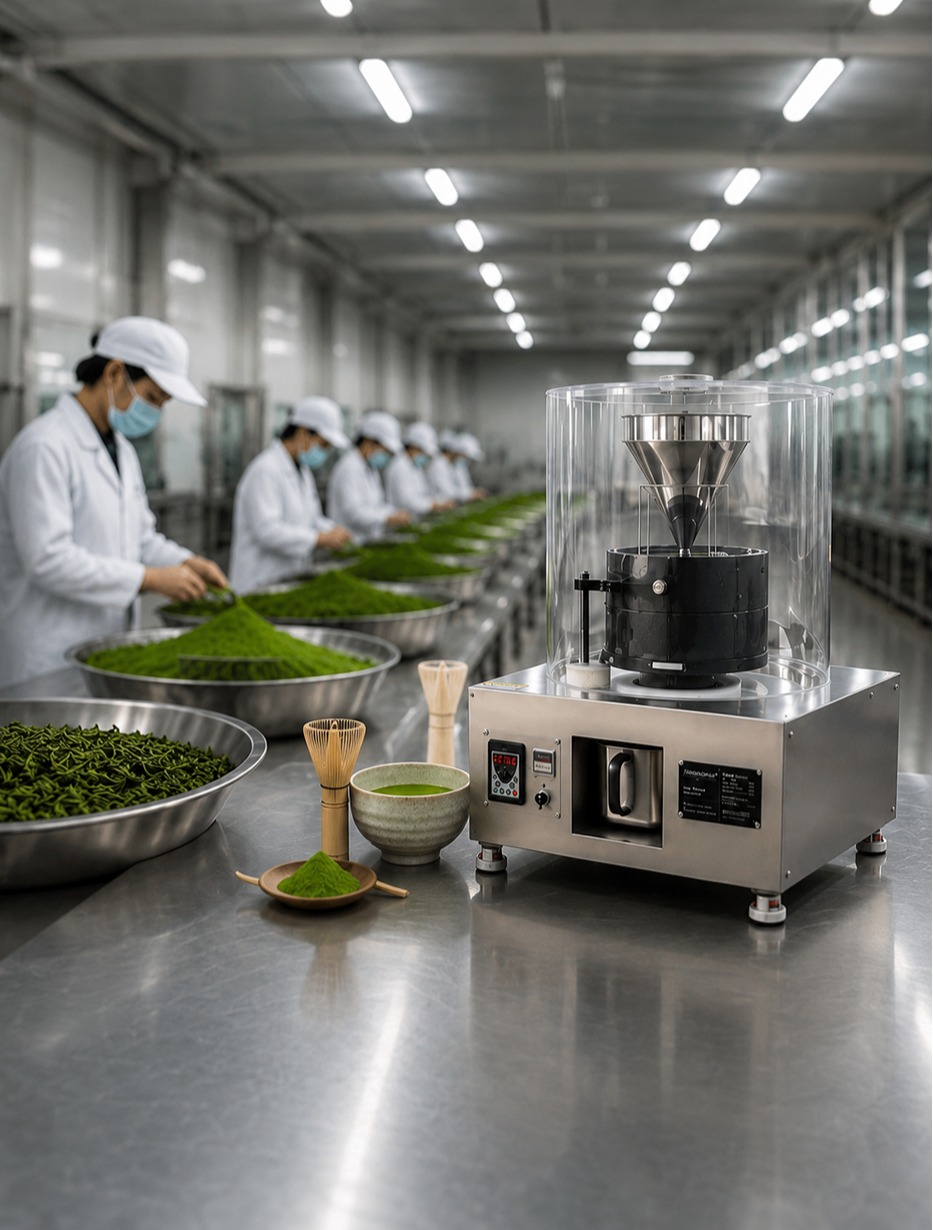
In a matcha specialty shop, tea studio, or small-batch production room, a stone mill may be both working equipment and part of the customer experience. Keeping it clean supports orderly production and makes the equipment easier to inspect.
Fine powder can remain in the feeding area, grinding grooves, and collection area after use. Maintenance therefore needs to address retained tea material, moisture, stone condition, and safe operation—not just the appearance of the stainless steel housing.
For the JUNZHENG JZ/MY-06, routine cleaning uses a soft brush to remove powder and a dry or slightly damp microfiber cloth for the exterior. Do not rinse, spray, or immerse the machine or grinding-stone components in water.
This guide explains the practical cleaning routine for the JZ/MY-06, with model-specific maintenance requirements drawn from its operating manual and JUNZHENG's clarification of the humid-environment schedule. Other mills may require different procedures. Operators must receive training before using, cleaning, or dismantling this machine.
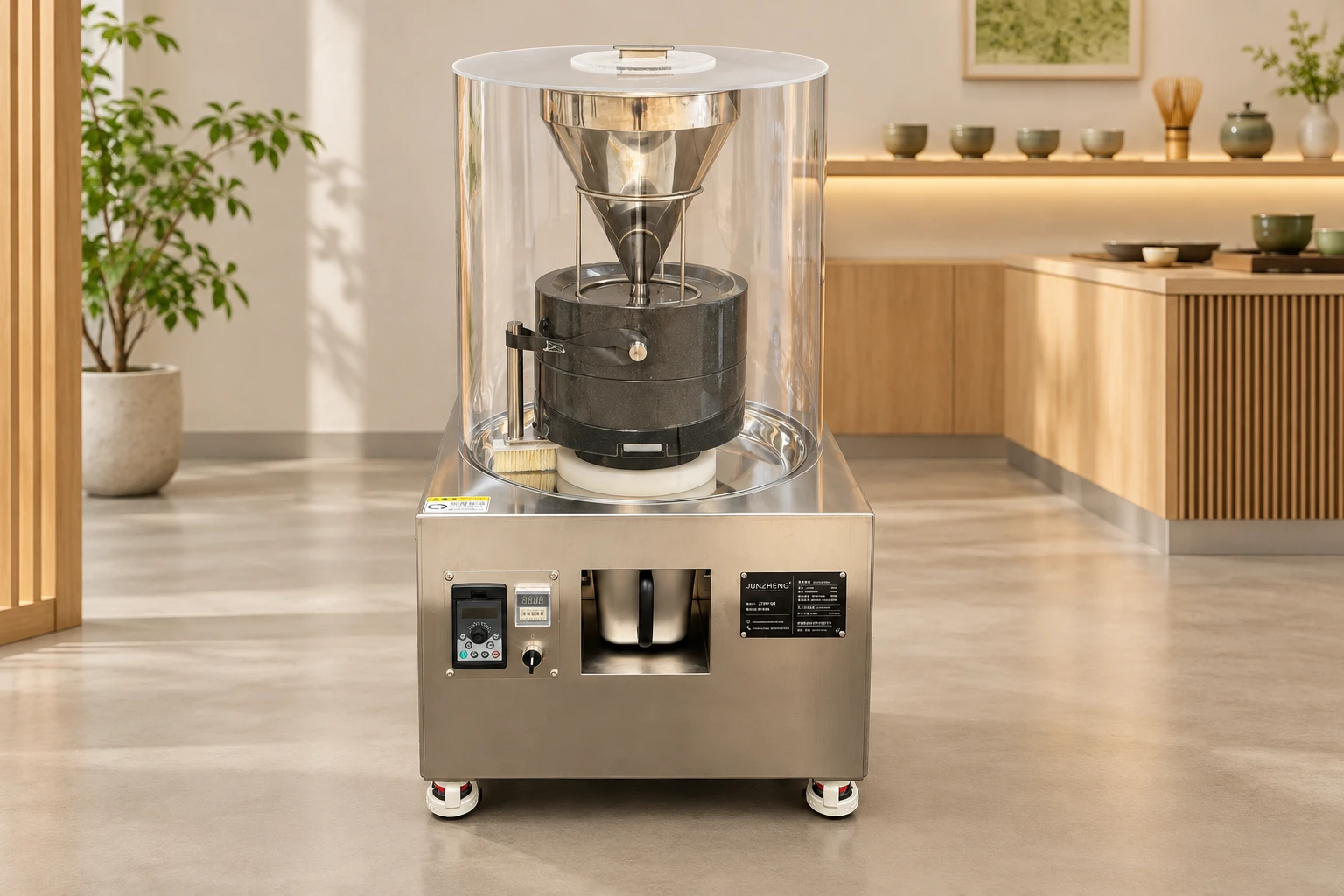
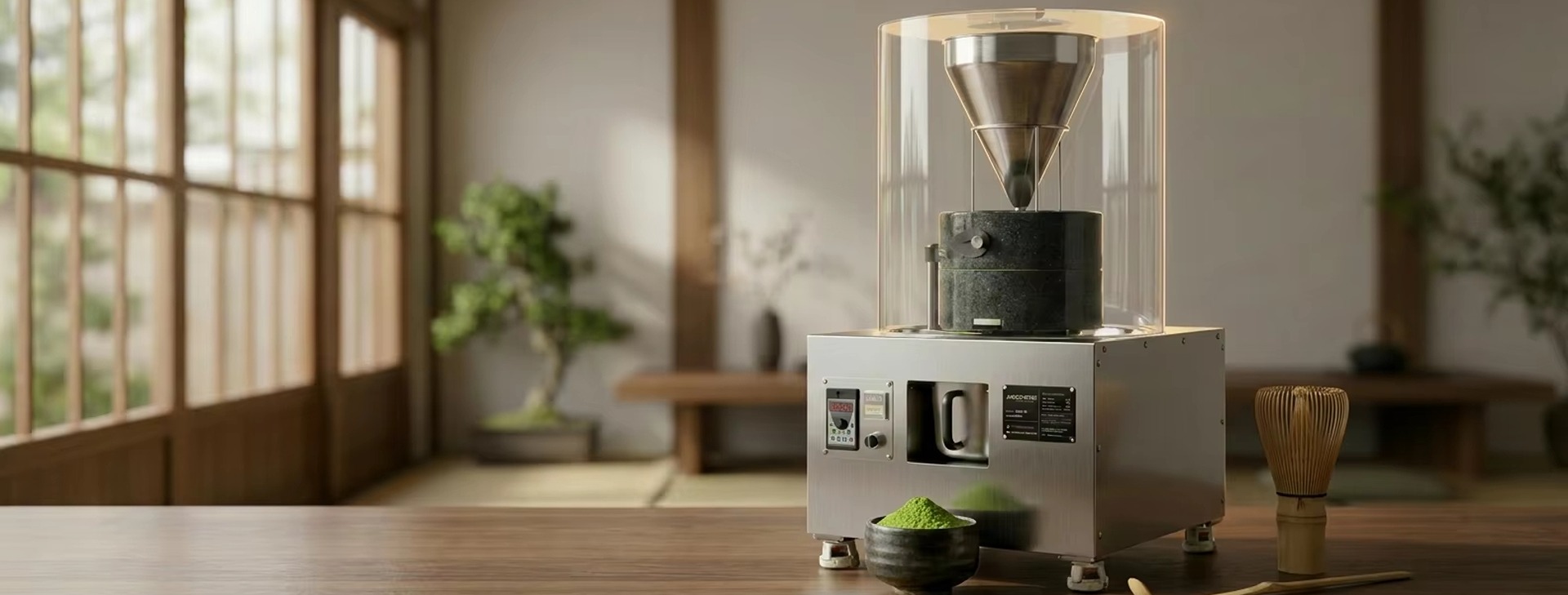
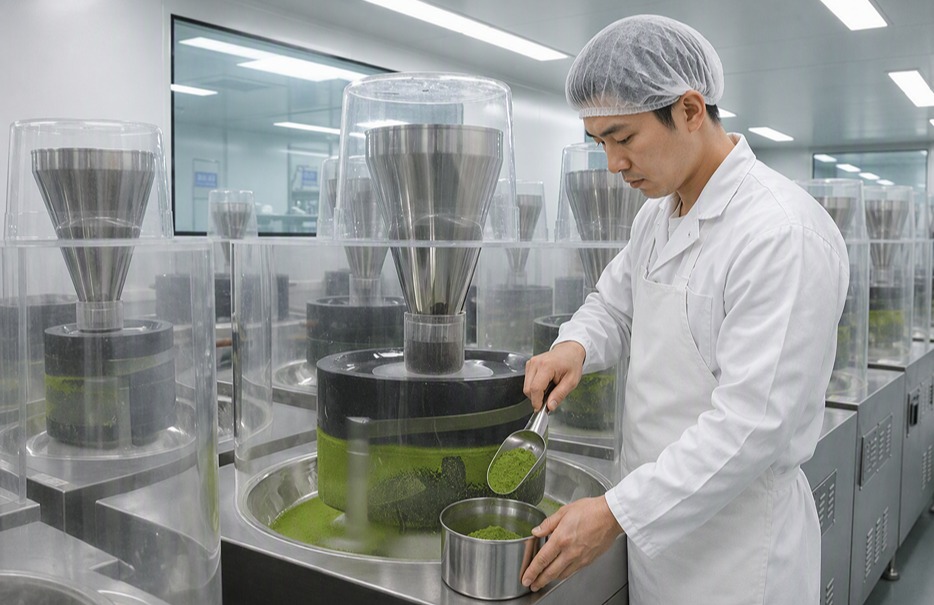
Illustrative tea-studio setting based on the supplied product photograph; not a documented customer installation.
Understand the Areas That Need Attention
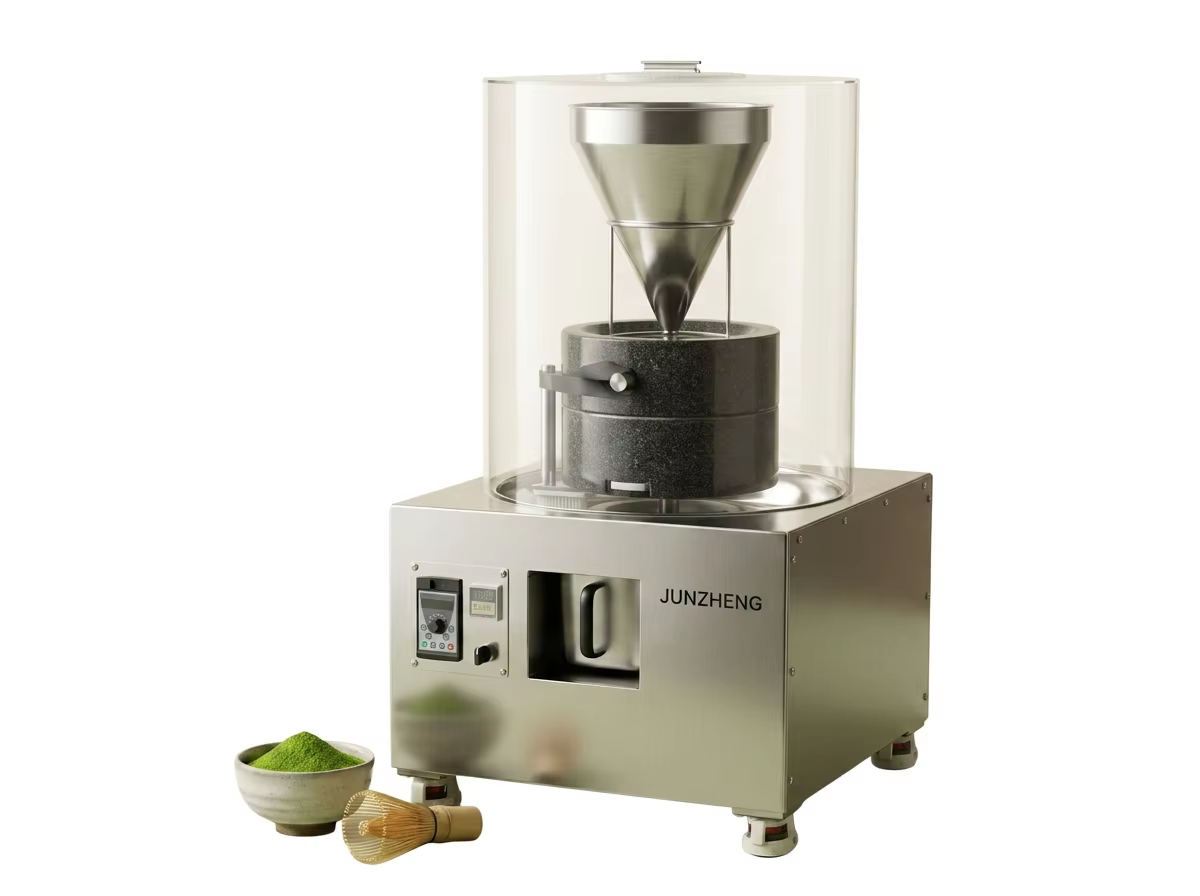
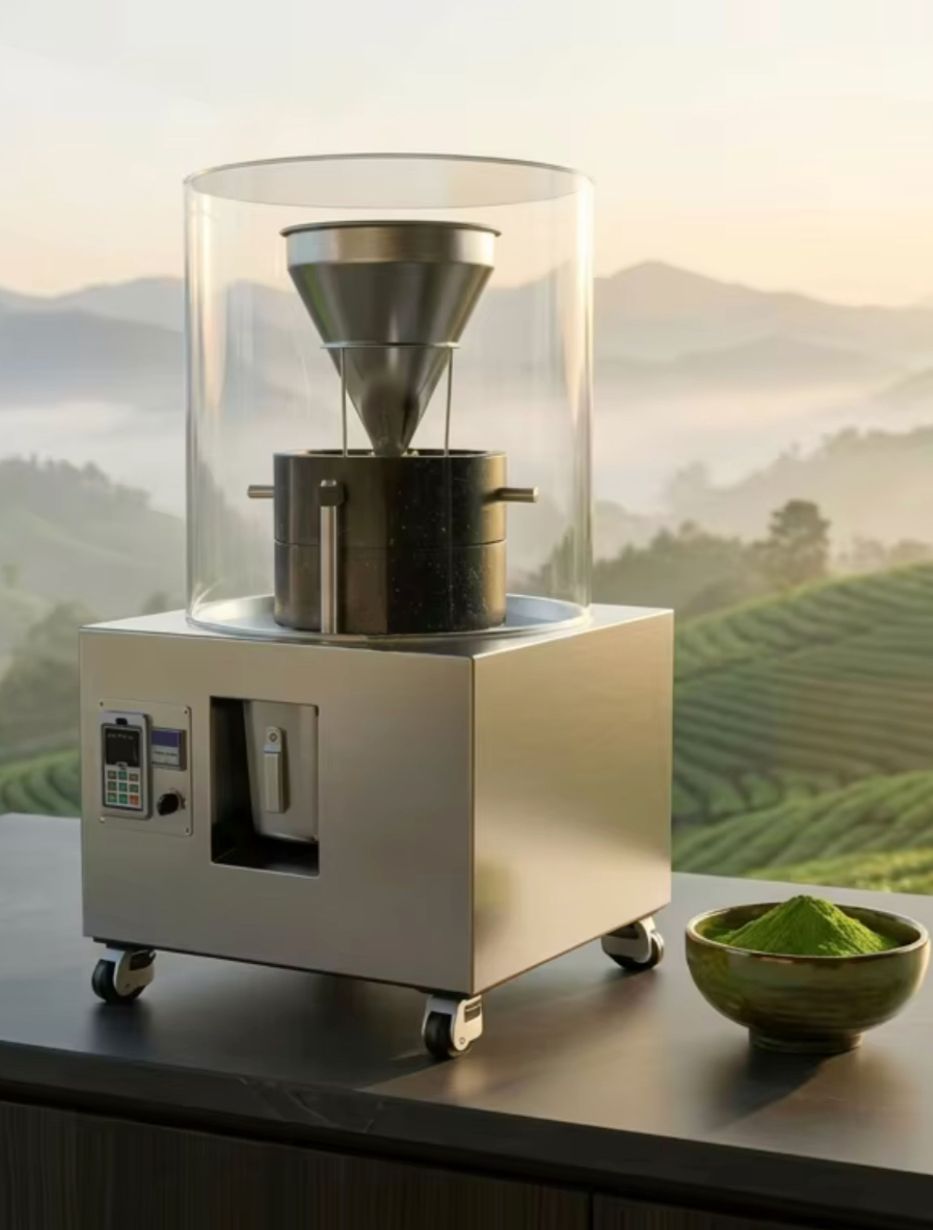
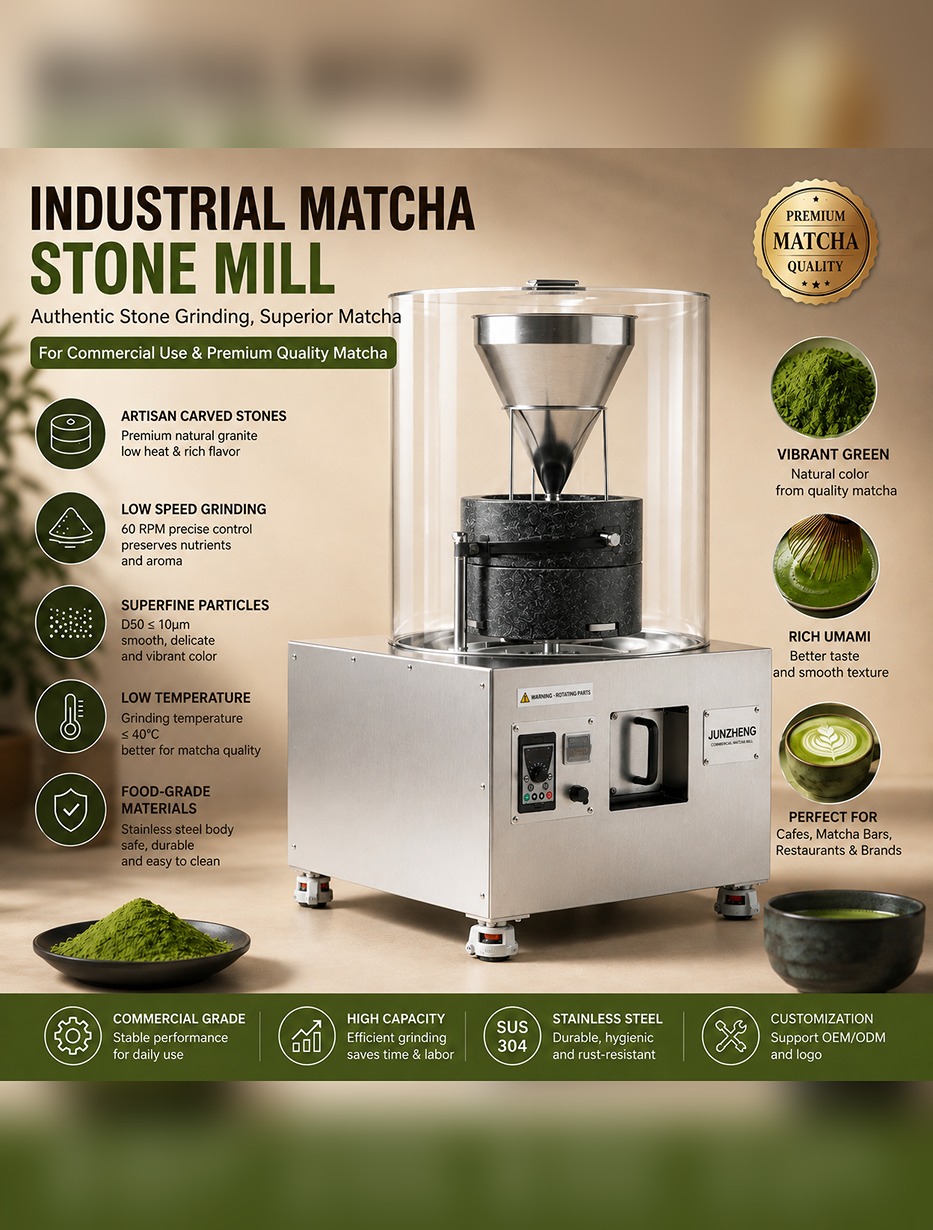
The JZ/MY-06 combines natural black granite grinding stones, a stainless steel body, a feeding hopper, a transparent acrylic protective cover, and a powder collection area.
Each area needs an appropriate approach:
| Area | Cleaning or inspection priority |
|---|---|
| Granite surfaces and grooves | Gently remove retained powder; inspect accessible surfaces for damage or abnormal odor |
| Hopper and feeding mechanism | Remove remaining tea material and check for buildup |
| Collection tray and outlet area | Clean after every use; check for powder accumulation and moisture |
| Stainless steel exterior | Wipe with a dry or slightly damp microfiber cloth |
| Control panel | Wipe carefully; prevent water from entering electrical components |
| Acrylic cover | Check cleanliness, condition, and secure installation; ask JUNZHENG for an approved cleaning method if dry wiping is insufficient |
For background on the grinding material, read Why Is Natural Granite Used for Matcha Stone Mills?.
How to Clean the Mill After Each Use
1. Stop Safely Before Cleaning
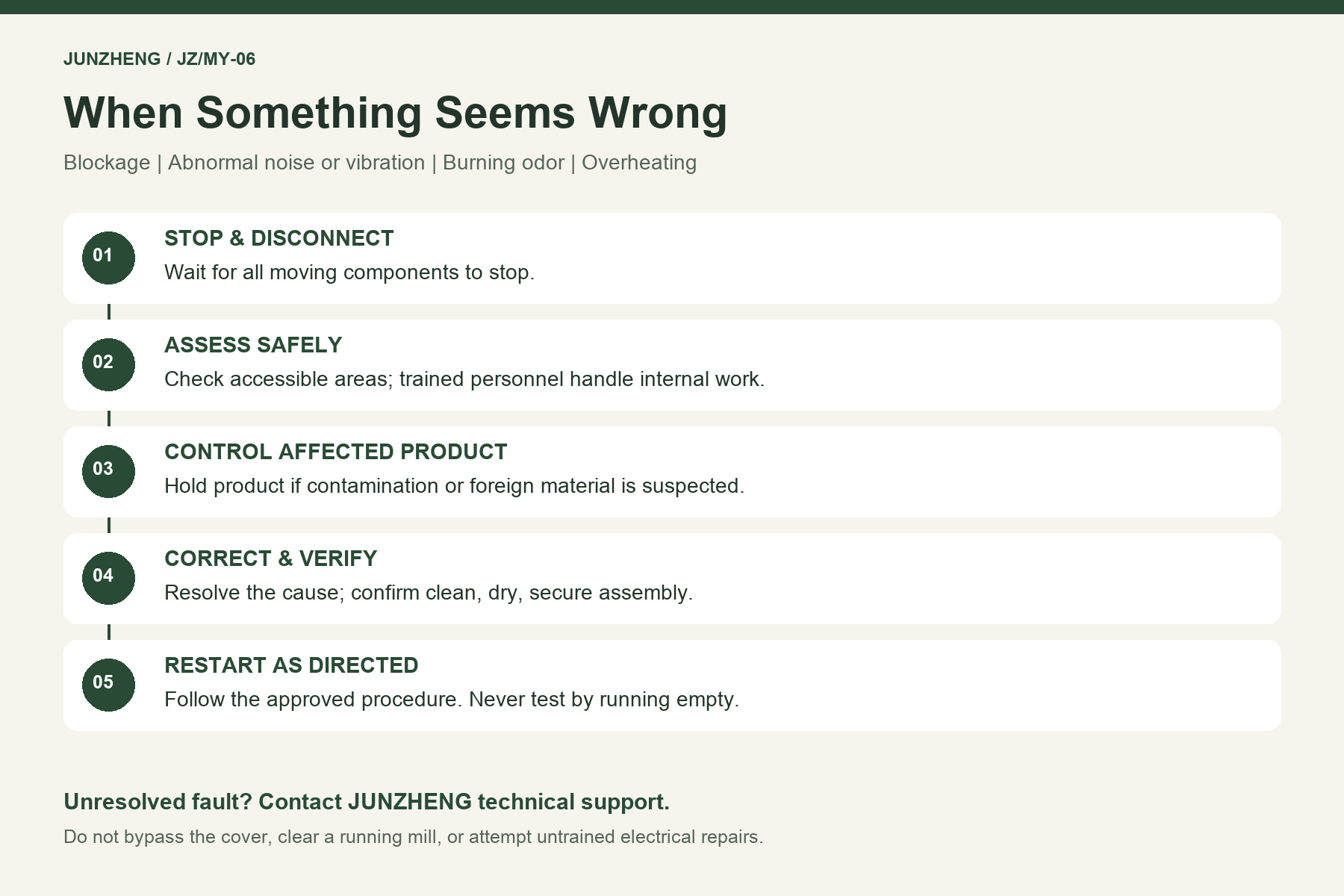
Shut down the mill according to the operating instructions. Wait until every grinding component has stopped, then disconnect the power before accessing internal areas or performing maintenance.
Do not run the JZ/MY-06 without tea material in the grinding chamber. Empty running is prohibited in the manual because it can damage the stones and transmission. Do not use an empty run to clear powder, dry the stones, or test the machine after cleaning.
The acrylic cover must remain installed during operation. Never remove it while the stones are rotating.
2. Brush Away Matcha Powder Residue
The manual specifies a soft-bristled brush, such as natural bristle or food-grade nylon, for gently removing powder from stone surfaces, grooves, the hopper, and the feeding mechanism.
Clean only areas that your training allows you to access. Do not reach into an assembled grinding gap or force a tool between the stones.
Collect cleaning residue separately from saleable matcha. Check the brush before and after use so damaged or loose bristles do not go unnoticed.
3. Clean the Powder Collection Area
Clean the collection tray after every use, as required by the manual. Inspect edges, accessible corners, and the outlet area for retained powder or damp deposits.
Do not assume that a clean-looking front panel means the product path is clean. Use suitable lighting to check accessible areas before releasing the mill for its next production session.
4. Wipe the Exterior
Use a dry or slightly damp microfiber cloth on the stainless steel housing and control panel. Keep water out of the grinding chamber and electrical components.
This permission to use a slightly damp cloth on the exterior does not authorize wet cleaning of the stones or rinsing the assembled equipment.
The supplied manual does not identify compatible detergents, sanitizers, or acrylic cleaners. Confirm the exact product and method with JUNZHENG before using a chemical cleaner.
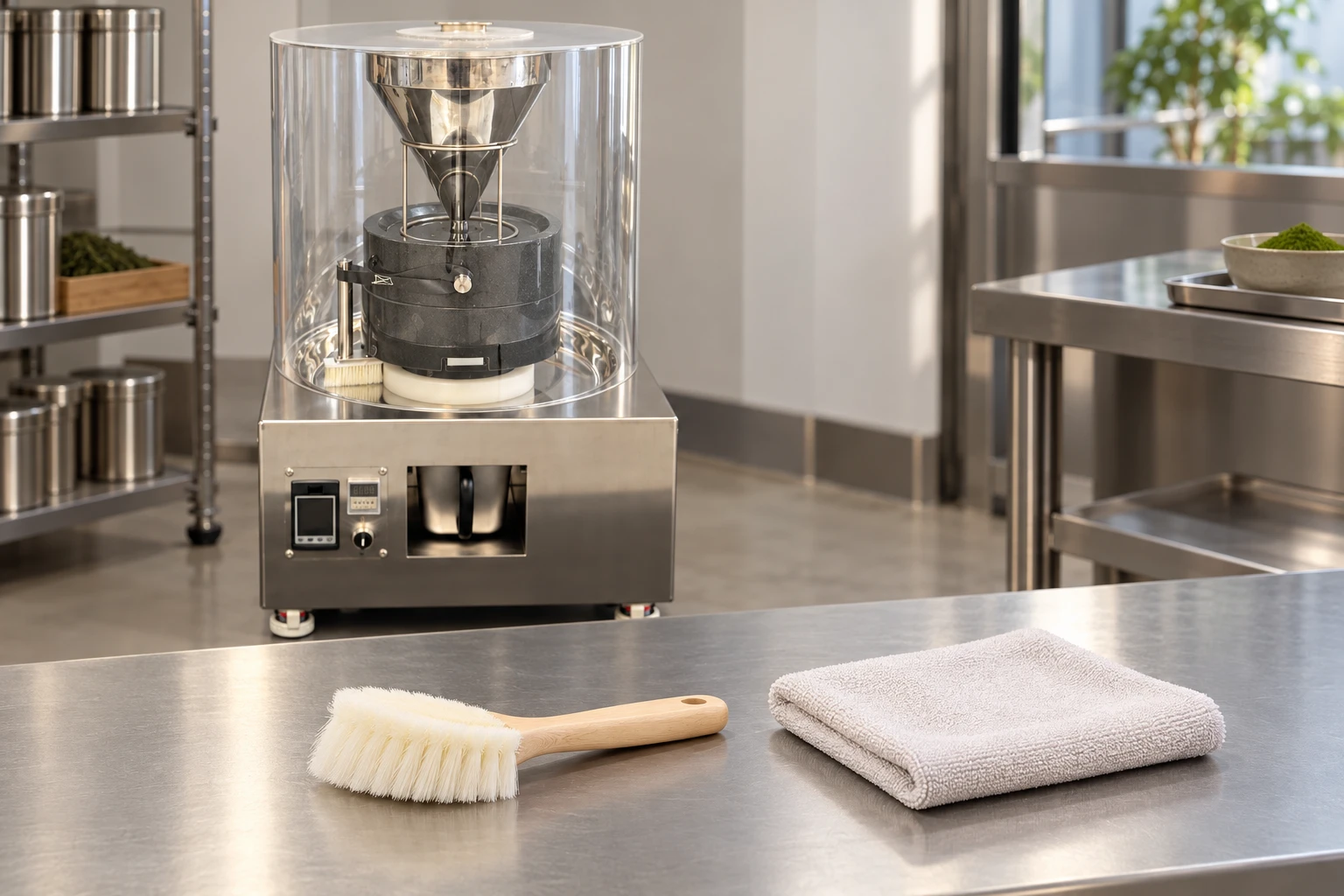
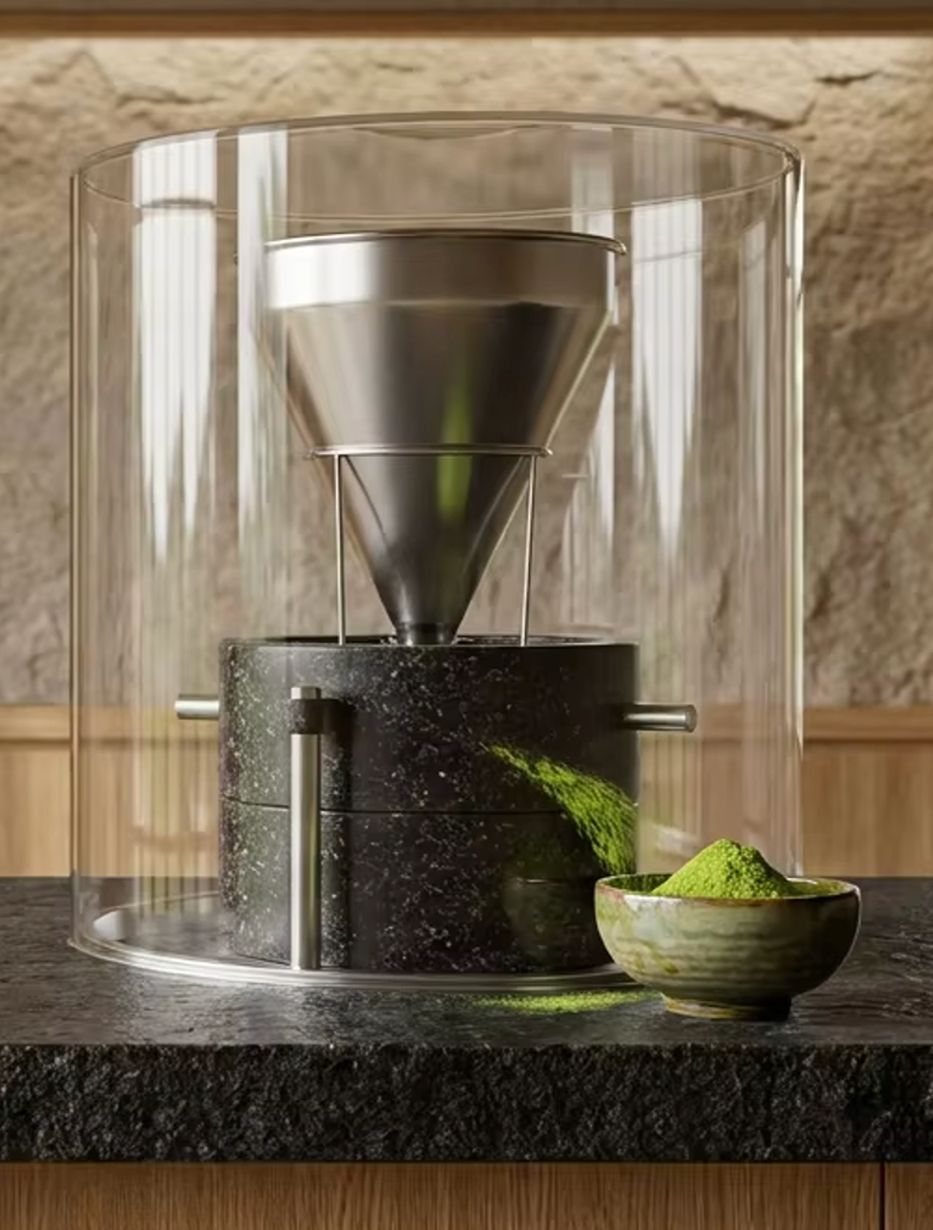
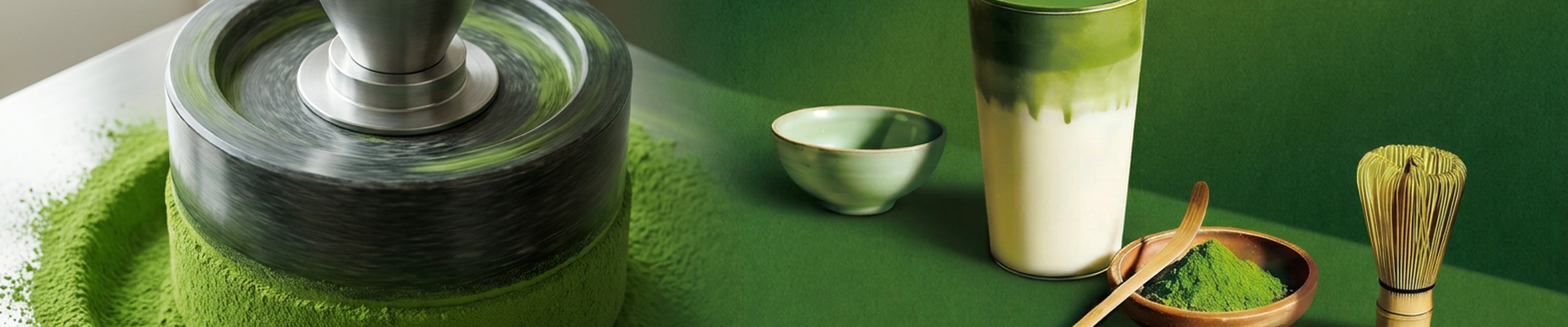
Illustrative cleaning-tool preparation. Internal access and cleaning require trained operators.
Protect the Natural Granite Grinding Stones
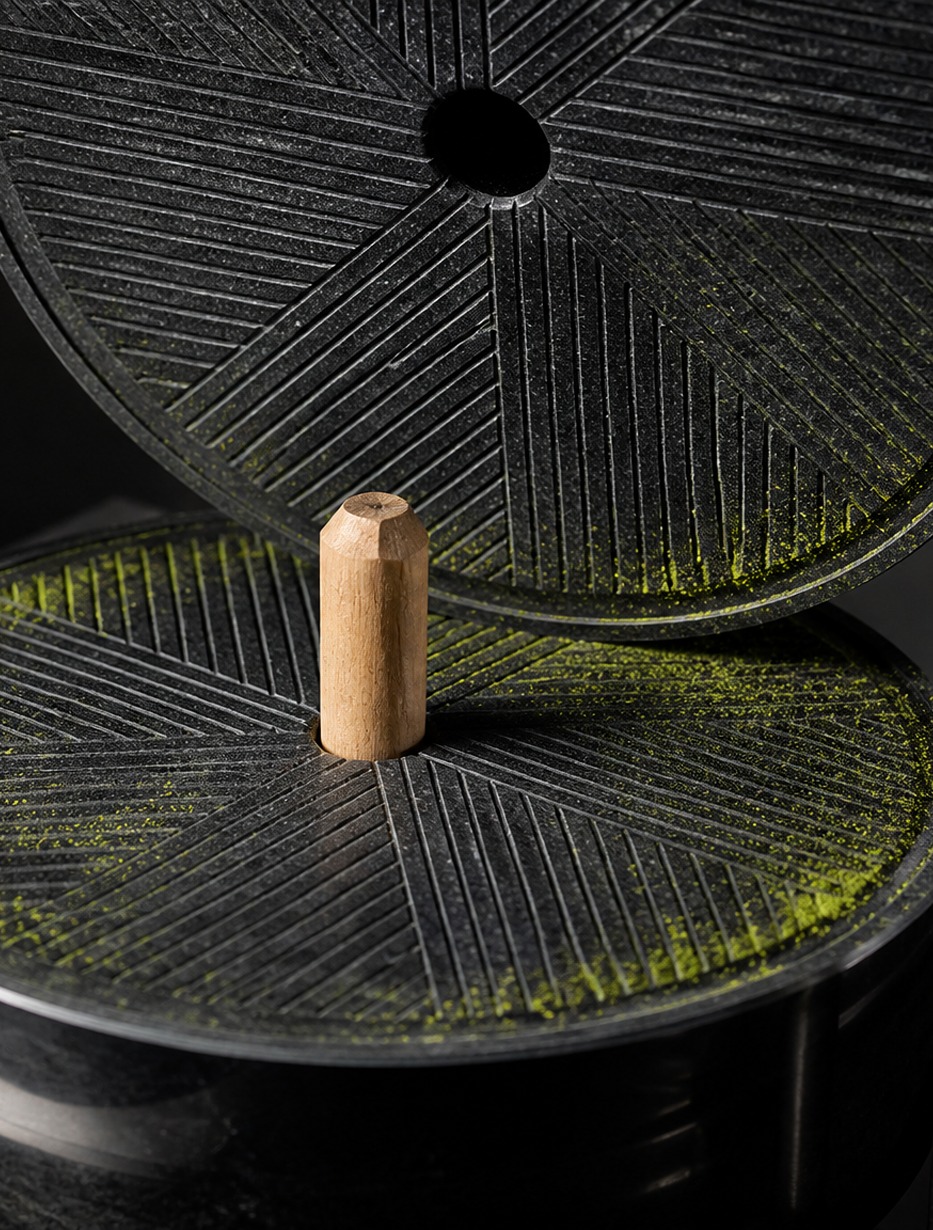
Grinding grooves are working surfaces. The cleaning objective is to remove retained tea material while preserving their geometry and condition.
Use gentle brushing rather than scraping with sharp metal tools or polishing the stone. Do not apply countertop sealer, stone polish, or oil to the grinding surfaces without an explicit manufacturer-approved procedure.
During authorized inspection, look for cracks, chips, loose fragments, persistent deposits, or unusual odor. If damage or foreign material is suspected, stop production and hold potentially affected product for assessment.
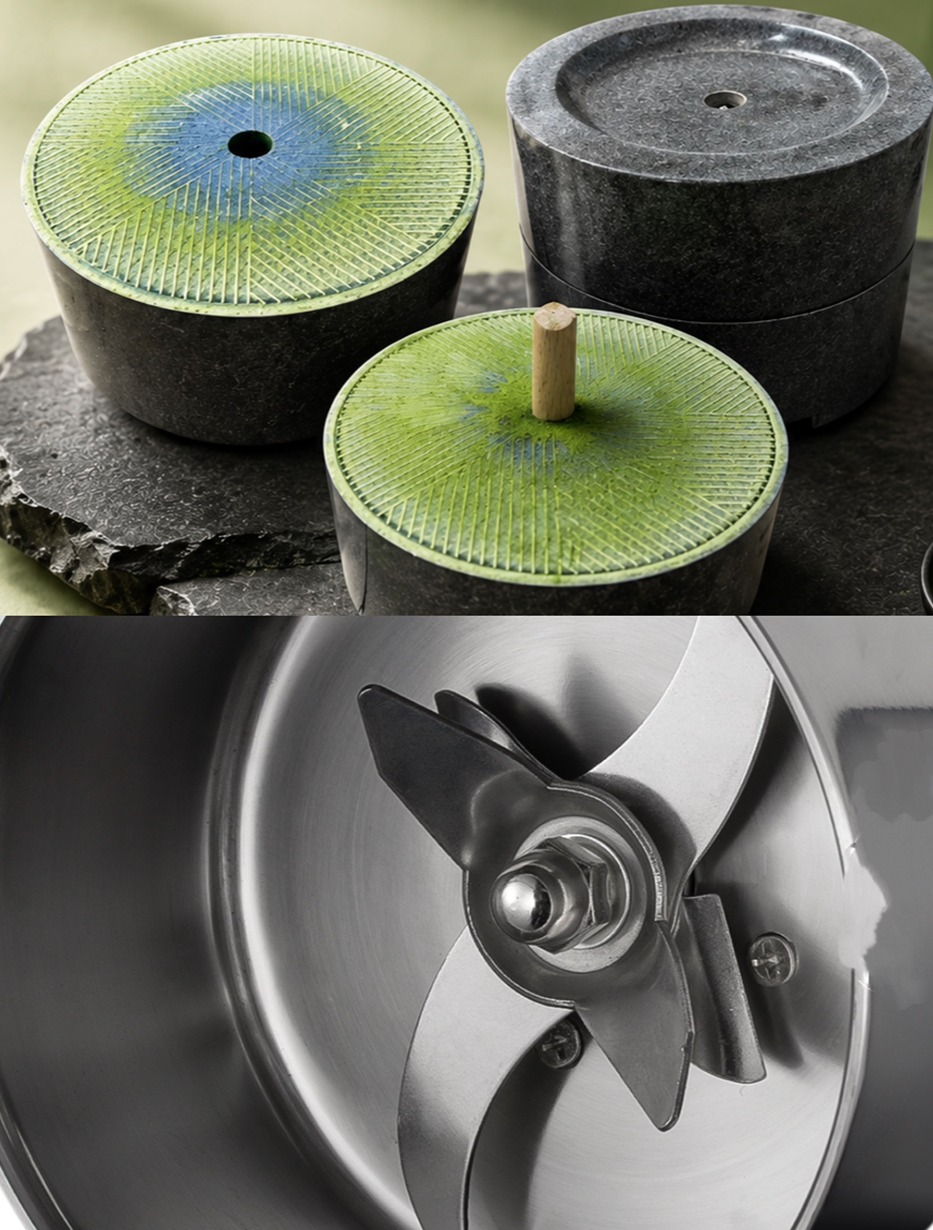
A green tint alone does not establish whether a stone is clean or contaminated. Evaluate removable residue, moisture, odor, and surface condition using the approved procedure; do not damage the surface while trying to make it look new.
Grinding stones are consumable components. Their service life depends on operating conditions and condition assessments. There is no fixed replacement interval in this guide.
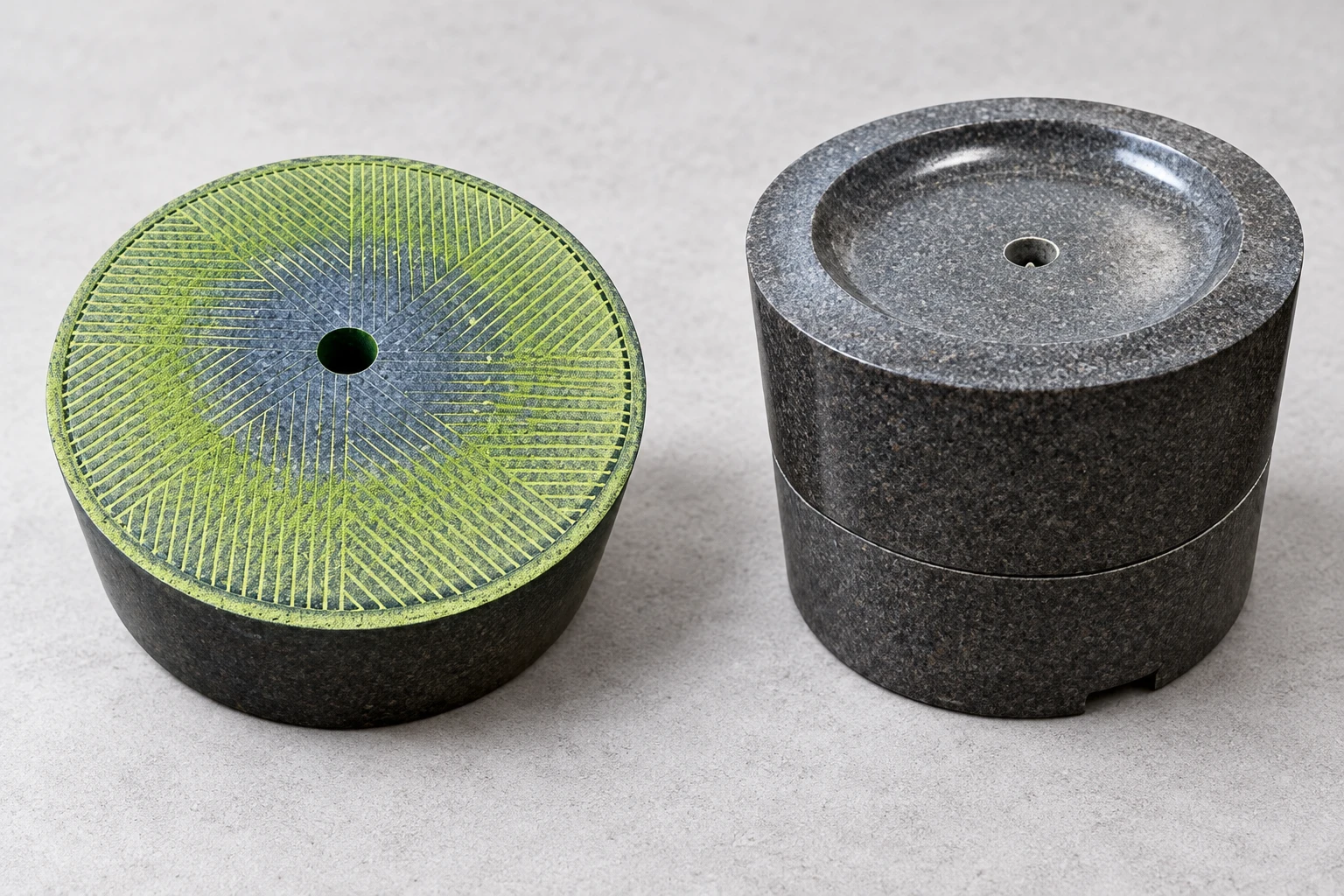
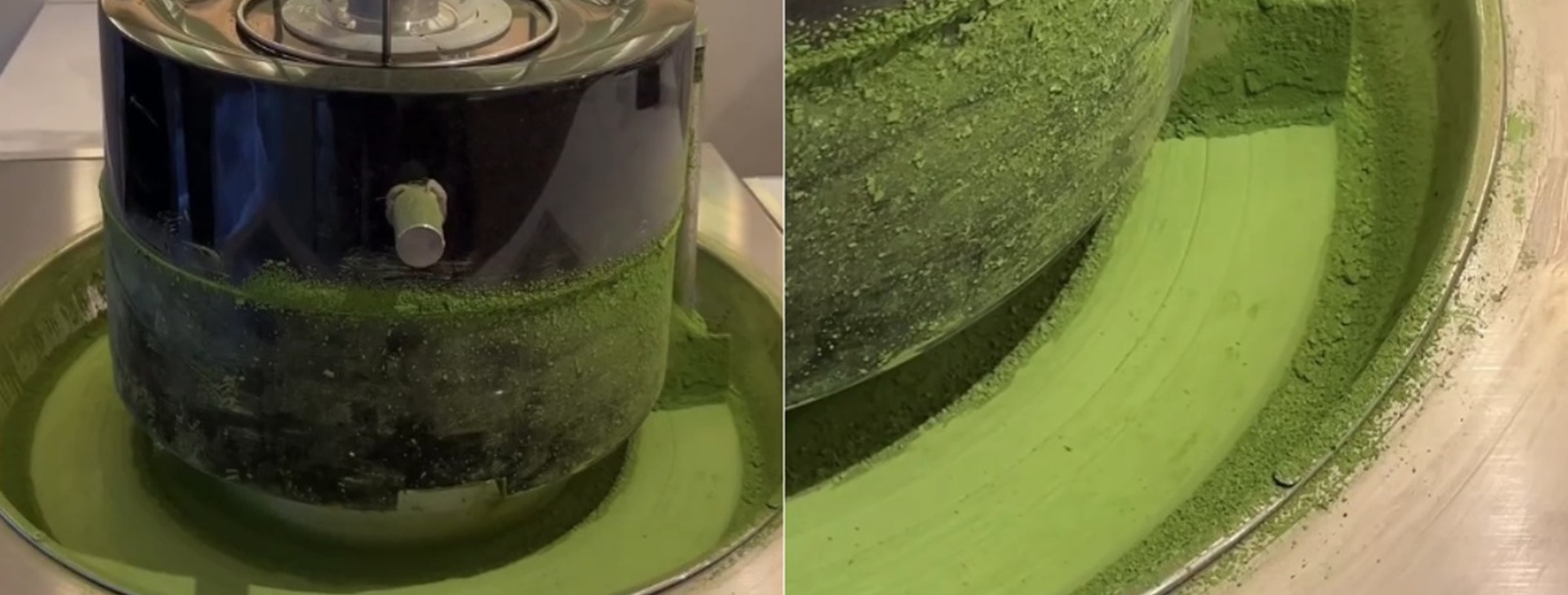
Reference-based illustration of grinding surfaces and residue; not a disassembly instruction.
Keep the Mill Dry in Real Commercial Settings
A café or tea room can expose equipment to steam from nearby drink preparation, sink splashes, and changing humidity. Position the mill in a clean, dry, ventilated indoor area, away from water sources, steam, heaters, and direct sunlight.
The manual recommends at least 300 mm of clearance on each side for ventilation and maintenance access. Install the machine on a firm, level surface and lock or securely fix the casters before operation.
In humid regions, the manual recommends keeping operating relative humidity below 50% where possible. For long-term storage of grinding stones, it recommends relative humidity below 30%. These are model-specific environmental recommendations, not proof that the equipment or product is microbiologically safe.
Check for moisture after every use. If condensation or damp grooves are found, address the moisture source and follow the approved drying procedure before restarting.
What Drying Method Does the Manual Describe?
For deep cleaning, the manual specifies complete drying with low-temperature warm air or compressed air before reinstallation.
It does not specify air temperature, pressure, duration, nozzle distance, or air-quality requirements. Obtain those details from JUNZHENG before applying the method. Do not improvise with a high-heat dryer or an unassessed workshop air supply.
Drying does not create permission to wash the stones: the manual expressly prohibits rinsing, spraying, and soaking the machine and grinding-stone components.
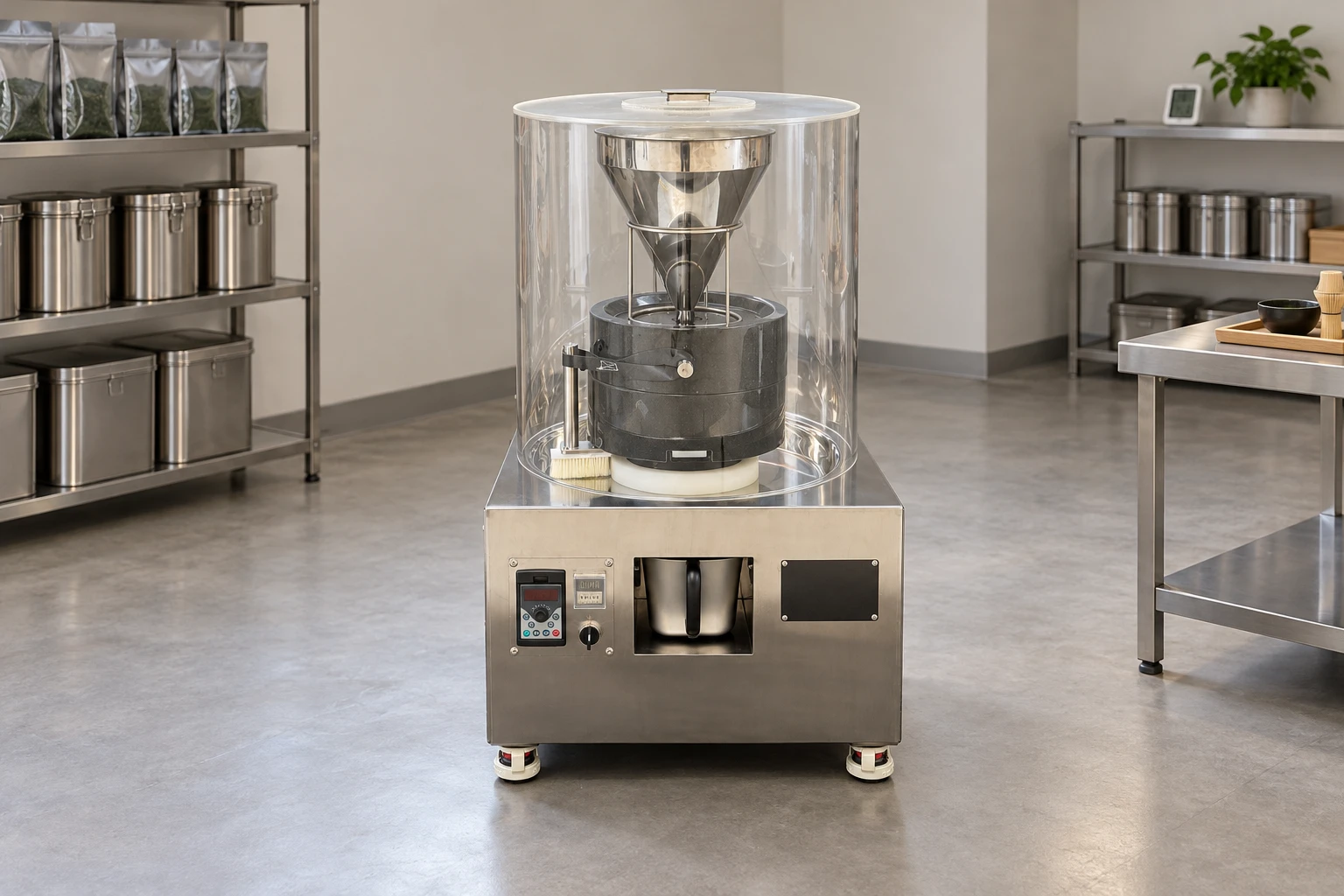
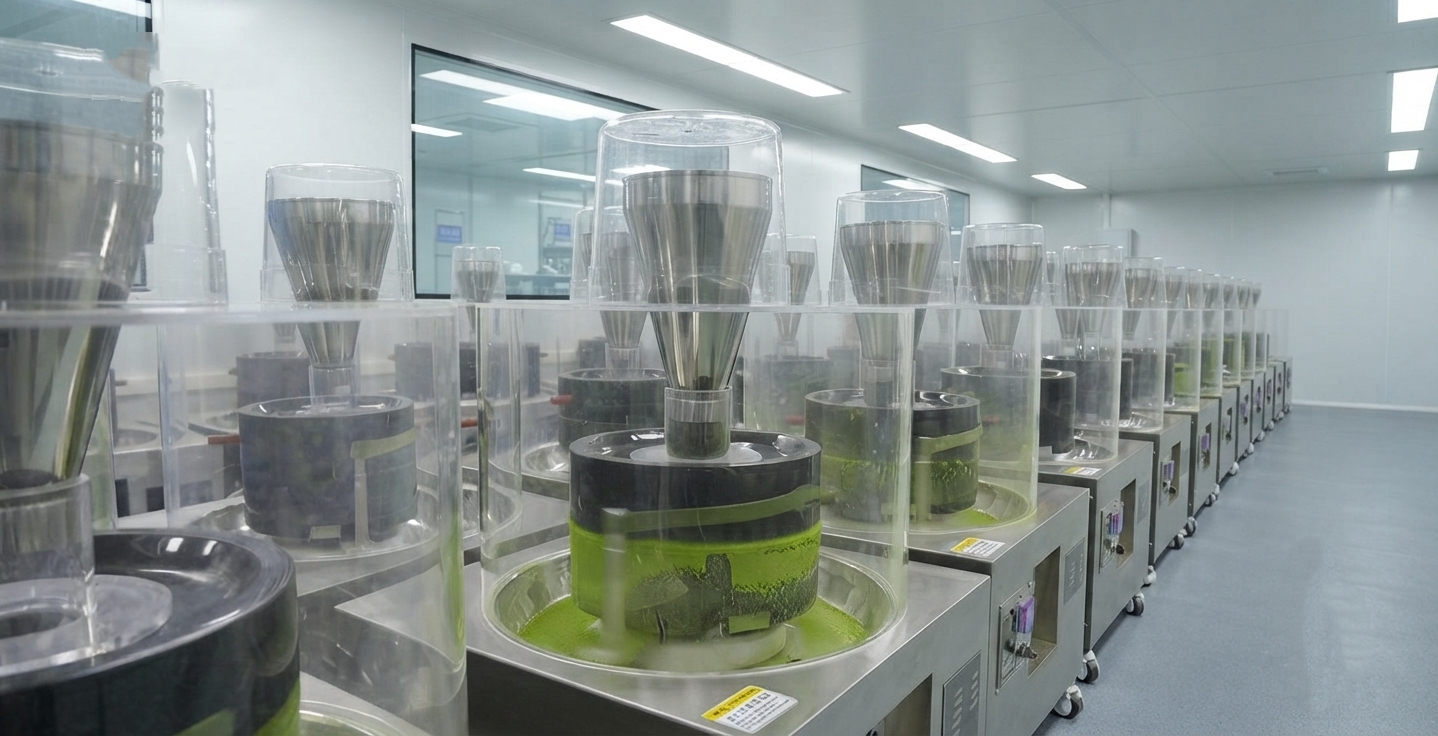
Illustrative workspace showing dry surroundings and service access, rather than a dimensioned installation plan.
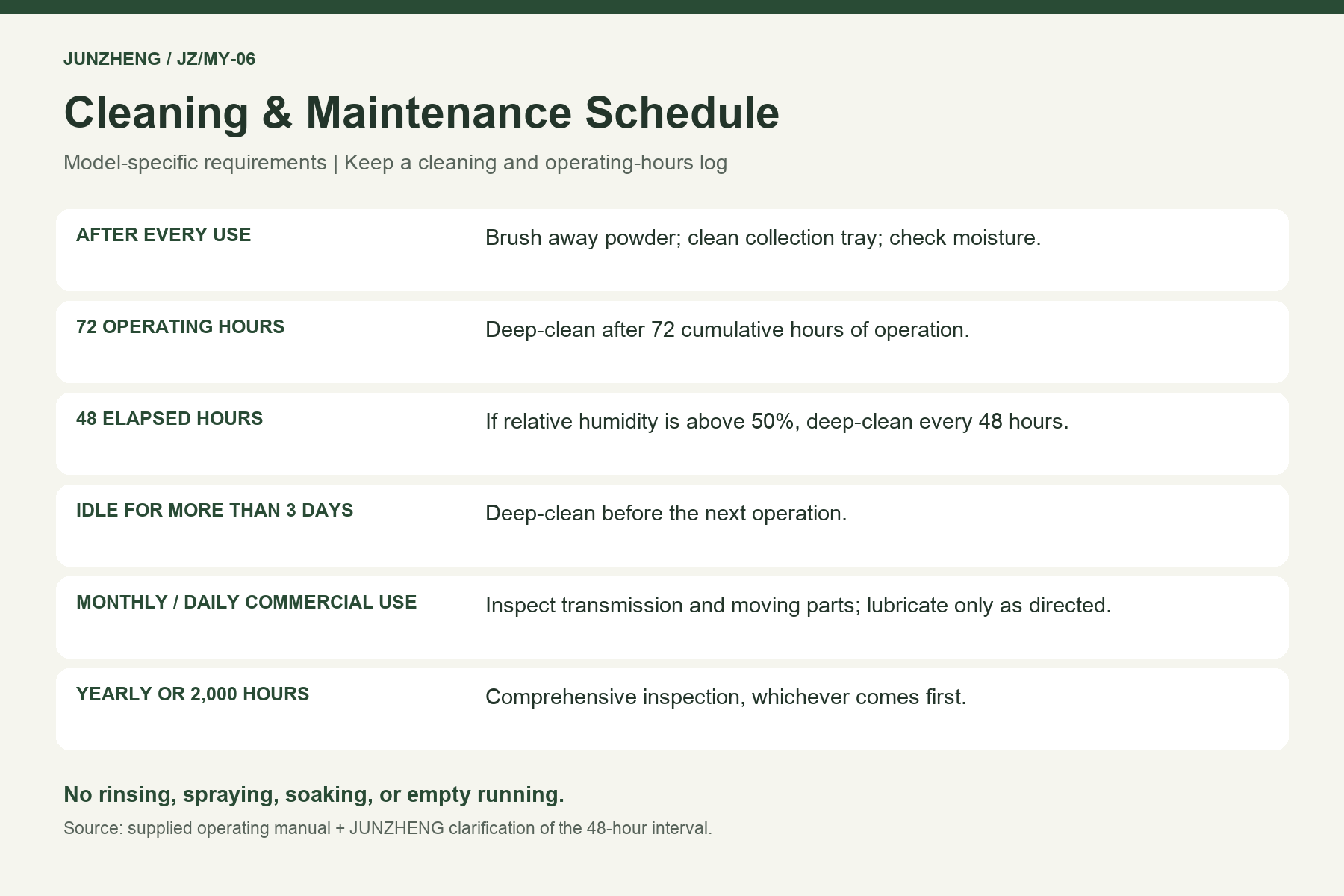
JZ/MY-06 Cleaning and Maintenance Schedule
The following schedule applies to this model. Do not treat it as a universal maintenance interval for commercial stone mills.
| Trigger or interval | Required or recommended action |
|---|---|
| After every use | Remove powder residue, clean the collection tray, wipe the exterior, and check for moisture |
| Every 72 cumulative operating hours | Perform the manual's deep-cleaning procedure |
| Relative humidity above 50% | Deep-clean every 48 elapsed hours; JUNZHENG has clarified that this means elapsed time, not accumulated running hours |
| After more than 3 days without use | Deep-clean before the next operation |
| Monthly for daily commercial use | Inspect transmission and moving components; lubricate required points only under the approved service instructions |
| Annually or after 2,000 cumulative operating hours, whichever comes first | Arrange a comprehensive inspection |
Do not wait for the next scheduled interval when moisture, abnormal odor, damage, or an operating fault is discovered.
Deep cleaning includes power disconnection, removal of the upper and lower stones, dry cleaning of the grooves, complete drying, inspection, and correct reinstallation. Stone handling must be performed by trained personnel using the approved lifting and installation method. This article does not provide a substitute lifting or disassembly sequence.
For lubrication, the manual calls for a small amount of certified food-grade lubricant where needed and warns against excess. It does not give an exact lubricant specification or lubrication-point diagram. Obtain these from JUNZHENG; do not oil the stones or product path.
Keep a log of operating hours, cleaning dates, humidity observations, faults, and service work.
Check the Mill Before the Next Production Session
Before starting, confirm that:
- Accessible product-contact areas are clean and dry.
- Stones are correctly installed, aligned, and level under the approved procedure.
- The hopper, acrylic cover, and collection components are securely fitted.
- Casters are locked or fixed and ventilation space is clear.
- The power cable and plug have no visible damage and the supply matches the actual machine's rating.
- Tencha has been prepared to the model's operating requirements and checked for foreign material.
Feedstock preparation matters because repeated buildup may have an upstream cause. The supplied manual specifies approximately 5 × 5 mm tencha flakes, 6–8% moisture, and a maximum recommended batch feed of approximately 900 g. These are the manual's preparation parameters for this machine, not general tea-storage or food-safety limits.
Do not feed hot, wet, or freshly steamed leaves, overload the hopper, or force material into the grinding chamber. Read How Is Matcha Made From Tencha? for the earlier production stages.
Troubleshooting Common Problems
For blockage, abnormal noise, vibration, burning odor, or overheating, stop and disconnect power before inspecting the mill. This follows the manual's safety chapter. Do not attempt to clear a blockage while the equipment is running.
| Symptom | Possible causes identified in the manual | Next action after safe shutdown |
|---|---|---|
| Uneven or restricted powder flow | Excessive tencha moisture, overfilled hopper, blocked grooves | Check material condition and loading; clean grooves through authorized access |
| Powder becomes coarser | Stone wear, unsuitable speed, uneven alignment | Review settings and arrange a stone-condition and alignment check |
| New noise or vibration | Misalignment, foreign material, loose parts, uneven floor | Inspect stability and obtain trained assistance for internal checks |
| Musty or unusual odor | Damp grooves, inadequate cleaning, damp feedstock | Hold affected product; investigate moisture and contamination before release |
| Overheating | Overload, inadequate ventilation, excessive speed, prolonged operation | Allow cooling, review conditions, and contact support if unresolved |
| Loose acrylic cover | Incorrect installation or vibration | Secure the cover while stopped; confirm stability before restart |
| Machine will not start | Supply, plug, voltage, or fuse problems | Check external connections safely; leave electrical diagnosis to qualified personnel |
Do not assume that brushing away residue makes product affected by suspected mold, chemical contamination, or foreign material safe. Follow your facility's food-safety response and release procedure.
Frequently Asked Questions
Can I wash a JUNZHENG JZ/MY-06 with water?
No. The supplied manual prohibits rinsing, spraying, or immersing the machine and grinding-stone components. It permits a dry or slightly damp microfiber cloth for the exterior housing and control panel, while preventing water entry.
Which brush should I use for matcha powder residue?
The manual specifies a soft brush, such as natural bristle or food-grade nylon. Use it gently on authorized accessible areas and check that the brush is intact.
Does the mill need cleaning if it only processes tencha?
Yes. The manual requires cleaning after every use. Processing one ingredient does not remove the need to manage retained powder, moisture, and equipment condition.
Can I run the mill empty to remove the last powder?
No. Empty running is prohibited for this model. Use its approved shutdown and cleaning instructions rather than an empty clearing or drying cycle.
What if the mill has been unused for several days?
After more than three days without use, perform the prescribed deep cleaning before restarting. Trained personnel must follow the approved stone-handling, drying, and reinstallation method.
How often should I replace the granite stones?
Base replacement on manufacturer assessment of wear, damage, and grinding performance. Do not replace or resurface stones using an assumed universal service interval.
Can I use a food-safe detergent or sanitizer?
The supplied manual does not approve a specific chemical product. Ask JUNZHENG to confirm compatibility, food-contact requirements, and the application method before use. Routine powder removal alone does not establish sanitization.
Get Model-Specific Support from JUNZHENG
For a shop grinding small batches or a tea business demonstrating stone milling to customers, maintenance should be planned alongside production and staff training.
Explore the JUNZHENG commercial matcha stone mill or request technical support for cleaning, stone handling, drying, and service instructions for your exact machine revision.
When requesting help, provide the model, serial number, relevant photos, and a description of the operating conditions. This helps the support team identify the appropriate procedure and parts.