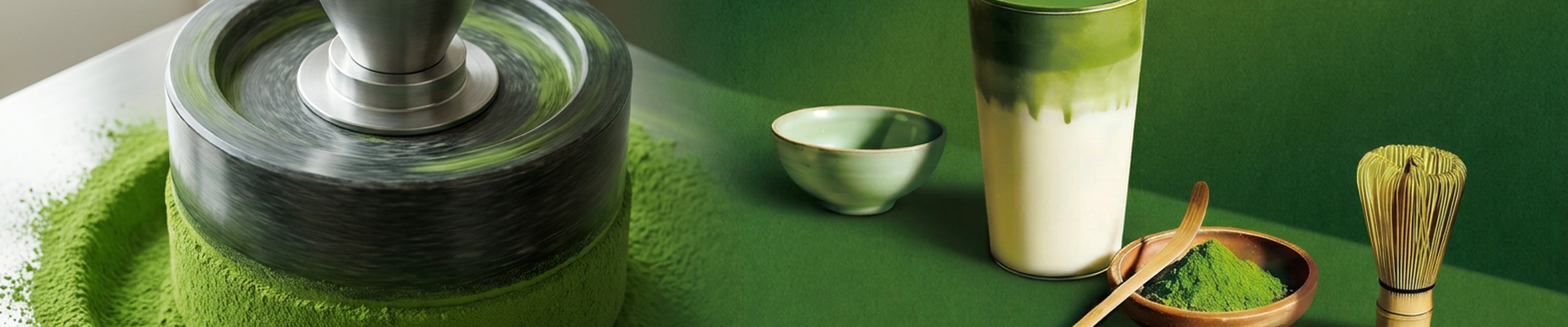
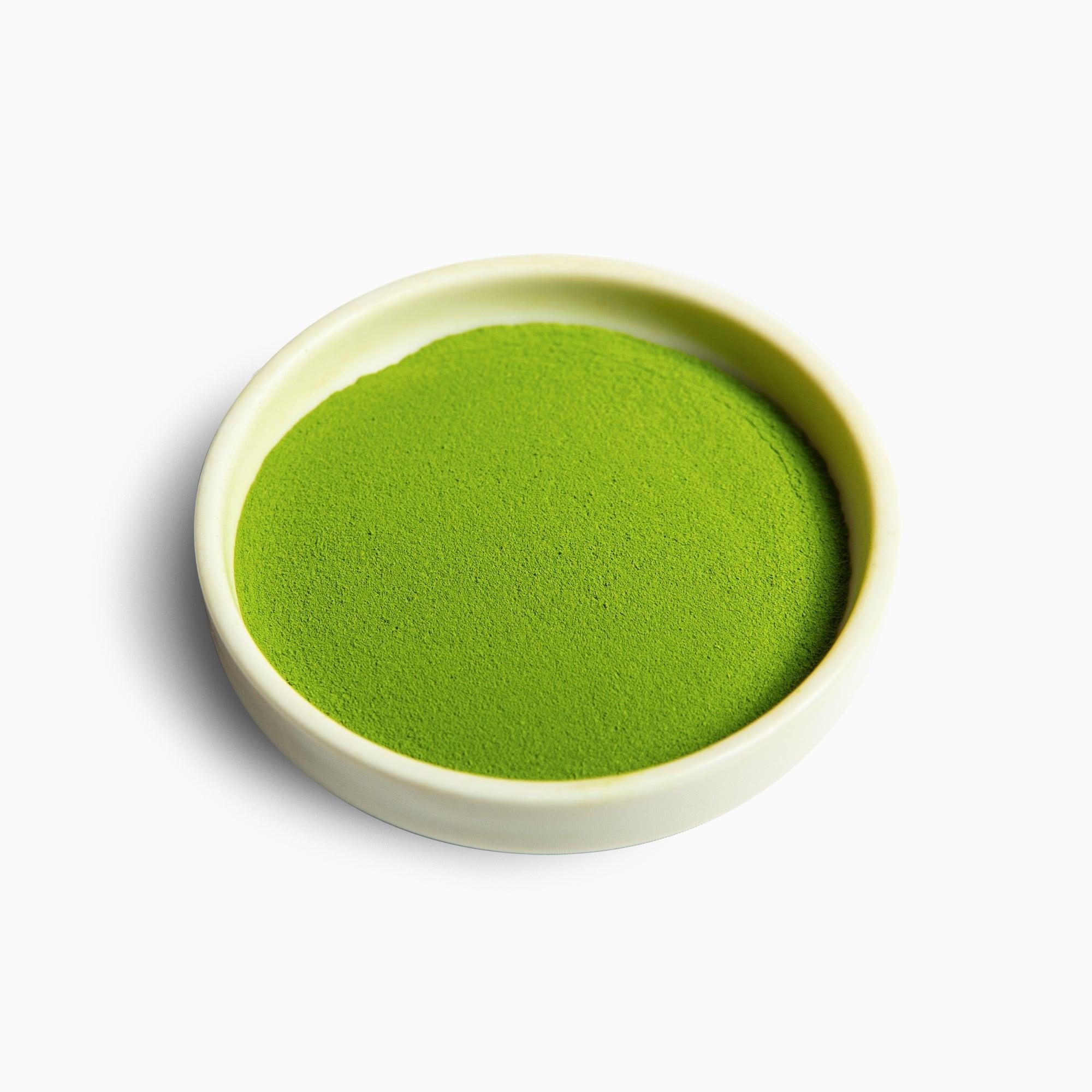
Matcha is known for its vibrant green color, distinctive flavor, and exceptionally fine powder texture. But what makes matcha feel smooth rather than gritty?
One important factor is particle size.
For matcha producers, specialty tea brands, cafés, and commercial equipment buyers, particle size is more than a technical specification. It can influence mouthfeel, dispersion, sedimentation, grinding efficiency, and the consistency of the finished product.
However, a common misconception is that smaller particles always mean better matcha.
In reality, the ideal particle size depends on the raw material, grinding process, particle size distribution, and intended application.
This guide explains how matcha particle size is measured, why it matters, and what commercial buyers should consider when choosing grinding equipment.
1. What Is Matcha Particle Size?
Particle size describes the dimensions of individual particles in matcha powder.
Because matcha powder consists of many particles of different sizes and shapes, it cannot normally be described accurately by a single number.
Particle size is commonly expressed in micrometers, also called microns (μm).
One micrometer equals one-thousandth of a millimeter.
To put this into perspective:
| Particle size | Equivalent in millimeters |
|---|---|
| 5 μm | 0.005 mm |
| 10 μm | 0.010 mm |
| 15 μm | 0.015 mm |
| 20 μm | 0.020 mm |
| 30 μm | 0.030 mm |
These values describe dimensions, not automatically the quality of the matcha.
Two powders with the same reported average particle size can behave differently if their particle size distributions are different.
This is why professional buyers should understand more than a manufacturer’s advertised fineness number.
2. What Particle Size Is Best for Matcha?
The best matcha particle size is the distribution that gives the required texture and mixing performance in your finished product. There is no single micron value that guarantees the best matcha for every application.
For context, a 2019 paper on matcha particle size and mouthfeel describes stone-milled matcha with median diameters around 10–20 μm and finer jet-milled or classified samples around 3–5 μm. These are observations from the paper, not universal quality grades or equipment guarantees.
The paper also reports that powders with similar median diameters can have different size distributions and sensory properties. A smaller median alone therefore does not establish better mouthfeel.
For procurement, define the measurement method, specify the relevant D50 and D90 values, and evaluate a sample in the actual beverage or food formulation. A figure such as “10 μm” is incomplete unless the supplier explains what statistic it represents.
3. Understanding D10, D50, and D90
When comparing professional matcha grinding machines, buyers may encounter specifications such as D50 and D90.
These terms describe points in a particle size distribution. The D50 median is not the same as an arithmetic mean, and D90 is not a maximum particle size.
Under a volume-based distribution, these percentiles are more explicitly written as Dv10, Dv50, and Dv90. Confirm the reporting basis before comparing results:
- D10: 10% of the measured particle volume is represented by particles smaller than this diameter.
- D50: 50% of the measured particle volume is represented by particles smaller than this diameter. This is the median particle diameter.
- D90: 90% of the measured particle volume is represented by particles smaller than this diameter.
For example, consider a hypothetical powder with:
| Measurement | Illustrative result |
|---|---|
| D10 | 4 μm |
| D50 | 11 μm |
| D90 | 24 μm |
This means the median particle size is 11 μm, but the powder also contains a population of larger particles.
Consequently:
D50 = 11 μm does not mean D90 = 11 μm.
This distinction is particularly important when a buyer requires a strict particle size specification.
A machine advertised as producing 11 μm powder cannot automatically be assumed to meet a D90 requirement below 12 μm.
Such a requirement should be verified using an appropriate particle size test.
4. How Does Particle Size Affect Matcha Texture?
Particle size can influence how matcha feels in the mouth.
Fine particles generally help reduce the sensation of grittiness, while larger particles may contribute to a rougher texture.
However, particle size is not the only factor.
Mouthfeel can also depend on:
- Particle size distribution
- Particle shape
- Tea leaf composition
- Grinding method
- Powder aggregation
- Beverage concentration
- Mixing and preparation methods
For premium matcha beverages, a smooth mouthfeel is often an important quality objective.
This is one reason manufacturers pay close attention to grinding fineness and consistency.
Nevertheless, grinding powder to the smallest possible particle size is not necessarily the most economical or appropriate production strategy.
The goal should be a particle size distribution that supports the intended sensory characteristics.
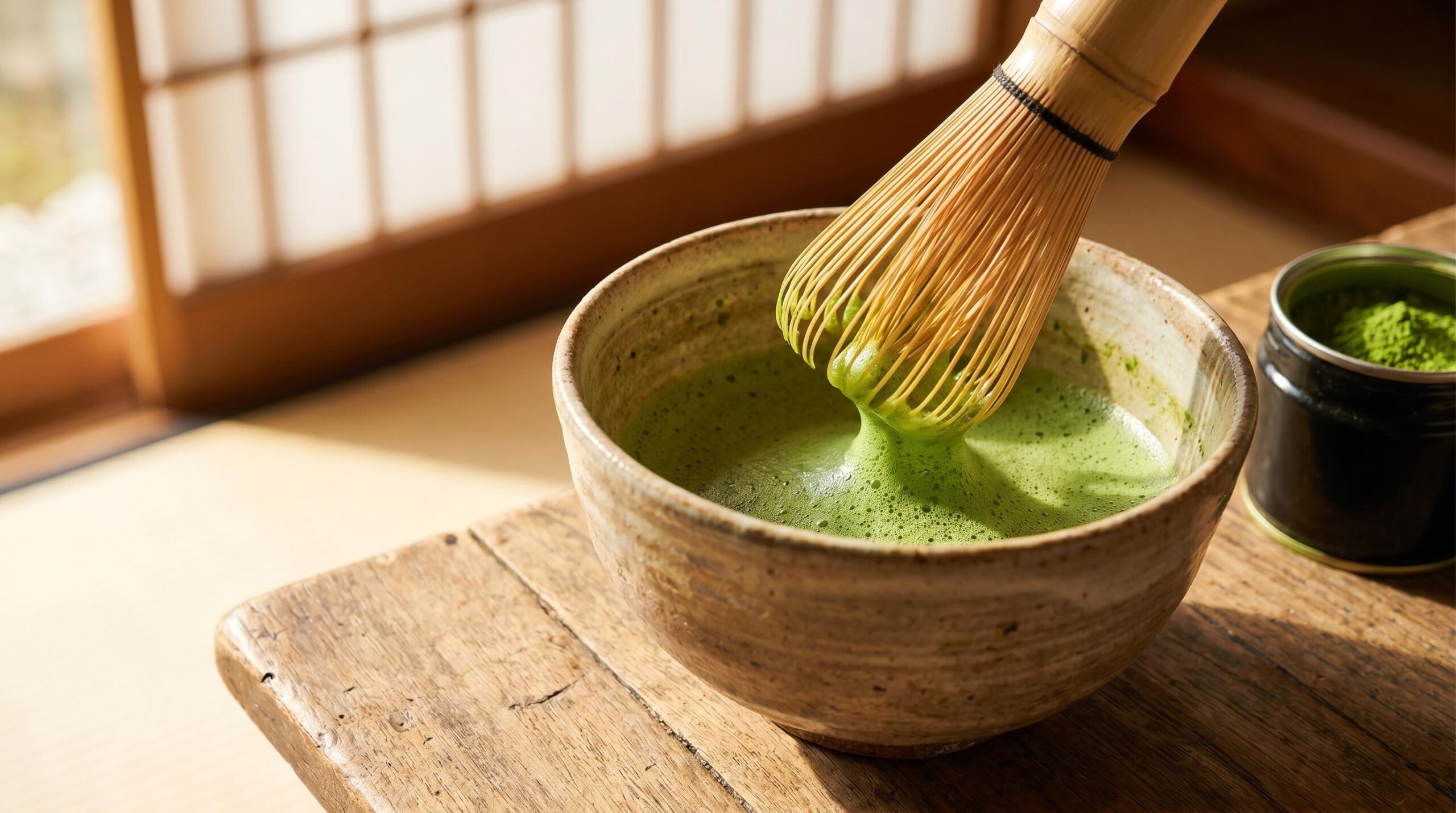
5. Does Finer Matcha Dissolve Better in Water?
Matcha behaves differently from soluble products such as instant tea powder.
Matcha is a suspension, not a completely dissolved beverage.
When matcha is mixed with water, much of the powdered tea material remains as small solid particles dispersed throughout the liquid.
Some water-soluble components dissolve, but the insoluble leaf material remains suspended or eventually settles.
Finer grinding may influence how the powder disperses and how quickly particles settle, but particle size alone does not determine the beverage’s stability.
Other important factors include:
- Particle aggregation
- Mixing intensity
- Water temperature
- Beverage viscosity
- Matcha concentration
- Storage and standing time
Therefore, a finer powder may improve certain aspects of beverage preparation without guaranteeing complete dissolution or preventing sedimentation.
For commercial beverage brands, this distinction is particularly important.
6. How Does Grinding Technology Affect Particle Size?
Different grinding technologies reduce tea material through different mechanical processes.
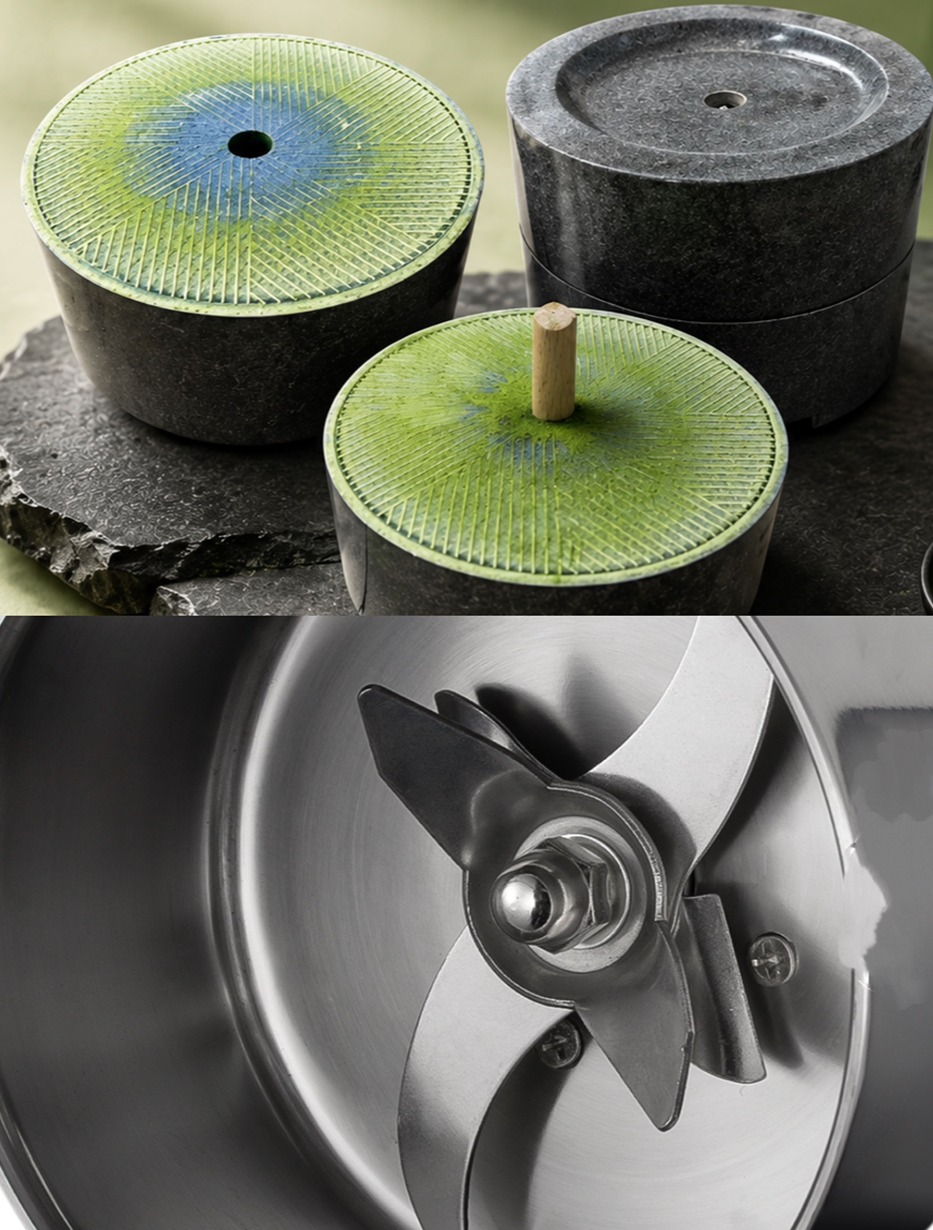
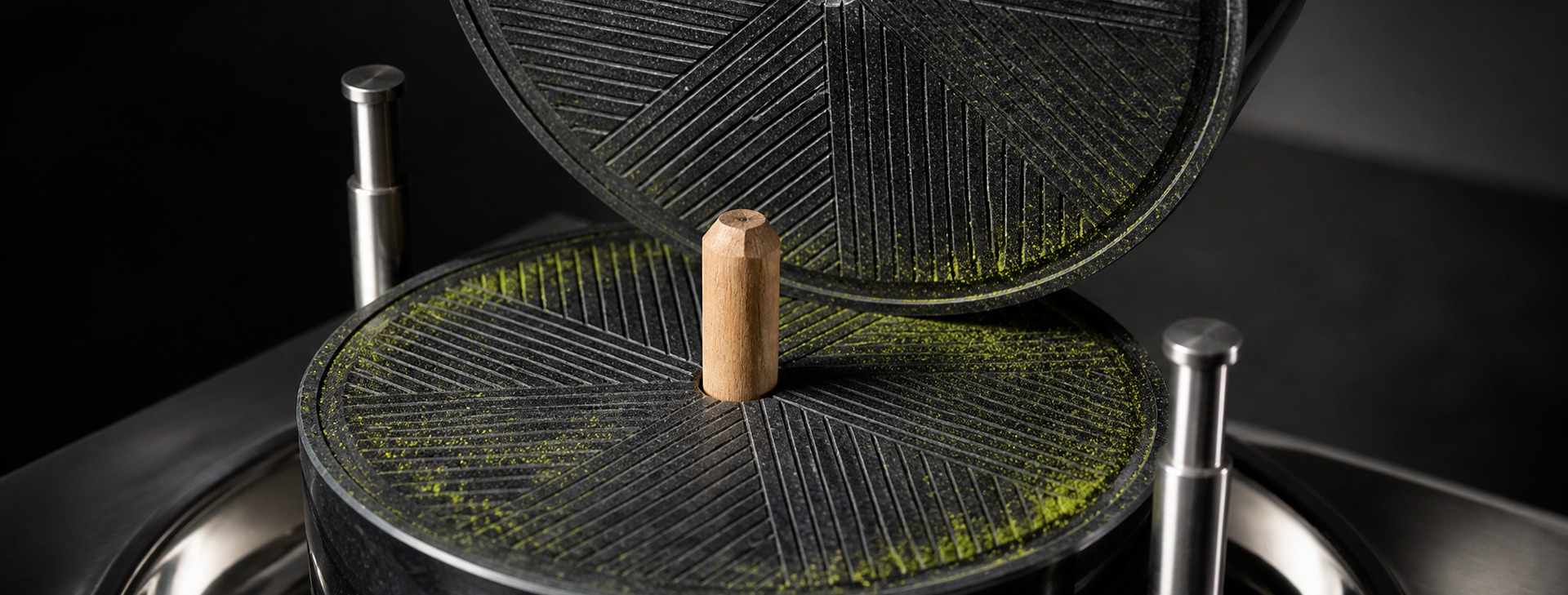
Traditional stone grinding uses controlled movement between grinding surfaces.
Other industrial technologies may use impact, airflow, beads, or other grinding mechanisms.
Each approach has different operating characteristics.
Stone Grinding
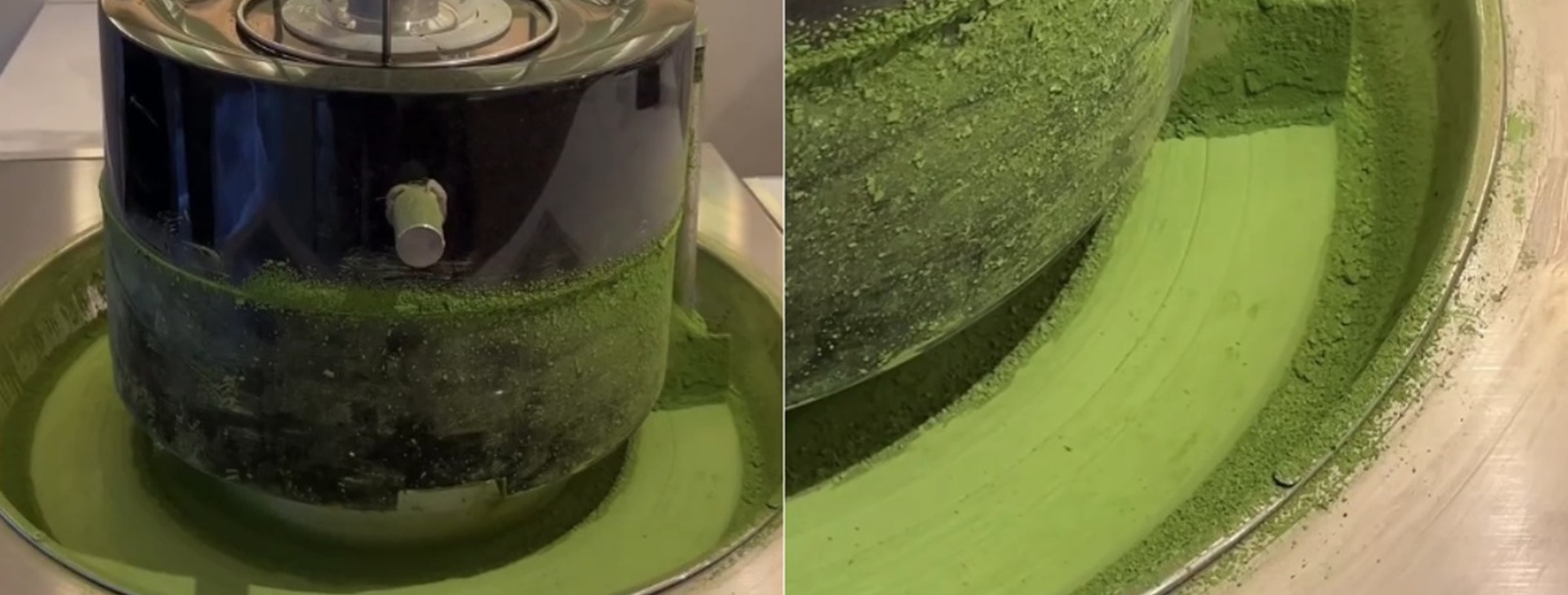
Stone grinding gradually reduces prepared tea material between grinding surfaces.
Its performance depends on factors such as stone geometry, rotational speed, feeding rate, stone condition, and raw material characteristics.
It is closely associated with traditional matcha production and remains relevant for businesses seeking stone-ground matcha.
High-Speed Mechanical Grinding
High-speed grinding technologies may offer different throughput and particle reduction characteristics.
Depending on the equipment, they may be suitable for larger-scale production or particular powder specifications.
However, performance should be assessed using actual particle size measurements, temperature data, production capacity, and product requirements.
No grinding method should be assumed to produce superior powder under every operating condition.
For a detailed comparison, read our article:
Stone Mill vs. Blade Grinder: Which Is Better for Matcha?
7. Why Is Particle Size Distribution Important?
Imagine two matcha powders.
Both are reported to have a D50 of 12 μm.
However, Powder A has a D90 of 20 μm, while Powder B has a D90 of 40 μm.
Although their median particle sizes are identical, their larger-particle populations differ significantly.
This difference may affect mouthfeel, dispersion, and other product characteristics.
For this reason, a complete particle size distribution provides more useful information than a single advertised fineness value.
Commercial buyers should consider asking suppliers for:
- The measurement method
- D10, D50, and D90 results
- Sample preparation conditions
- Raw material details
- Test repeatability
- Operating conditions during grinding
A professionally documented test result can provide a stronger basis for equipment evaluation. The Powder A and Powder B figures above are hypothetical examples, not JUNZHENG test results.
8. How Is Matcha Particle Size Measured?
Particle size can be evaluated using several analytical methods.
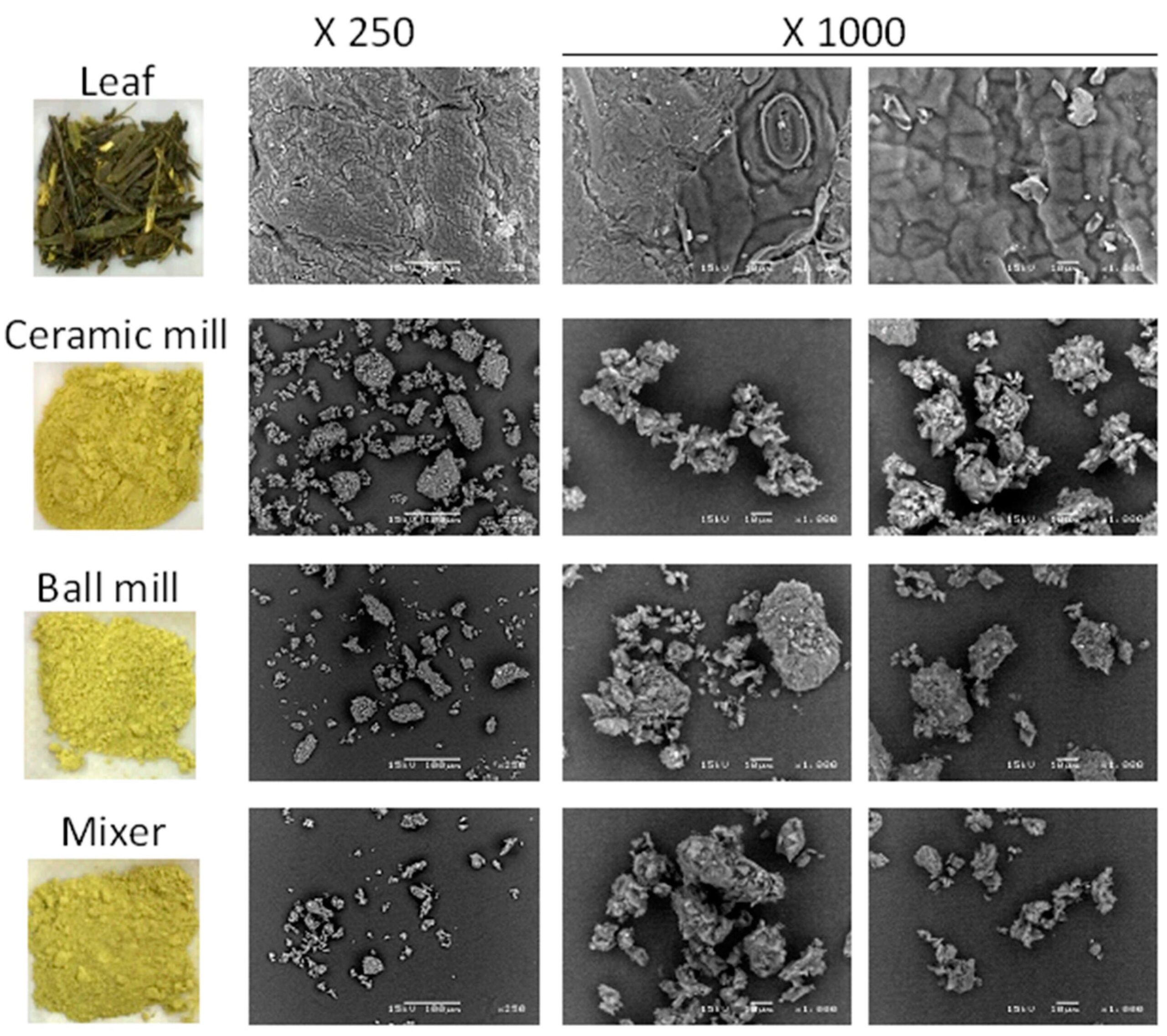
Common techniques include laser diffraction and microscopy-based particle analysis.
Laser diffraction reports an equivalent-sphere particle diameter rather than directly measuring every irregular leaf fragment. Results depend on sample preparation, dispersion conditions, optical assumptions, and instrument settings. Record whether the test uses wet or dry dispersion and how agglomerates are treated.
Microscopy can provide additional information about particle shape and structure.
When comparing results, buyers should confirm whether the reported values come from comparable methods.
For example, a laser diffraction D50 value should not automatically be treated as identical to an average particle diameter estimated from microscopy.
For commercial procurement, a clearly documented measurement method is more useful than a vague claim such as “3000 mesh” or “ultra-fine.” Mesh describes a sieve designation, not a complete distribution; do not convert a marketing mesh claim directly into D50 or D90.
9. What Particle Size Can a Commercial Matcha Stone Mill Achieve?
The grinding fineness of a commercial matcha stone mill depends on its design and operating conditions.
Important variables include:
- Grinding stone material and geometry
- Rotational speed
- Stone condition
- Feeding rate
- Raw material moisture
- Tencha preparation
- Grinding adjustment
- Operating duration
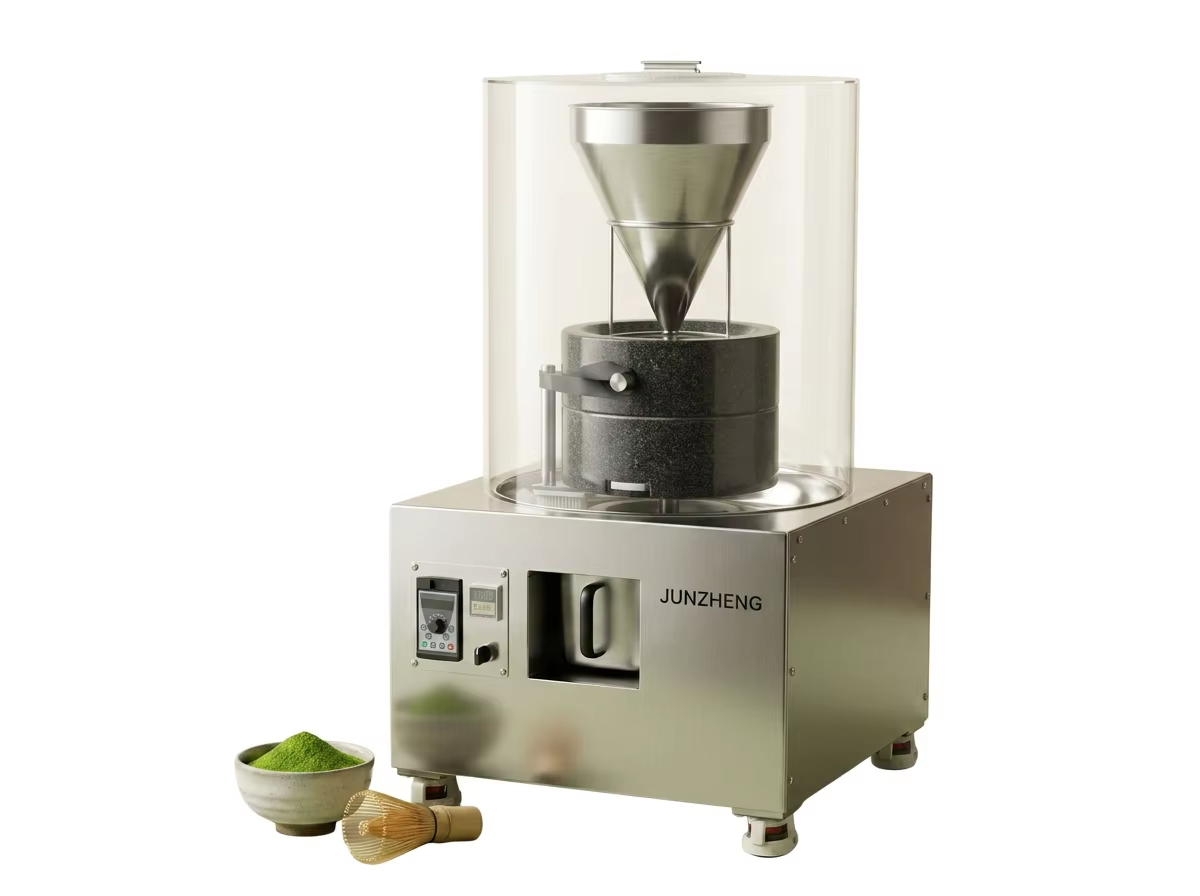
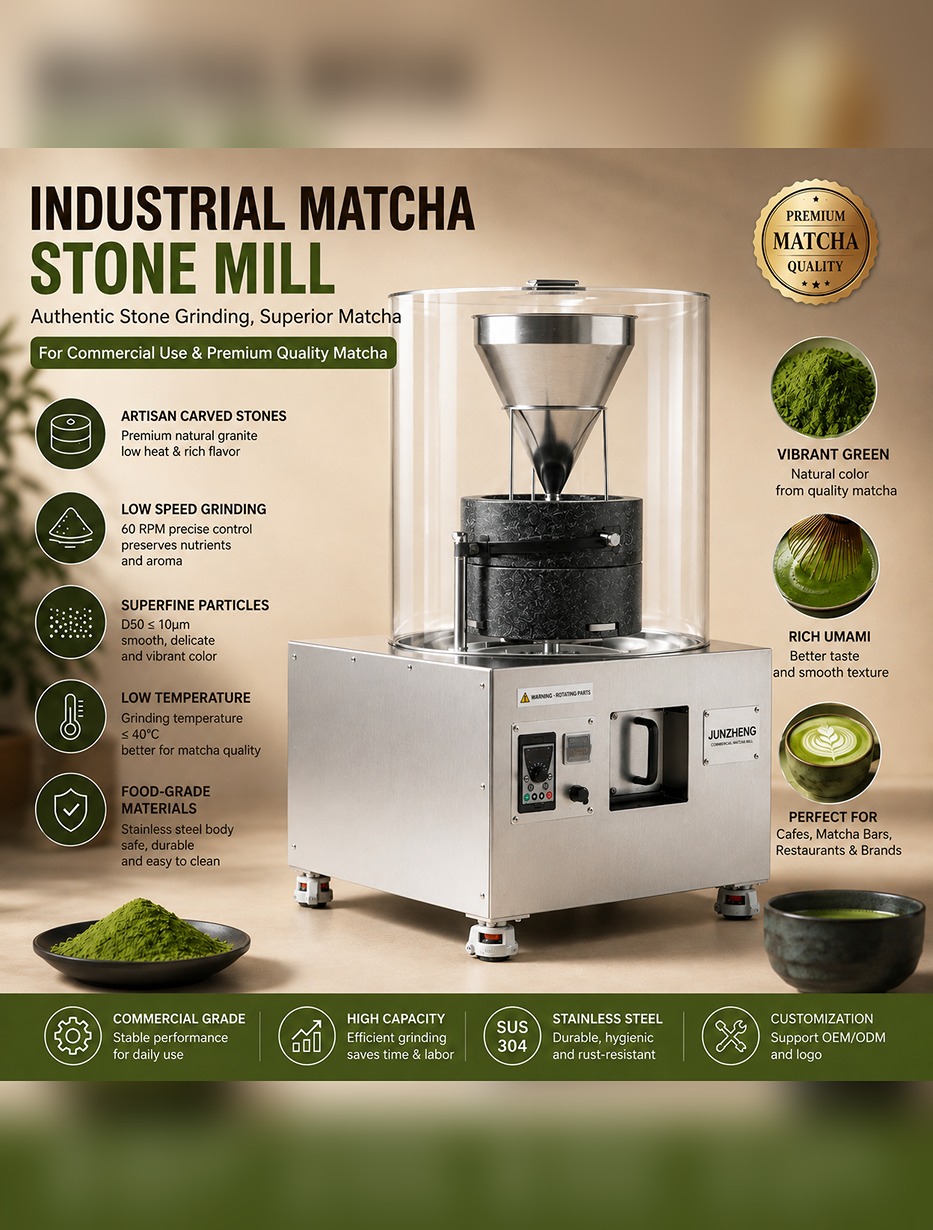
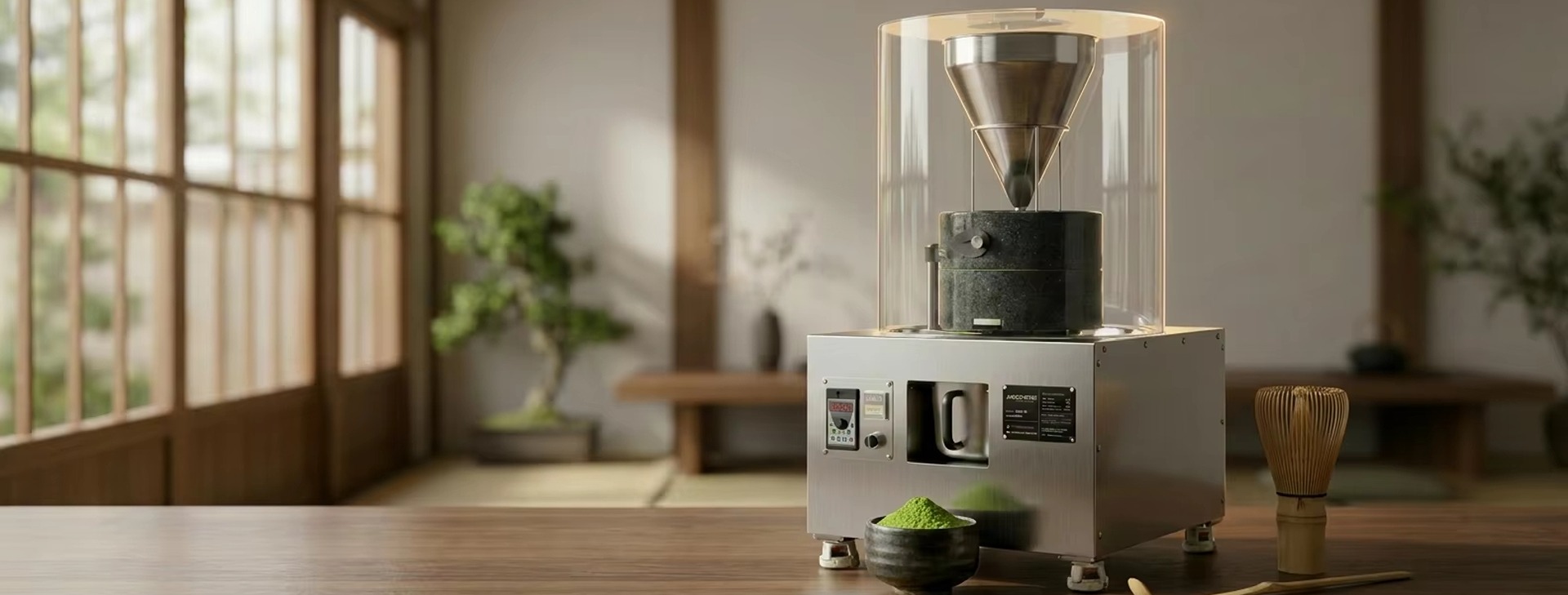
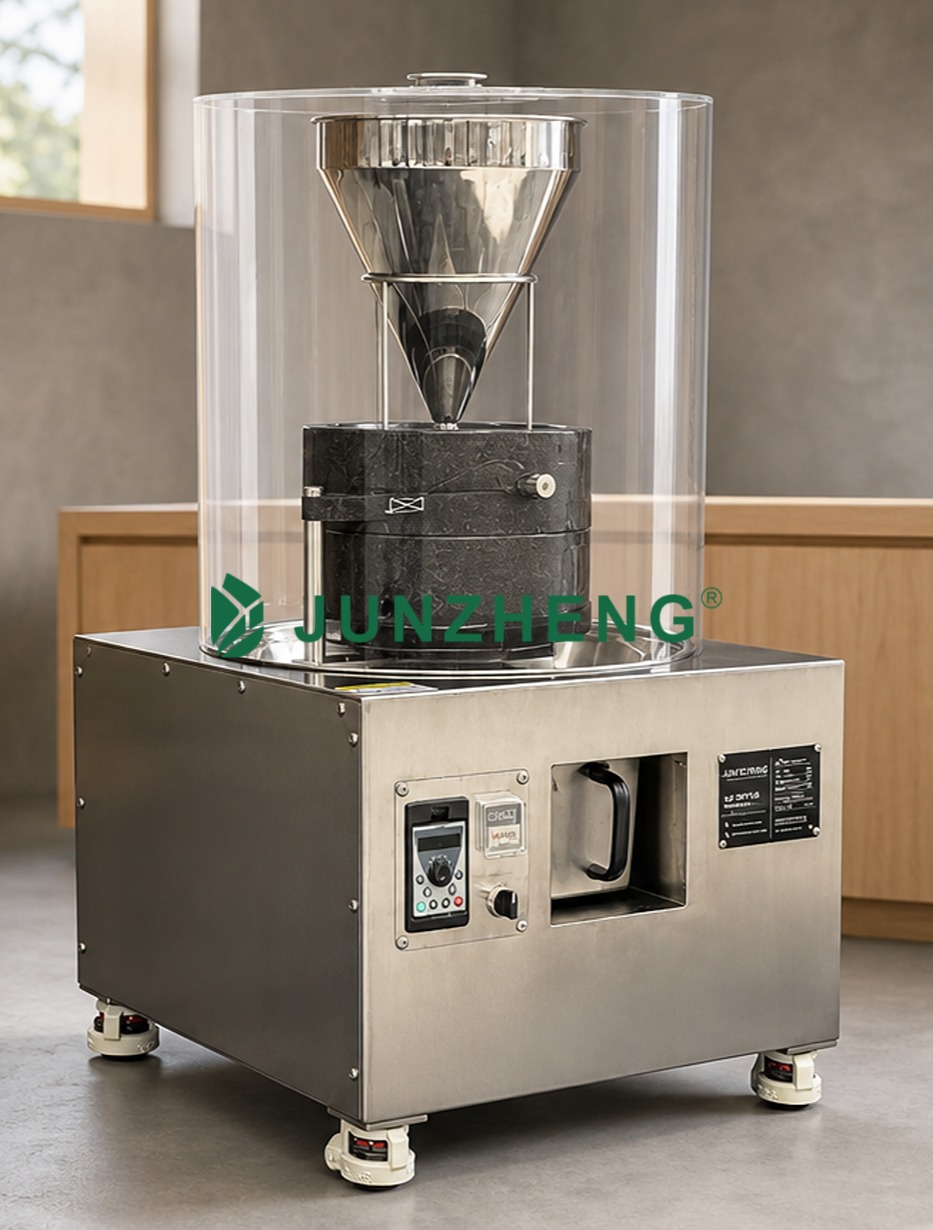
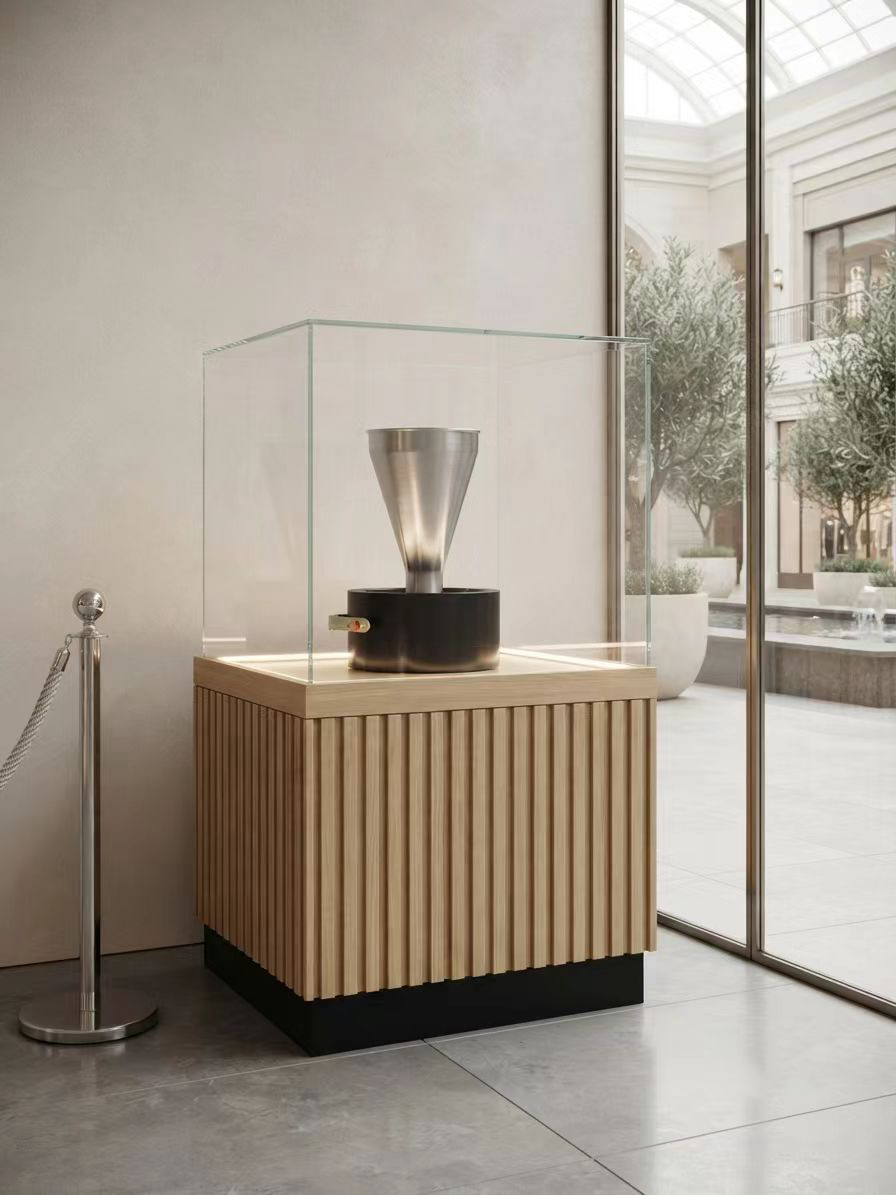
The JUNZHENG JZMY06 commercial matcha stone mill is designed for fine matcha grinding.
Ask JUNZHENG for the current model-specific fineness specification and the corresponding test report. Confirm whether the quoted figure is a median, mean, percentile, or another measure before comparing it with your requirement.
A stated fineness figure is not automatically a guaranteed D90 value or a maximum particle diameter. Agree on the feedstock, operating conditions, sampling method, and acceptance criteria before using it as a purchase specification.
For buyers with strict requirements, such as D90 below a specified threshold, sample testing and verification should be discussed before purchase.
This approach helps ensure that the equipment is evaluated against the buyer’s actual production requirements.
10. Choosing Particle Size for Different Matcha Applications
Different matcha businesses may prioritize different powder characteristics.
| Application | Important considerations |
|---|---|
| Traditional matcha preparation | Smooth mouthfeel, fine texture, consistent powder |
| Specialty matcha cafés | Beverage texture, dispersion, repeatability |
| Matcha latte production | Mixing behavior, mouthfeel, sedimentation |
| Matcha brands | Consistent specifications and quality control |
| Bakery and confectionery | Mixing behavior, color, formulation requirements |
| Tea processing facilities | Capacity, particle size distribution, production efficiency |
A premium tea brand may prioritize texture and a tightly controlled specification.
A high-volume ingredient processor may place greater emphasis on throughput, cost, and compatibility with downstream processing.
The ideal grinding system should therefore be selected according to the finished product rather than a single particle size number.
11. What Should Buyers Ask Before Purchasing a Matcha Grinder?
Before purchasing commercial matcha grinding equipment, consider the following questions:
- What is the target particle size distribution?
- Is the requirement based on D50, D90, or another measurement?
- What raw material will be processed?
- How much powder must be produced per hour?
- Is traditional stone grinding required?
- What temperature conditions are acceptable?
- Can the supplier provide relevant test results?
- How will grinding consistency be evaluated?
- What cleaning and maintenance procedures are required?
- Can the equipment meet the electrical requirements of the destination market?
These questions can help buyers compare equipment more effectively and avoid relying solely on marketing claims.
For further guidance, read:
How to Choose a Commercial Matcha Stone Mill: 10 Things Buyers Should Know
12. Why Consistent Grinding Matters for Commercial Matcha Production
Commercial production requires more than achieving a fine powder once.
A business also needs to understand whether the grinding process can produce repeatable results over time.
Consistency can be influenced by changes in raw material, feeding rate, grinding surface condition, operating temperature, and machine settings.
For professional matcha producers, maintaining suitable process controls is therefore essential.
A reliable production process combines:
Appropriate Raw Material + Suitable Grinding Equipment + Controlled Operating Conditions + Quality Testing
This principle applies whether the business operates a small commercial stone mill or a larger industrial grinding system.
Is Finer Matcha Always Better?
Not necessarily.
Particle size is an important factor in matcha quality, but it should never be evaluated in isolation.
A fine powder may contribute to smooth mouthfeel and desirable beverage characteristics, yet the final result also depends on particle size distribution, raw material quality, grinding method, and preparation conditions.
For commercial matcha businesses, the most useful objective is not simply to achieve the smallest possible micron value.
It is to produce a consistent particle size distribution that meets the requirements of the intended product.
Understanding D50, D90, grinding technology, and measurement methods allows buyers to evaluate equipment more professionally and make better long-term purchasing decisions.
Frequently Asked Questions
Is 10 μm the best particle size for all matcha?
No. The meaning of 10 μm depends on the measurement statistic and method. Compare the full distribution and test texture, dispersion, and settling in the intended preparation.
Does D50 = 10 μm mean every particle is smaller than 10 μm?
No. For a volume-based D50, half of the measured particle volume is below that diameter. It is a median, not an upper size limit.
Does finer matcha dissolve completely?
No. Some tea components dissolve, while insoluble leaf material remains dispersed or settles. Finer grinding does not turn matcha into a fully soluble instant tea.
Can a mesh number replace a particle size report?
No. A mesh designation does not provide D10, D50, D90, or the complete distribution. Ask for the test method and actual results.
Can particle size prove ceremonial-grade quality?
Particle size alone cannot establish a quality grade. Raw material, flavor, aroma, color, and performance in the intended preparation also need assessment.
Looking for a Commercial Matcha Stone Mill?
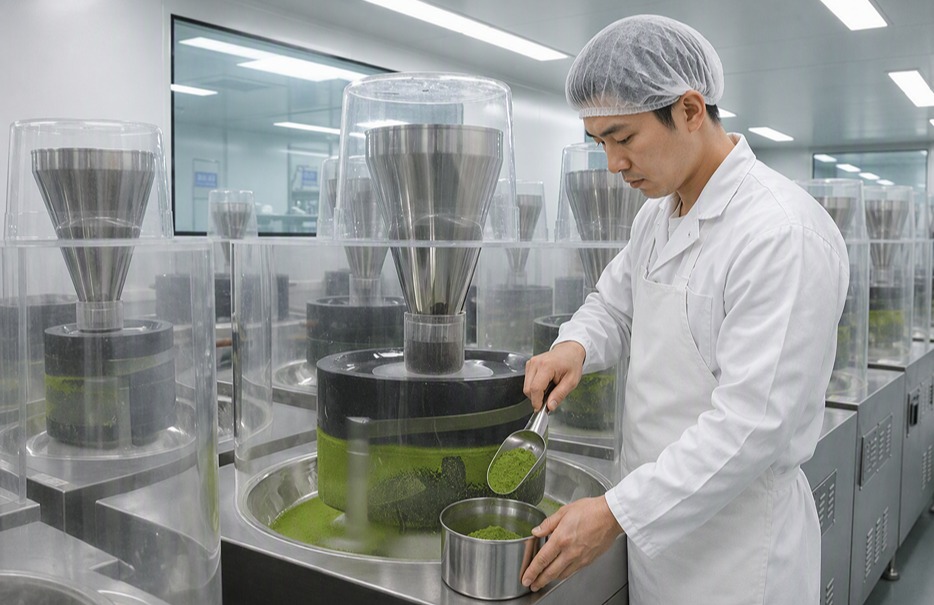
JUNZHENG provides commercial stone grinding equipment for specialty tea businesses, matcha cafés, matcha brands, and professional processors.
If your project has specific requirements for grinding fineness, production capacity, or machine configuration, contact our team to discuss your application.
Explore JUNZHENG Commercial Matcha Stone Mills →
Contact Us for Technical Consultation →
References and Further Reading
Malvern Panalytical: Definition and Measurement Methods of Particle Size Distribution.