For specialty matcha cafés, tea houses, and premium beverage shops, matcha is more than an ingredient. It is part of the customer experience, brand identity, and product quality.
As interest in specialty matcha continues to grow, some café owners are exploring an alternative to purchasing all their matcha in finished powder form: grinding tencha leaves with a commercial matcha stone mill.
But is buying a matcha stone mill a practical investment for a café?
Can one machine produce enough matcha for daily beverage sales? Can it operate throughout business hours? And does on-site stone grinding offer enough value to justify the equipment, labor, and operating costs?
In this guide, we examine the practical and commercial considerations behind investing in a matcha stone mill for cafés, using the JUNZHENG JZMY06 as a real equipment example.
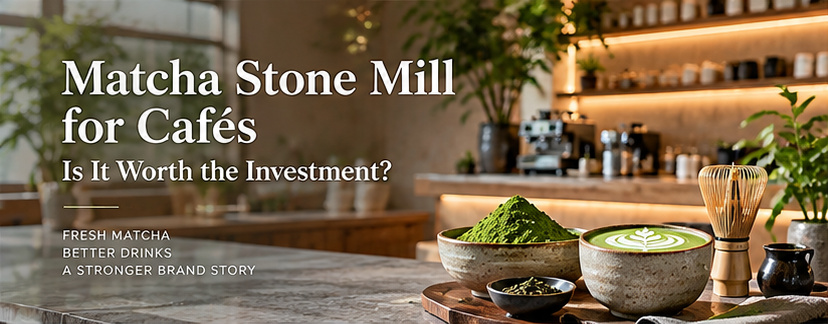
1. Why Are Specialty Cafés Interested in Stone-Ground Matcha?
Many cafés purchase ready-made matcha powder from tea suppliers. This is convenient and remains a sensible choice for numerous businesses.
However, operating a stone mill can create additional possibilities for cafés that want greater involvement in how their matcha is produced.
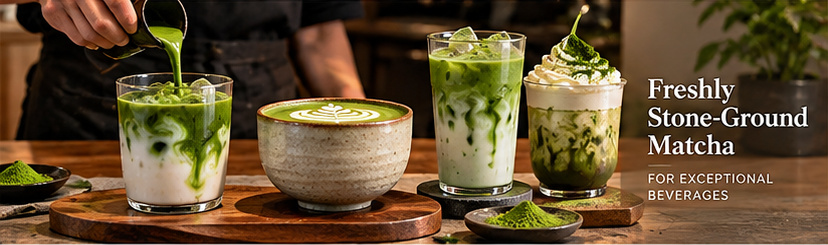
Freshly Ground Matcha as a Product Experience
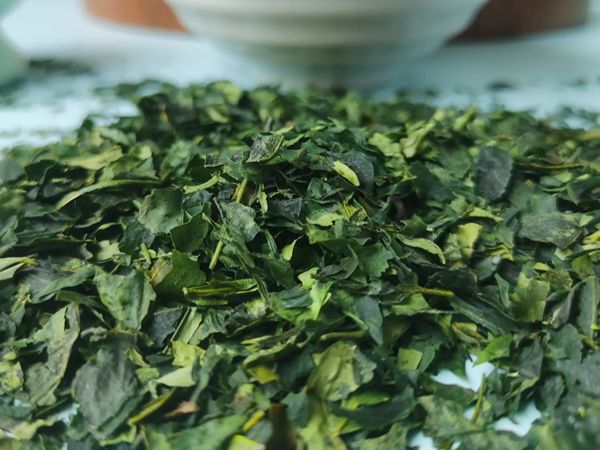
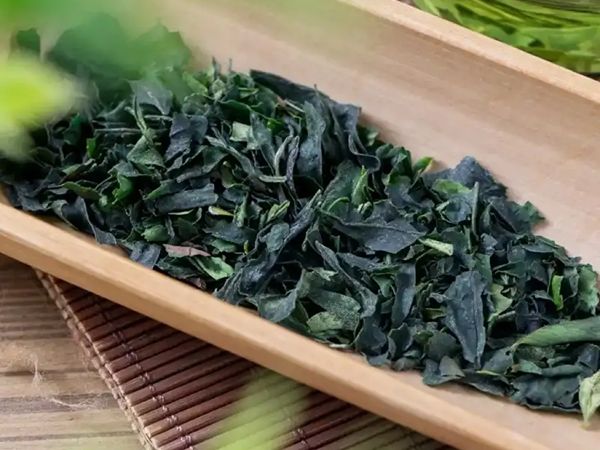
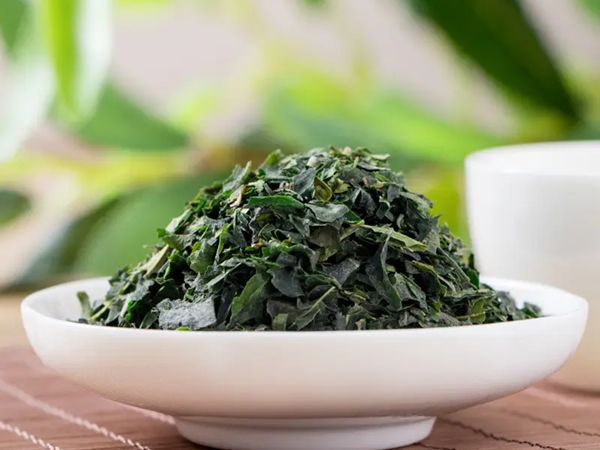
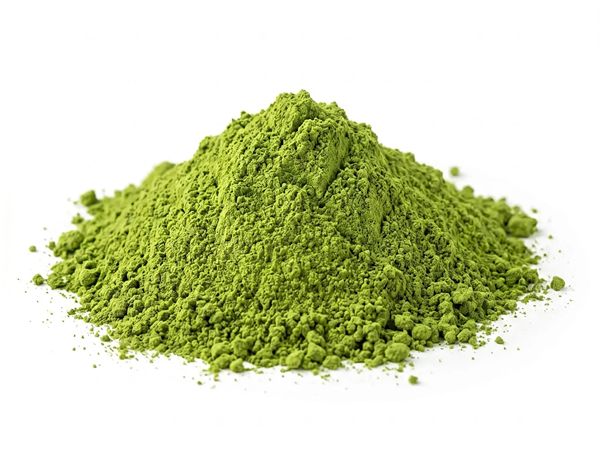
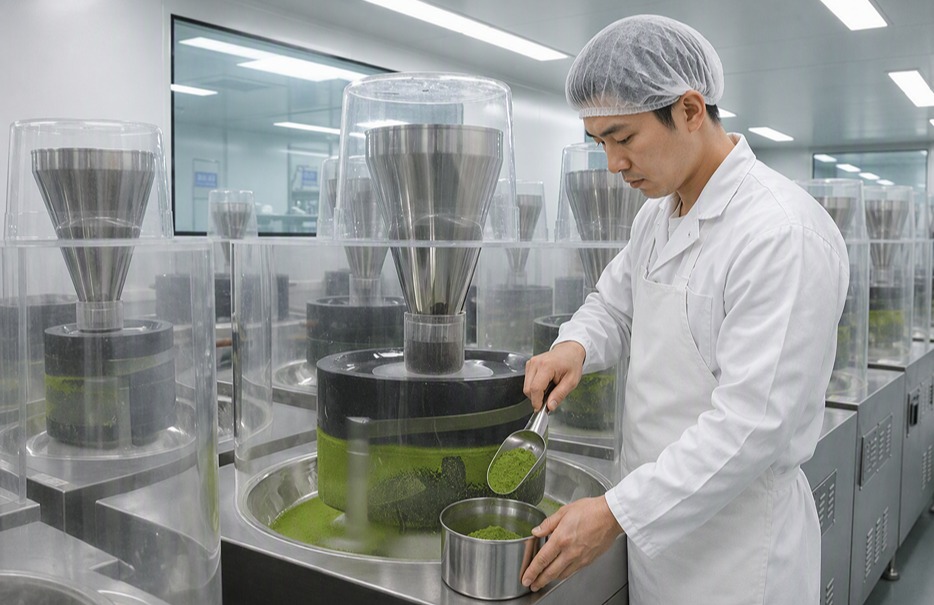
A commercial matcha stone mill allows a café to grind suitably prepared tencha leaves into matcha powder on-site.
Rather than simply opening a package of finished powder, staff can introduce the traditional stone-grinding process as part of the café’s identity.
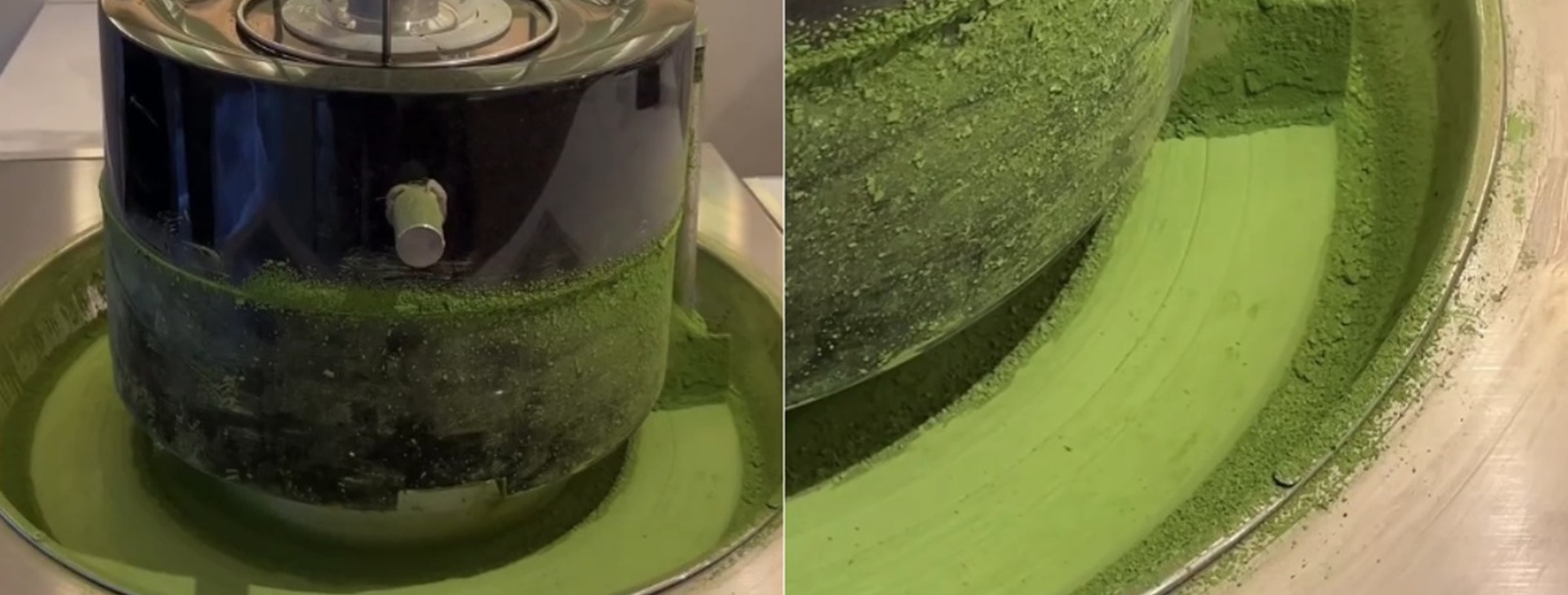
For customers interested in Japanese tea culture and traditional craftsmanship, the sight of slowly rotating granite grinding stones can become part of the experience.
However, freshly ground matcha is not automatically superior to professionally produced, properly stored matcha powder. Final quality depends on the tencha, grinding conditions, handling, storage, and beverage preparation.
A More Distinctive Brand Story
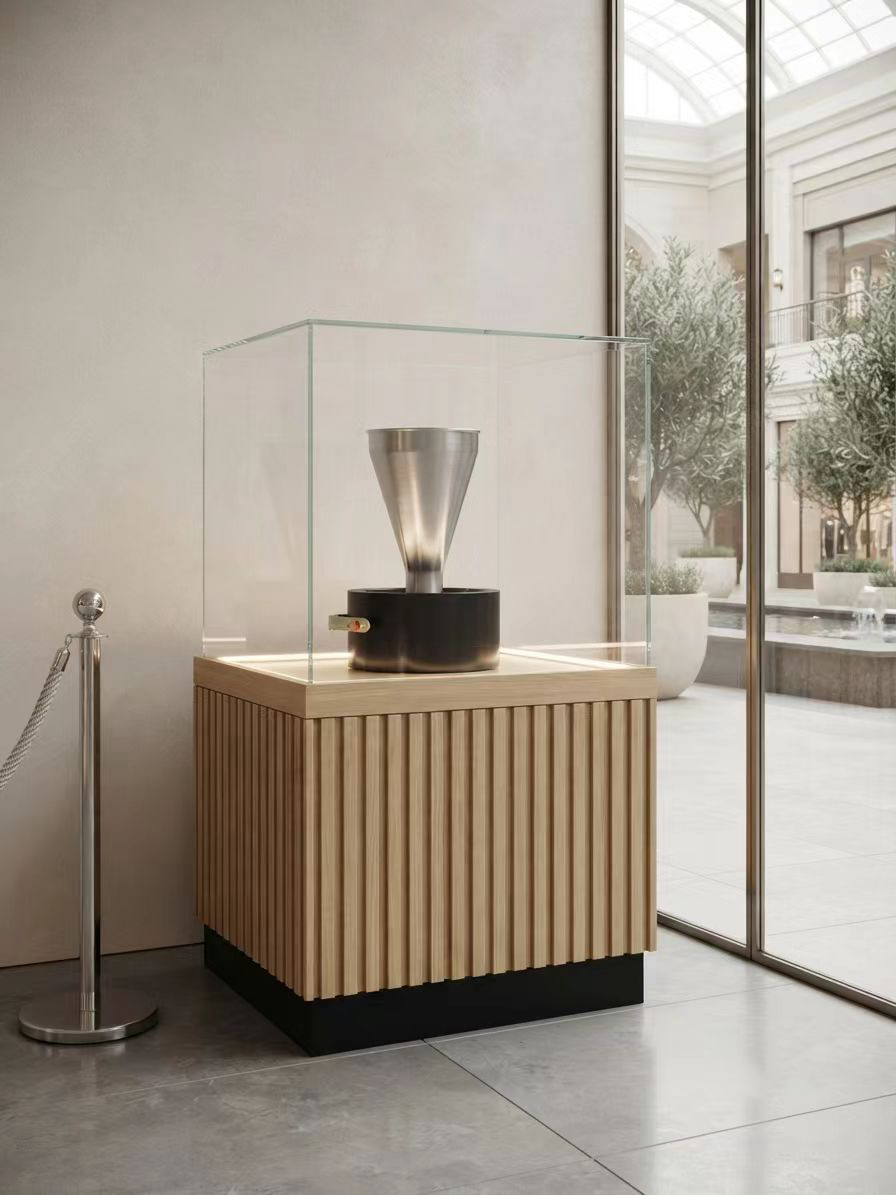
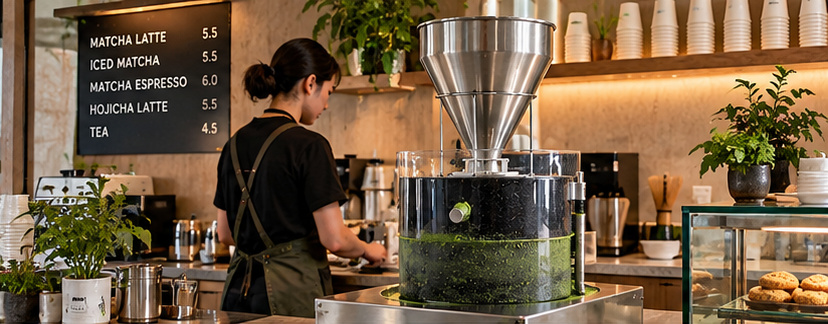
A visible stone mill can help cafés communicate a particular approach to matcha: traditional craftsmanship, attention to ingredients, and careful preparation.
It may also support educational demonstrations, guided tastings, or specialty menu offerings.
These benefits depend on the café’s customer base and concept. A stone mill is not guaranteed to increase sales or justify higher menu prices.
More Involvement in Matcha Production
For a café that has access to suitable tencha, in-house grinding can create opportunities to test different raw materials and develop distinctive matcha offerings.
Nevertheless, the mill does not replace good sourcing. Low-quality or improperly prepared tencha cannot be transformed into premium matcha through grinding alone.
2. How Much Matcha Does a Café Need Every Day?
Before purchasing any commercial matcha grinder, the most important question is straightforward:
How many matcha drinks does your café expect to sell each day?
Matcha consumption depends on three variables:
- The number of matcha beverages sold.
- The grams of matcha used in each recipe.
- Additional demand from pastries, desserts, retail products, or tasting sessions.
For practical capacity planning, we will use 3 grams of matcha per beverage.
This is an illustrative serving size, not a universal industry standard. For example, Ippodo Tea publishes a matcha latte recipe using 3 grams of matcha.
Example: Daily and Monthly Matcha Demand
The following table assumes 3 grams per drink and 26 operating days per month.
| Matcha drinks per day | Daily powder required | Monthly powder required |
|---|---|---|
| 30 | 90 g | 2.34 kg |
| 50 | 150 g | 3.90 kg |
| 80 | 240 g | 6.24 kg |
| 100 | 300 g | 7.80 kg |
| 120 | 360 g | 9.36 kg |
| 150 | 450 g | 11.70 kg |
| 200 | 600 g | 15.60 kg |
These figures are planning scenarios, not verified average café sales volumes.
Actual consumption can be higher when recipes use more powder, customers order concentrated matcha drinks, or the café also produces matcha desserts.
A café owner should ideally use several weeks of actual sales and recipe data when evaluating equipment capacity.
3. Can One Commercial Matcha Stone Mill Meet a Café’s Daily Demand?
The answer depends on the machine’s actual grinding capacity and how many hours it will operate.
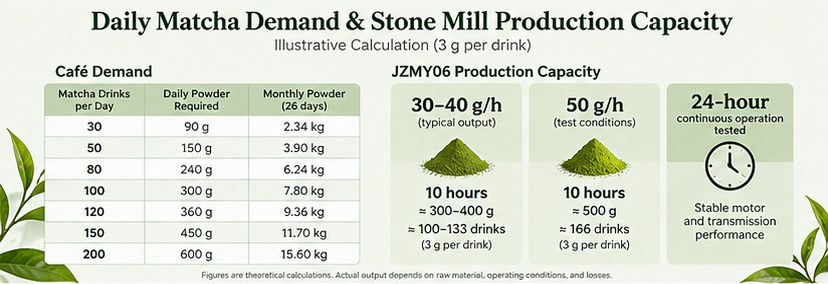
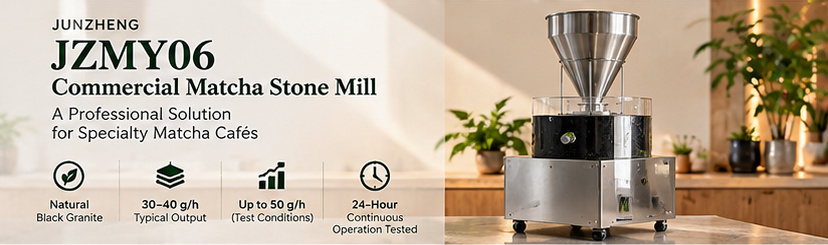
The JUNZHENG JZMY06 Commercial Matcha Stone Mill has a typical reference output of approximately 30–40 grams per hour.
Under specific extended-operation test conditions, output has reached approximately 50 grams per hour. That higher figure is a test observation, not a guaranteed capacity for every material or operating condition.
Estimated Matcha Production by Operating Time
| Grinding time | Typical output at 30–40 g/h | Output at 50 g/h under specific test conditions |
|---|---|---|
| 4 hours | 120–160 g | 200 g |
| 6 hours | 180–240 g | 300 g |
| 8 hours | 240–320 g | 400 g |
| 10 hours | 300–400 g | 500 g |
| 12 hours | 360–480 g | 600 g |
All figures are theoretical calculations based on maintaining the stated hourly output. They do not deduct time for cleaning, interruptions, changes in feeding conditions, or product losses.
Example: A Café Selling 100 Matcha Drinks Per Day
Suppose a specialty café sells 100 matcha drinks each day and uses 3 grams of matcha per cup.
Daily matcha demand would be:
100 drinks × 3 g = 300 g per day
At a grinding capacity of 30–40 g/hour, producing 300 grams would theoretically require approximately 7.5–10 hours.
At the approximately 50 g/hour output observed under specific test conditions, the theoretical grinding time would be 6 hours.
This suggests that a single commercial stone mill may be a practical option for this type of café, subject to its real operating schedule, tencha quality, production losses, and maintenance requirements.
For higher-demand locations, advance production, additional equipment, or a different production arrangement may be appropriate.
4. Can a Matcha Stone Mill Run Throughout Café Business Hours?
Some café owners want more than occasional small-batch grinding.
They want a machine that can operate during extended opening hours, providing powder while also allowing customers to observe the traditional stone-milling process.
For this application, operational reliability is especially important.
JZMY06: 24-Hour Continuous Operation Testing
The JUNZHENG JZMY06 has undergone a 24-hour continuous operation test.
During this test, the motor and transmission system demonstrated stable operation.
This provides useful evidence when evaluating the machine for cafés that intend to grind matcha over extended periods.
However, the test does not mean the mill requires no cleaning, can operate indefinitely without interruption, or will always maintain its highest observed output.
Appropriate feeding, maintenance, environmental conditions, and operator supervision remain necessary.
Practical Planning for an 8–10 Hour Café Day
For a café operating for approximately 8–10 hours, a stone mill may be incorporated into the daily workflow.
A business might choose to:
- Prepare a suitable quantity of matcha before opening.
- Grind additional matcha during business hours.
- Display the process in a designated preparation area.
- Adjust production according to anticipated demand.
- Schedule cleaning and inspections according to the manufacturer’s instructions.
The best arrangement depends on available floor space, staff responsibilities, hygiene controls, and the café’s sales pattern.
Importantly, continuous rotation is not the same as continuous productive grinding. Powder output requires appropriate material feeding and operating conditions.
For the JZMY06, operators should not run the grinding stones empty. All operation must follow the applicable machine instructions.
5. What Makes a Matcha Stone Mill Suitable for a Café?
Not every grinding machine is appropriate for use in a retail beverage environment.
Café operators should consider the following factors.
Natural Granite Grinding Stones
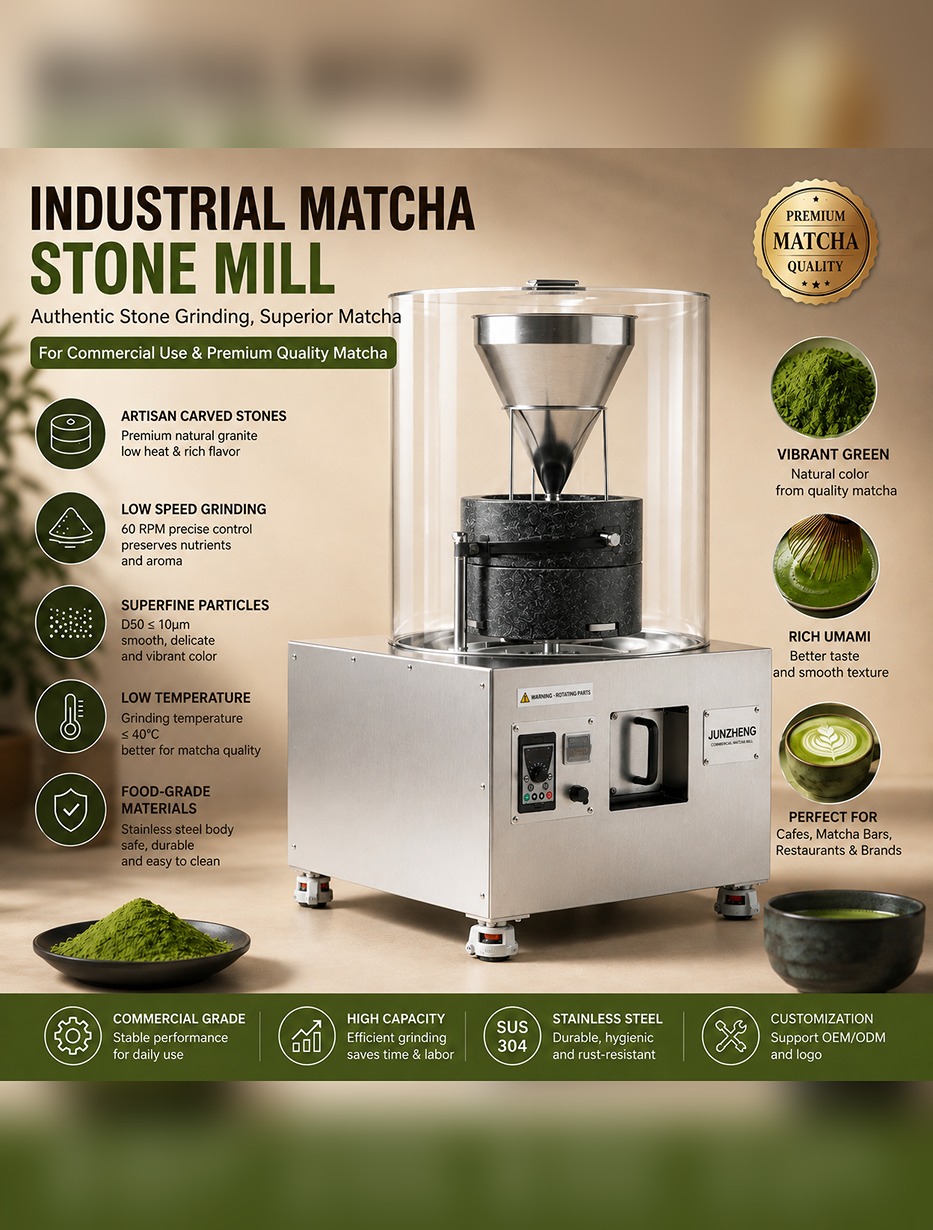
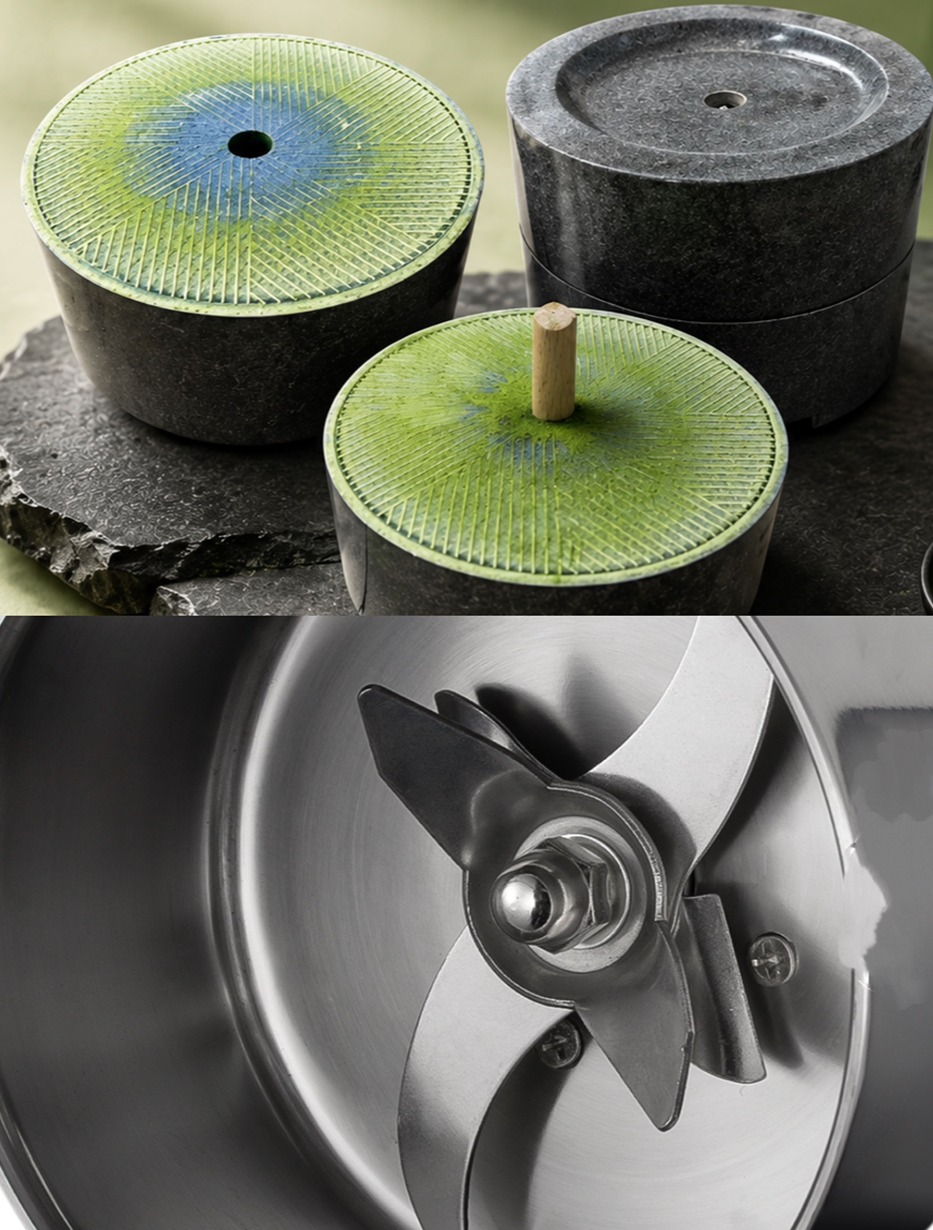
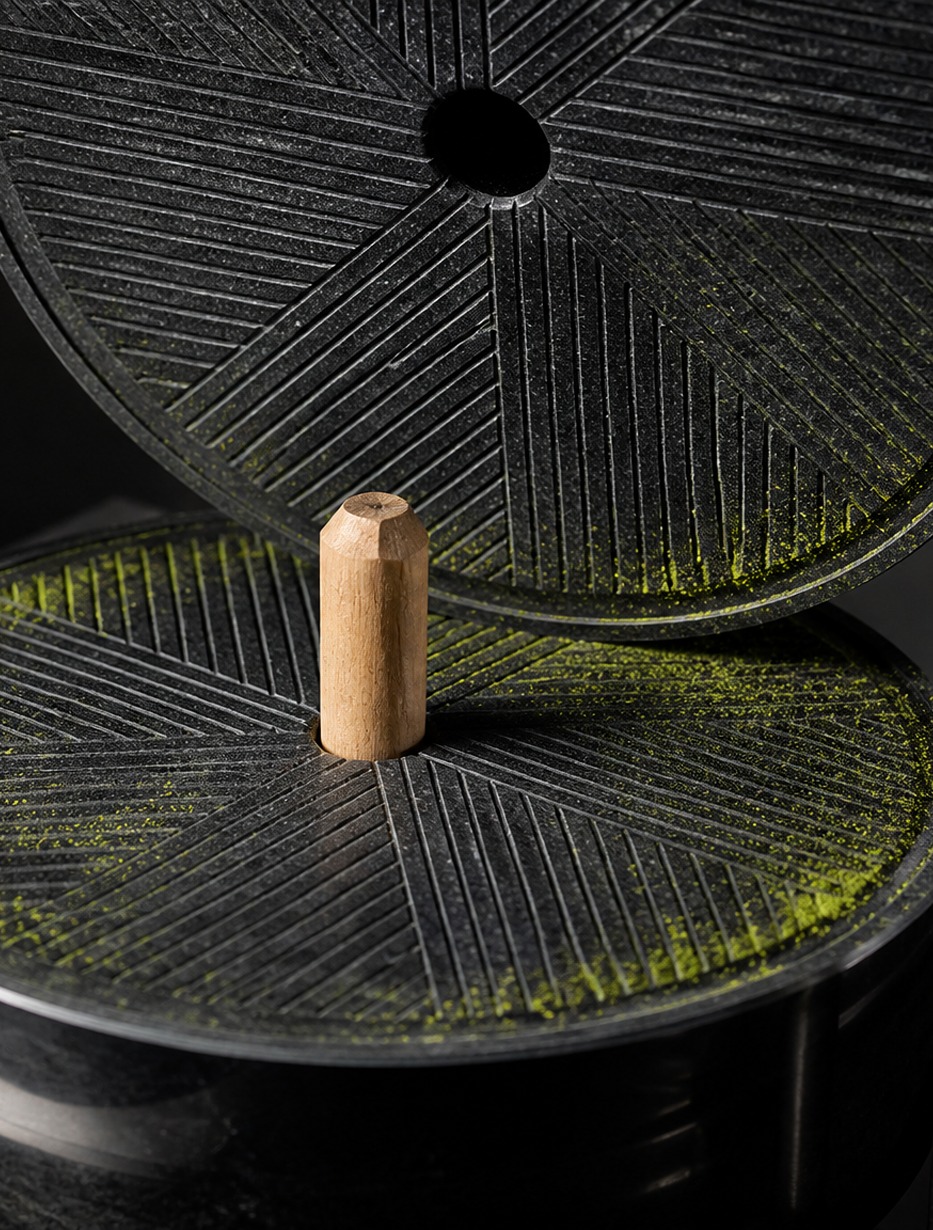
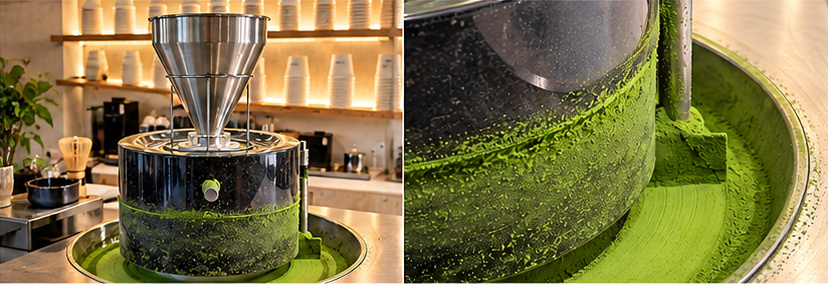
The JZMY06 uses natural black granite grinding stones.
This grinding system is designed for controlled processing of prepared tencha leaves into fine matcha powder.
The stone material, surface geometry, feeding conditions, and operating settings all affect the grinding result.
Learn more in Why Is Natural Granite Used for Matcha Stone Mills?.
Controlled Grinding Speed
For specialty matcha, the objective is not simply to grind material as quickly as possible.
The grinding system should support suitable particle fineness, consistent operation, and appropriate temperature management.
The JZMY06 uses a controlled, relatively low-speed stone-grinding process rather than conventional high-speed blade pulverization.
Commercial Construction
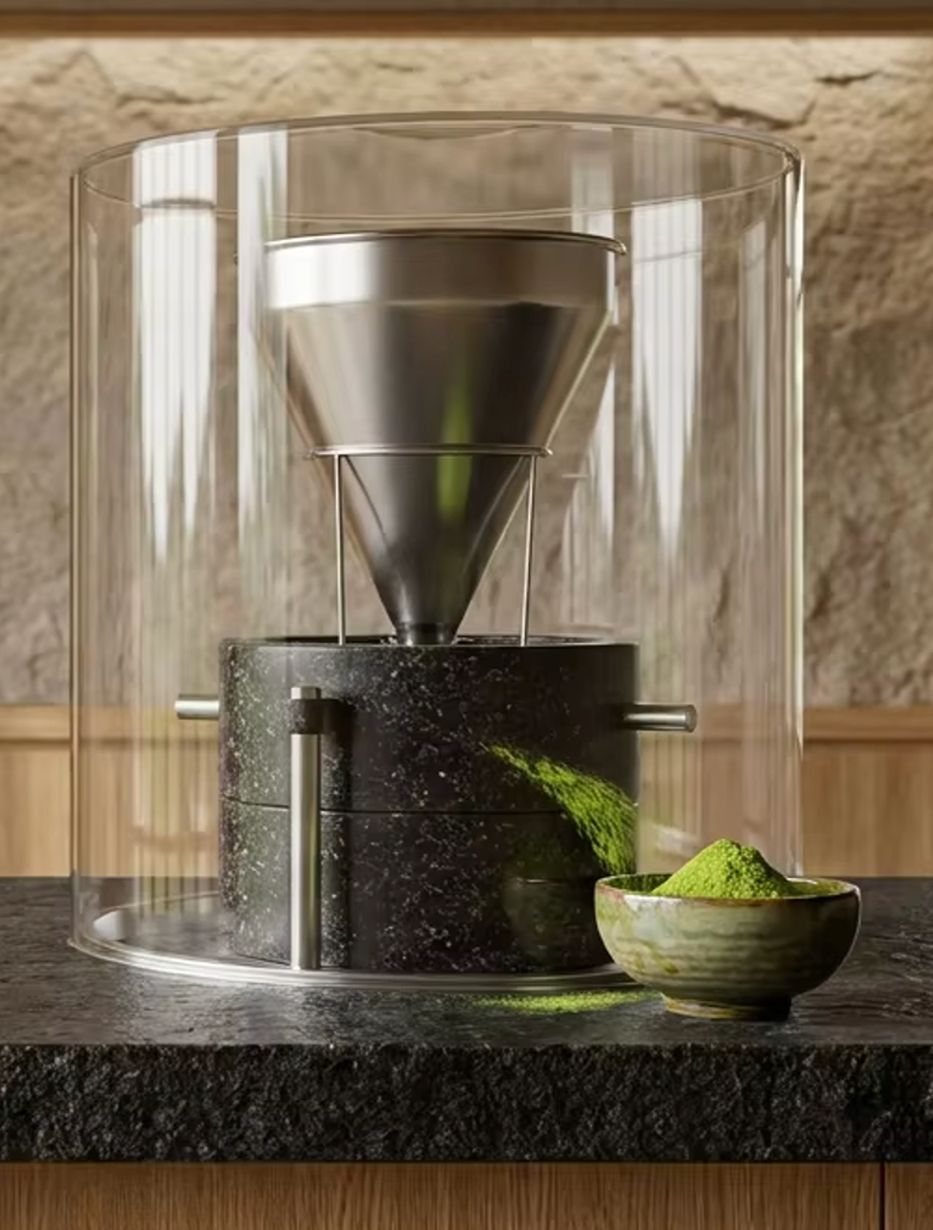
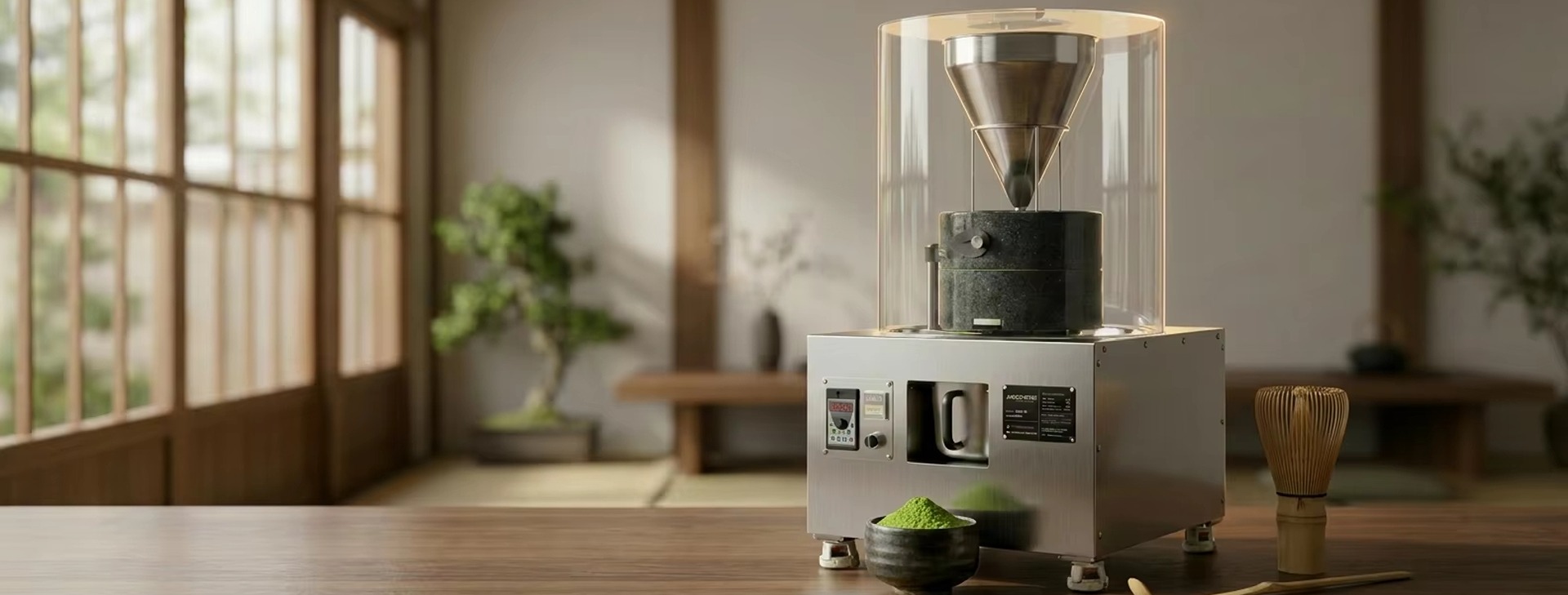
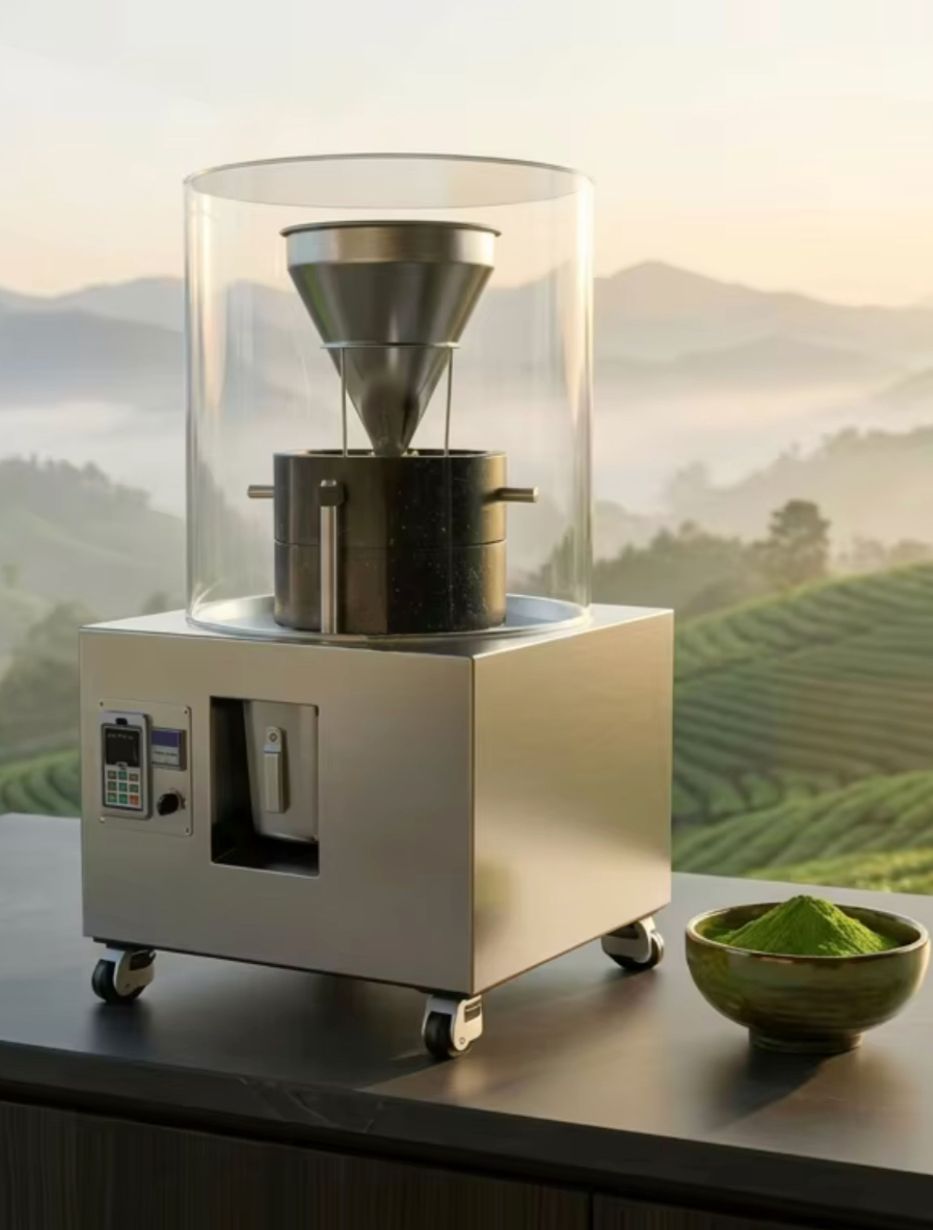
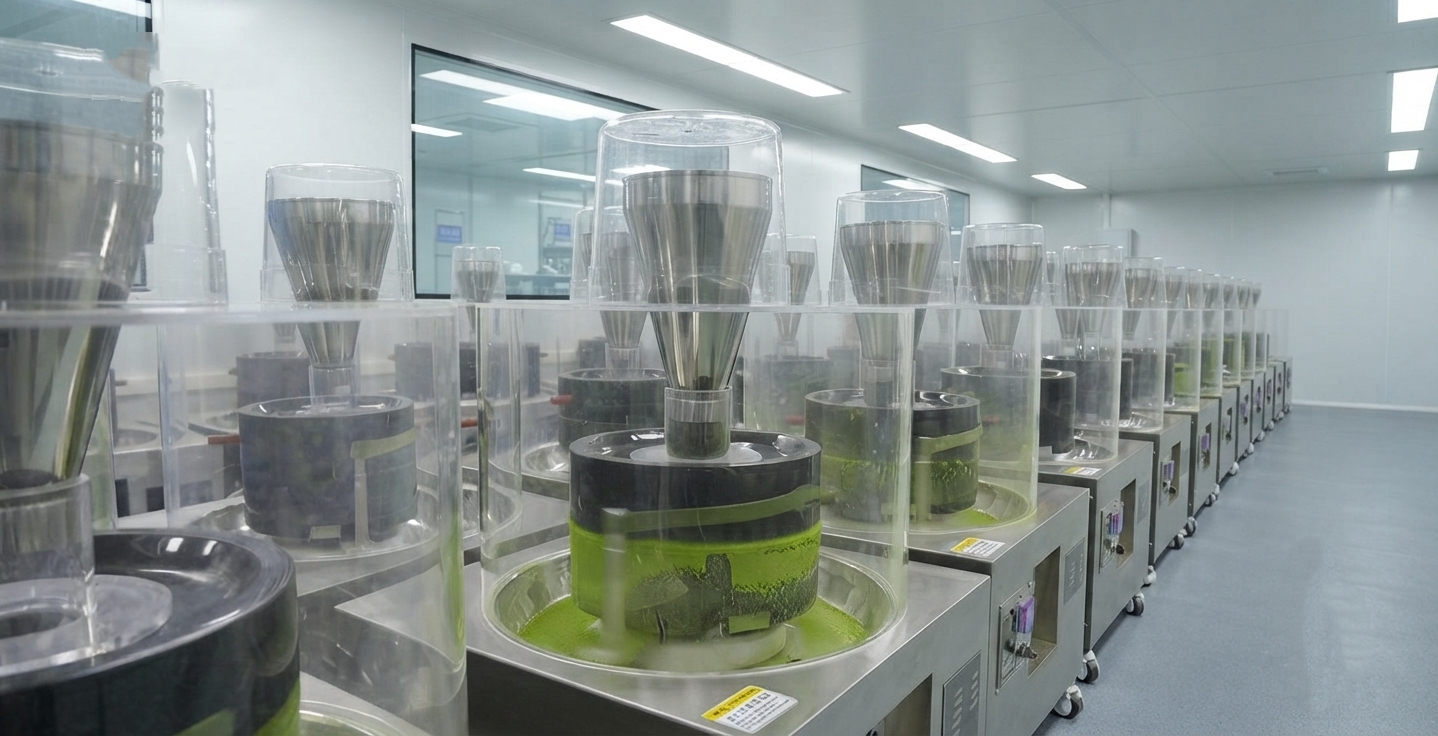
The JZMY06 combines its granite grinding system with a stainless-steel cabinet, feeding hopper, and transparent acrylic protective cover.
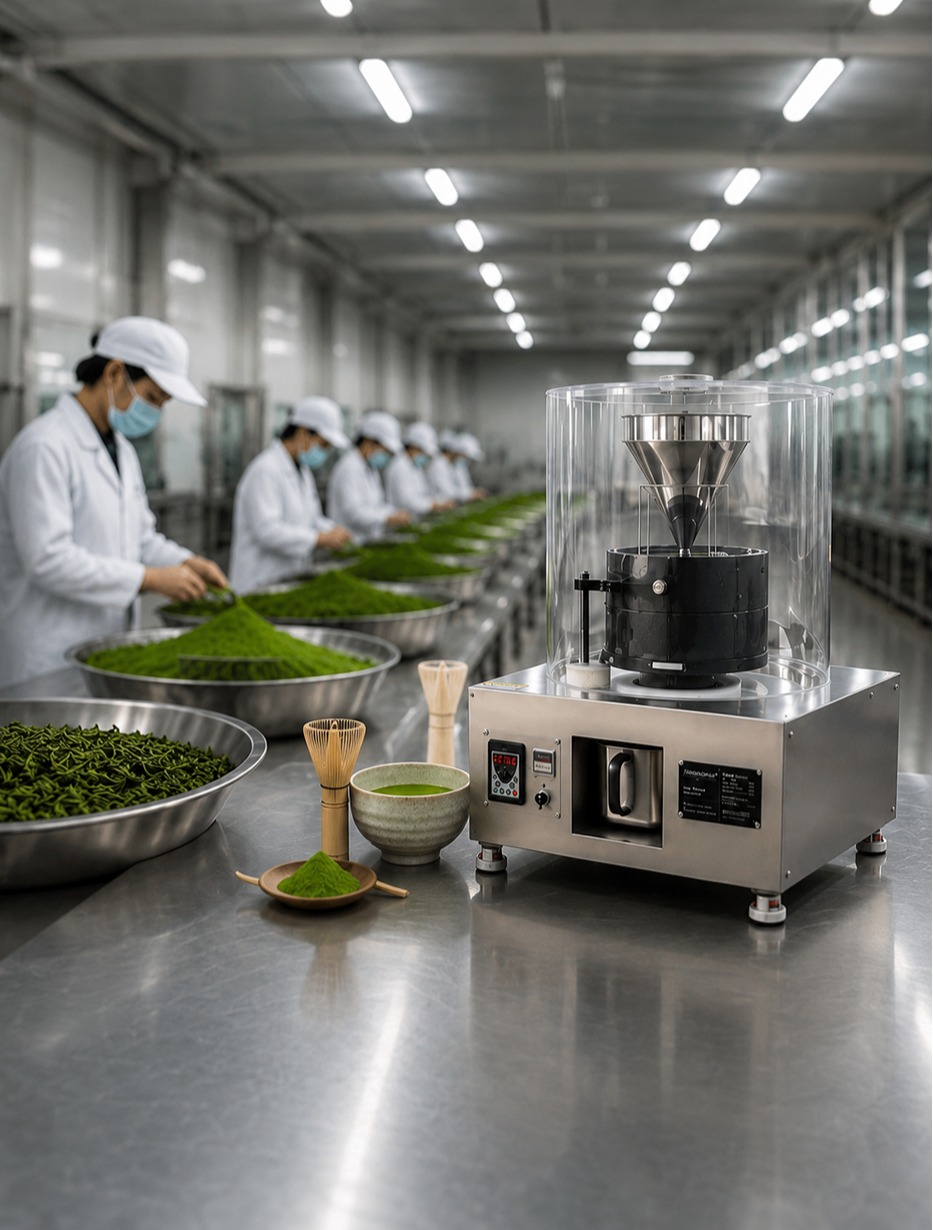
The enclosed commercial design can be useful when planning a dedicated grinding station.
Buyers should confirm the exact machine dimensions, electrical configuration, access requirements, and installation instructions before selecting a location.
Grinding Process Visibility
For cafés that want to demonstrate traditional matcha production, an observable grinding process can be valuable.
A stone mill may become an educational feature within the store, provided it is installed safely and does not interfere with staff operations or customer circulation.
The protective cover must remain correctly installed during operation.
Cleaning and Maintenance
A commercial mill also needs a practical cleaning and maintenance routine.
Fine matcha residue, moisture, and grinding-stone condition require attention.
For the JZMY06, routine cleaning includes removing powder residue with an approved soft brush and following the machine’s model-specific cleaning instructions.
Operators must not rinse the grinding stones or use unapproved cleaning chemicals.
Read the JUNZHENG Matcha Stone Mill Cleaning and Maintenance Guide before planning daily operation.
6. Is Fresh Stone-Ground Matcha Better for a Café?
Fresh grinding can be an appealing part of a premium matcha concept, but it is important to distinguish the production method from the quality of the final drink.
Matcha flavor, aroma, color, and mouthfeel are influenced by several factors:
- Tencha origin and quality.
- Tea cultivation and processing.
- Grinding conditions.
- Particle size and distribution.
- Exposure to heat, moisture, oxygen, and light.
- Storage and beverage preparation.
A café using excellent pre-ground matcha may produce better drinks than a café grinding poor-quality tencha on-site.
Therefore, the strongest business case for a stone mill is not simply that freshly ground matcha is always better.
It is the opportunity to combine appropriate raw material sourcing, controlled grinding, distinctive preparation, and a compelling café experience.
For technical background, see What Particle Size Is Best for Matcha?.
7. How Much Does a Commercial Matcha Stone Mill Cost to Operate?
The purchase price is only one part of the investment.
Café owners should evaluate the complete cost of producing matcha on-site.
Equipment Investment
Initial costs may include:
- The stone mill itself.
- International freight and applicable duties or taxes.
- Installation or electrical preparation.
- Accessories and dedicated working space.
- Staff training.
Raw Material Costs
The business must purchase suitable tencha rather than finished matcha powder.
Tencha prices can vary significantly depending on origin, grade, quality, supplier, and order volume.
Lower processing costs cannot be assumed without comparing comparable-quality raw materials.
Labor and Daily Operation
Grinding may require time for:
- Raw material preparation.
- Feeding and monitoring.
- Powder collection and handling.
- Cleaning and inspection.
- Maintenance and recordkeeping.
Electricity is another operating cost, although staffing, tencha sourcing, equipment depreciation, and product losses may be more important drivers of overall economics.
Product Losses and Yield
A production plan should account for retained powder, handling losses, cleaning residue, and occasional rejected batches.
Theoretical machine output should not automatically be treated as the quantity of finished matcha available for sale.
8. How Can a Café Calculate the Return on Investment?
A commercial matcha stone mill should be assessed using actual business numbers, not a universal promise of rapid payback.
There are two possible sources of value.
Production Economics
A café can compare the cost of purchasing finished matcha powder with the fully loaded cost of producing matcha from tencha.
The comparison should use similar-quality finished products.
In-house matcha production cost per gram =
Tencha cost + operating labor + electricity + maintenance + equipment depreciation + expected losses, divided by usable matcha output.
If producing matcha in-house costs more than buying finished powder, a café may still have a reason to invest—but the justification must come from other benefits.
Customer Experience and Brand Value
On-site stone grinding may create opportunities for:
- Premium matcha experiences.
- Educational tasting sessions.
- Distinctive menu concepts.
- Brand storytelling.
- Differentiation from nearby competitors.
These benefits can have commercial value, but they must be tested rather than assumed.
A Simple Payback Example
Suppose a café estimates that owning a stone mill will generate $50 of additional daily contribution profit after its additional operating costs.
If the total upfront investment is $4,520, the simple payback calculation would be:
$4,520 ÷ $50 = approximately 91 operating days
This is only a hypothetical arithmetic example. It is not a forecast of JZMY06 profitability, excludes financing and other cash-flow considerations, and assumes the additional profit is actually achieved.
For an accurate decision, owners should calculate several scenarios using realistic sales, material costs, labor, maintenance, and investment figures.
9. Which Types of Cafés Are the Best Fit?
A commercial matcha stone mill is not the right equipment for every beverage shop.
Small Specialty Matcha Cafés
A café serving approximately 30–60 matcha beverages per day may find that a single commercial stone mill offers adequate theoretical production capacity.
Whether the investment makes sense will depend heavily on how important on-site grinding is to the business concept.
Established Matcha Shops
For a café selling approximately 80–120 matcha beverages per day, capacity planning becomes particularly relevant.
At 3 grams per beverage, daily demand would be approximately 240–360 grams.
This is a useful range for assessing a single JZMY06, provided operating hours, maintenance, losses, and actual production conditions are taken into account.
High-Volume Matcha Locations
Businesses producing 150–200 or more matcha beverages daily may require additional planning.
Options could include grinding before opening, operating multiple mills, or combining stone-ground specialty offerings with externally sourced matcha.
A single mill should not be assumed to satisfy all high-volume demand.
General Coffee Shops with Limited Matcha Sales
If matcha represents only a small portion of total beverage sales, purchasing ready-made powder may remain more efficient.
A dedicated stone mill becomes more compelling when matcha is an important part of the shop’s product identity or customer experience.
10. What Should Café Owners Ask Before Buying?
Before purchasing a commercial matcha stone mill, ask the supplier:
- What output can the machine normally achieve with suitable tencha?
- Has it undergone extended continuous-operation testing?
- What are the actual machine dimensions and electrical requirements?
- How does the grinding process affect particle fineness?
- What raw material preparation is required?
- How should the grinding stones be cleaned and maintained?
- What operating restrictions apply?
- Which spare parts and technical support are available?
- Can the supplier provide relevant operating demonstrations and documentation?
- Does the machine’s real capacity match the café’s projected daily powder demand?
These questions help buyers assess the entire operating system rather than comparing machinery only by price or advertised hourly output.
For more detail, read How to Choose a Commercial Matcha Stone Mill: 10 Things Buyers Should Know.
11. JUNZHENG JZMY06: A Commercial Stone Mill for Specialty Matcha Businesses
The JUNZHENG JZMY06 Commercial Matcha Stone Mill is designed for small-batch professional matcha production.
Its main commercial features include:
| Feature | JZMY06 Reference Information |
|---|---|
| Grinding system | Natural black granite stones |
| Typical output | Approximately 30–40 g/hour |
| Higher output observed in testing | Approximately 50 g/hour under specific conditions |
| Extended operation | 24-hour continuous operation tested |
| Grinding approach | Controlled low-speed stone grinding |
| Machine construction | Stainless-steel cabinet with protective cover |
| Intended applications | Specialty cafés, tea shops, matcha brands, and small-batch processing |
Actual results depend on tencha preparation, machine settings, operating conditions, and maintenance.
The machine is best evaluated as part of a complete matcha production plan, not simply as a stand-alone appliance.
Explore the JUNZHENG JZMY06 Commercial Matcha Stone Mill for model information.
Frequently Asked Questions
How many cups of matcha can one stone mill support per day?
It depends on powder output, operating hours, and the grams of matcha used per drink.
For example, a mill producing 30–40 g/hour over 10 productive hours could theoretically supply 300–400 grams, equivalent to approximately 100–133 drinks at 3 grams per cup, before deducting losses.
Can a commercial matcha stone mill run for 10 hours?
The JUNZHENG JZMY06 has undergone a 24-hour continuous operation test with stable motor and transmission performance.
However, regular cleaning, proper feeding, operating checks, and the manufacturer’s instructions still apply.
How much matcha does a café need for 100 drinks?
At 3 grams per drink, 100 matcha beverages require 300 grams of powder before any additional allowance for waste or other menu items.
Is a stone mill suitable for a small café?
It can be, especially when the café values on-site production and the traditional grinding experience.
However, low-volume shops should compare the total investment with the convenience of buying finished matcha powder.
Does a matcha stone mill need tencha?
Yes. Traditional matcha stone grinding uses properly prepared tencha, not ordinary unprocessed fresh tea leaves.
The raw material must meet the machine’s preparation requirements.
Is stone-ground matcha always better than pre-ground matcha?
No. Quality depends on raw materials, grinding conditions, storage, and preparation. A stone mill is a production method, not a guarantee of superior matcha.
How many stone mills would a busy café need?
That depends on demand and scheduling.
A café using 600 grams of matcha per day would theoretically need 15–20 productive grinding hours at 30–40 g/hour with one machine. It may therefore consider advance production, longer planned production periods, or more than one machine.
Conclusion: Is a Matcha Stone Mill Worth It for Your Café?
A commercial matcha stone mill can be a worthwhile investment when it supports a clear business objective.
For some cafés, that objective is producing controlled small batches of matcha. For others, it is presenting traditional craftsmanship and creating a more distinctive customer experience.
The decision should start with realistic demand: how many matcha drinks the café sells, how much powder each drink uses, and how many hours are available for productive grinding.
The JUNZHENG JZMY06 offers a typical reference capacity of 30–40 g/hour and has undergone 24-hour continuous-operation testing, making it a relevant option for businesses evaluating extended daily commercial grinding.
However, equipment capacity is only one part of the decision. Good tencha sourcing, appropriate maintenance, staff training, and realistic cost analysis remain essential.
Planning a matcha café or upgrading your current grinding process?
Contact JUNZHENG with your expected daily matcha consumption, business location, and operating requirements. We can help you evaluate whether a single JZMY06 or a different grinding arrangement is more appropriate for your operation.